


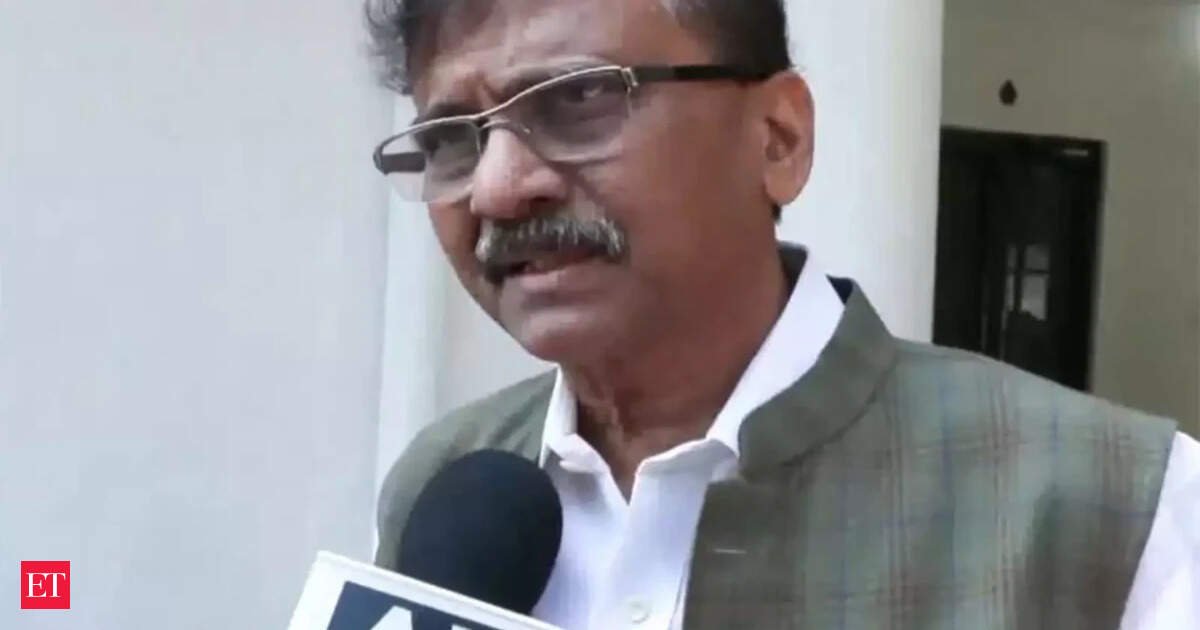
Speaking to ANI, Raut said PM Modi came to the House 25 days after the war began, appeared depressed, had lost control, and seemed unwilling to stay in power.
Also Read: ‘Modi Ji, ab jhola uthao or chale jaiye’: Shiv Sena (UBT) MP Sanjay Raut slams Centre over inflation
“Modi ji came to the House 25 days after the war started, and when we observed his body language, his mannerisms, and his way of speaking, we all felt that Modi ji is in depression. Modi ji has lost control, and his mindset doesn’t seem like he wants to stay in power for much longer. Modi will leave on his own,” he said.
On Congress leader Rahul Gandhi’s remarks regarding PM Modi’s 25-minute speech, Raut added that his speech failed to provide the public with the clarity expected in such a serious crisis.
“A debate should happen. Such a big problem is before the world and the country. You yourself said the situation that existed during Corona could return once more. If you want to inform the public and the country about a serious situation, then there should be a debate,” Raut said.
The remarks come after Rahul Gandhi criticised PM Modi for his handling of the West Asia situation, alleging that he avoided naming the US in his address and is “100% under the control” of President Donald Trump.While addressing the Adivasi Adhikar Samvidhan Sammelan in Vadodara, the Congress MP had stated that PM Modi cannot debate in the parliament because he is compromised.
“I’ve heard that the Prime Minister gave a 25-minute speech. But I guarantee he cannot participate in a debate in Parliament because he is compromised. Narendra Modi spoke for 25 minutes but did not say a single word against America. Narendra Modi is 100% under the control of Trump,” the Prime Minister.
Meanwhile, PM Modi, in his Lok Sabha address on Monday, described the West Asia conflict as “worrisome” and highlighted its potential economic, security, and humanitarian impact on India.
He emphasised India’s trade ties with the war-affected region, particularly its dependence on crude oil and gas, and reiterated that the country must remain prepared for the conflict’s long-term consequences.
The Prime Minister also asserted that India’s diplomatic approach has been to urge all parties to de-escalate tensions, condemning attacks on civilians, commercial vessels, and blockages of key waterways like the Strait of Hormuz.
