


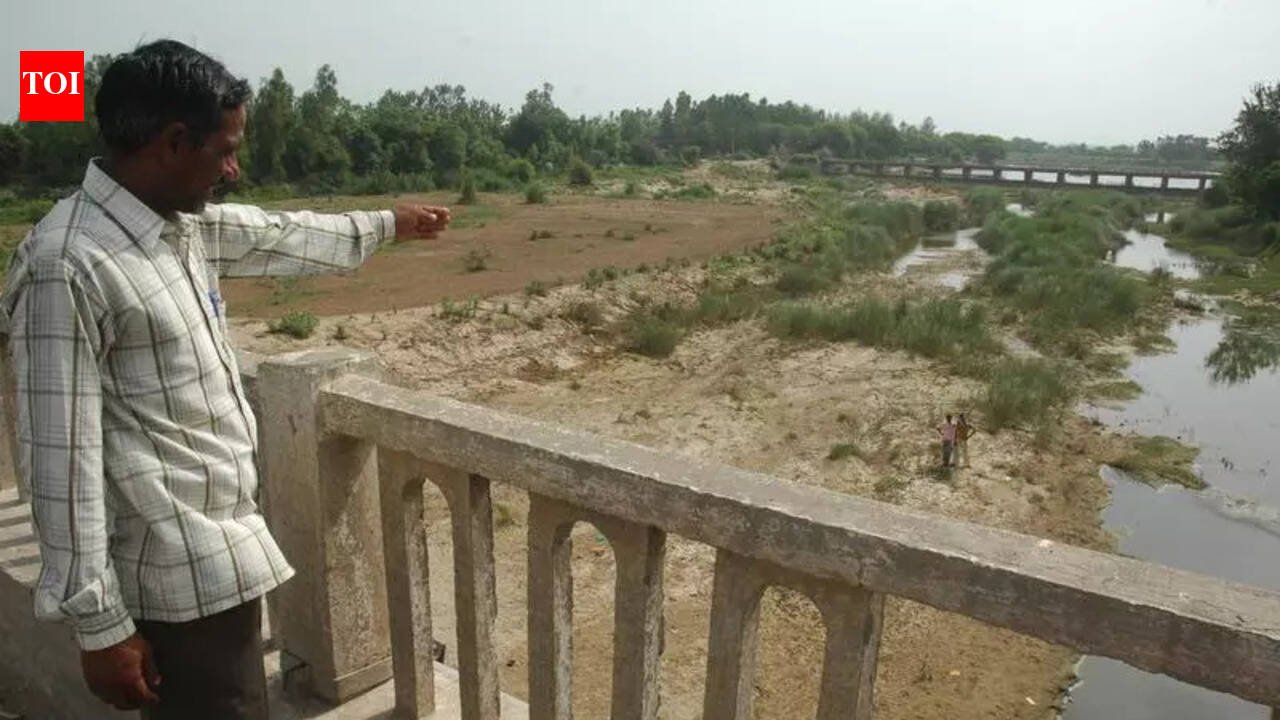
Kullu: The National Green Tribunal (NGT) has ordered the Himachal Pradesh govt to stop the outflow of effluents from the Kala Amb industrial area in Sirmaur district into the neighbouring districts of Haryana.In a recent order, Justice Arun Kumar Tyagi has directed the Himachal Pradesh chief secretary to submit an action plan for diversion or treatment of 11.62 million litres daily (MLD) that enters Haryana through the Markanda river and Jatton Walla Nallah.Justice Tyagi has also ordered the Punjab govt to monitor the quality of Tangri river, a tributary of the Ghaggar river. The order states that the stretch of the Tangri river that flows through Punjab before joining the Markanda river in Haryana should be systematically monitored to identify and tap discharge points contributing to pollution.The order follows a report submitted to the NGT on the pollution in the Markanda river by the Haryana State Pollution Control Board (HSPCB) in January this year.According to the HSPCB report, the main cause of pollution in the Markanda river, which is a tributary of the Ghaggar river and originates in the Shivalik hills on the border of Himachal and Haryana, is Jatton Walla Nallah, a rivulet that flows from Rampur Jattan village in the Kala Amb area of Sirmaur district in Himachal Pradesh.The report states that Jatton Walla Nallah carries domestic and industrial effluents generated by houses and industries located in Kala Amb and significantly increases the biochemical oxygen demand (BOD) level – a measurement of water quality – of the Markanda river after merging with it.On the directions of the NGT, the HSPCB, in Dec 2025 and Jan 2026, collected samples from 27 drains in Ambala, Kurukshetra and Panchkula districts where Markanda river flows before finally joining the Ghaggar river in Kaithal.The HSPCB stated in its report that the BOD of the sample drawn at the entry point of the river in Haryana bordering Kala Amb was recorded at 16 milligrams per litre (mg/l). However, a significant increase in the BOD level from 16 mg/l to 18 mg/l was recorded at the confluence of Markanda and Jatton Walla Nallah, which has a BOD level of 134 mg/l.According to the Central Pollution Control Board (CPCB), water quality above 3 mg/l is polluted and more than 30 mg/l is hazardous.The HSPCB report further stated that at the point where the Markanda river re-enters Kurukshetra district, the BOD level of the samples was observed to be 25 mg/l. The report concluded that the Markanda river got polluted due to the release of domestic and industrial effluents into its water at Kala Amb while requesting the NGT to direct the Himachal govt to make an action plan for treating approximately 11.62 MLD of effluents that flow into Haryana.It may be mentioned that a letter petition was filed in 2022 by Dharamvir, a resident of Naraingarh in Ambala district, requesting the NGT intervention while stating that industrial units located in Kala Amb in Sirmaur district had been discharging wastewater into the Markanda river.The petition stated that Markanda, which flows for around 24 km in Himachal, continued its stretch for another 125 km in Haryana, was regarded as a holy river and the industrial units of Kala Amb were not only polluting it but also causing serious diseases among the villagers and cattle of the area downstream. MSID:: 129751736 413 |
