


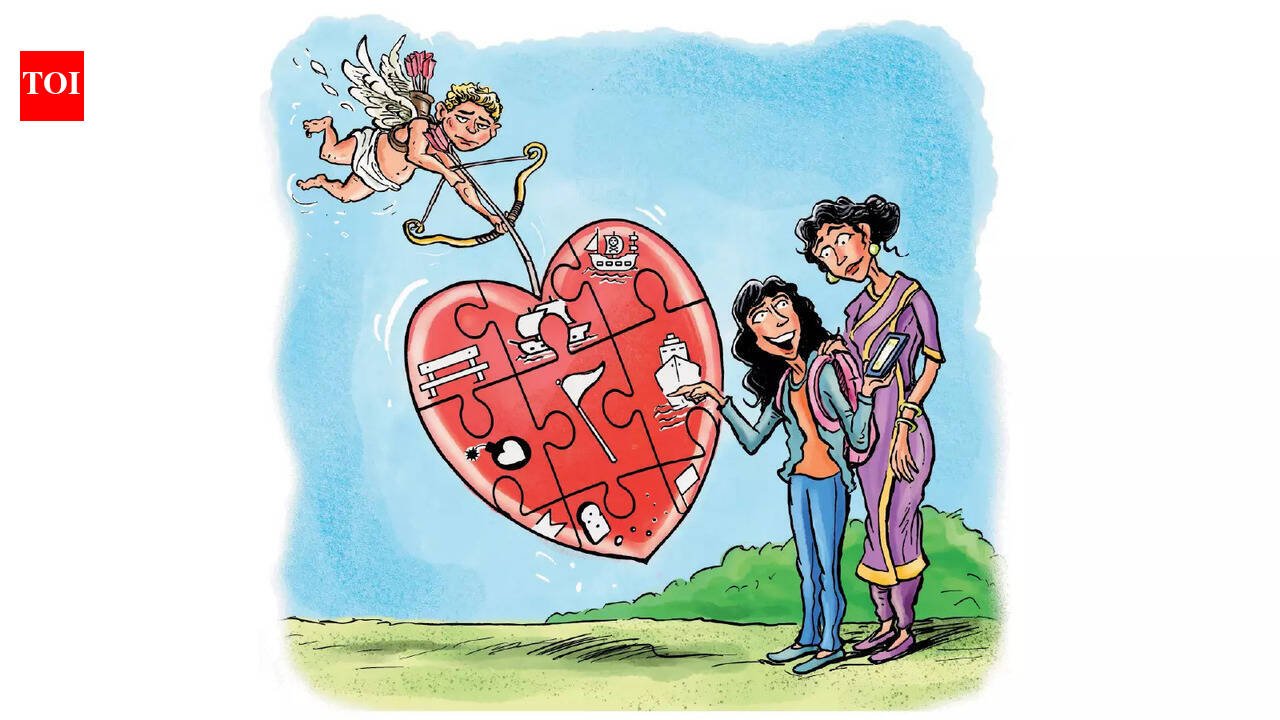
Nothing lasts foreverGen Z globally shows a preference for casual, low-commitment relationships. A recent Bumble study found most single Indians want ‘low-pressure’ connections and 73% of Gen Z respondents said they were not ready for a serious relationship. “I think casual relationships are quite the norm in high schools and colleges now. The flavour of dating is now more of temporary companionship. Parents are trying to accept their kids are not in it for love or anything long term,” says Chaturvedi.Marker points out that some kids date simply for “social credit”. “Sometimes, the head boy dates the head girl or a male footballer dates a female one, simply because that is the cool thing to do. I don’t think that it is worrisome as long as it’s not taking them away from normal functionality or causing any emotional stress,” Marker adds.Today’s youth have also crafted their own language of love to correctly capture the flexibility, fluidity, and complexity of their connections (see box). While most parents have heard of these terms via reels, they often don’t know how to react to them. Marker recently met a couple who were super stressed because their 21-year-old daughter said she was just “trying it out” with a college mate. The girl and boy eventually got into a commitment six months later, but that period was difficult for her parents to stomach.Single, not lovin’ itParents and experts point out that the most worrisome aspect about the ‘new normal’ teenhood is that there is immense pressure to be in a romantic relationship of some sort. “There is massive pressure to couple up.Unfortunately, kids who are single bear the brunt,” says Chaturvedi. Ravindran has seen how a child’s self-esteem takes a hit when they are not seeing anyone. Sukanya recently confided in her that she felt left out because she was the only one in her group who didn’t have a boyfriend. “She felt that nobody likes her and asked me if it was because of her complexion. My younger one also feels the pressure, though she is only in seventh grade. She wonders if no boy is asking her out because she is taller than them,” she says, adding that she feels sad that her daughters’ self-worth has become tied up to their love life.
I think casual relationships are quite the norm in high schools and colleges now. The flavour of dating is now more of temporary companionship, and parents are trying to accept their kids are not in it for love or anything long term
Pallavi Rao Chaturvedi, Parent Coach
Guide, don’t guardExperts say most parents are iffy about their kids dating, as they fear they will engage in sexual activities with their partners which can have very real consequences. They underline the importance of conversations about boundaries, safety and age-appropriate limits in terms of physical intimacy. “I recognise that it can be hard for many parents due to our value system. We did not have these conversations growing up, but we need to overcome our squeamishness (and judgement) and talk to the children about it, not alarm them. Parents should create that space for them,” says Iyer. Chaturvedi agrees, “Don’t assume that your child is not interested or into dating. Normalise talking about relationships and also talk about the importance of not falling for pressure, and not changing oneself just to please one’s partner.”Marker says it is also important to familiarise kids with society’s deeply-embedded gender biases. “Boys are perceived as cool when they have multiple girlfriends, but girls lose reputation if they move from boy to boy,” she says. “I told my daughter that dating is a normal part of growing up but you need to know how to conduct yourself. There have been cases of children who handled relationships very poorly and were ostracised from the peer group. This happened recently with a 14-year-old I know. No one wanted to hang out with her. I told my daughter that the other child is not a bad person; she just made bad choices.”There is another pain point for parents: the pressure to send nudes. “Young girls are very vulnerable. They want the boy to think they are cool so they end up sharing inappropriate photos,” says Ravindran, adding that she is concerned about her daughter falling for ‘truth or dare’ and ‘never have I ever’ kind of games, which the kids play often during free periods.Marker suggests parents should not tell kids not to do this or that. “Just ask them to not do anything they are not comfortable with and trust their instincts. We often underestimate their intelligence,” she says.Open is bestExperts say parents need to guide kids of different ages using appropriate language. One needs to be especially tactful while talking to young adults as they don’t like to be controlled, even if they are still living under the parents’ roof. If the child is not threatened or interrogated, they will be more open to discuss their dating choices. “The parent should observe and try to understand their child’s dating journey. If somebody is a serial dater, it literally means that person has a fear of being alone and the relationship is a crutch. You can then guide or seek help accordingly,” says Marker. Parents who invest in a friendly equation with their kids are in the best position. When Meghna Bhatt’s* son started dating at the age of 14 and told her he was seeing someone, she was excited. “I was happy he felt he could talk to me about his girlfriend. I had grown up in a conservative Punjabi family where we were told never to talk to boys, so telling our parents about our crushes or interactions with a boy was unimaginable. That’s all the more reason I wanted to have an open-minded relationship with my child,” she says.Mehta advised her son not to rush into “getting physical” and explained the concept of consent. “He came home one day blushing, and told me that he had his first kiss,” she recalls, adding that she continues to guide her son about what to expect and how he should ensure he does not hurt his own feelings or those of his girlfriend. *Names changed on request
