There are people who enter a room and make sure you notice them. And then there are people you almost miss.
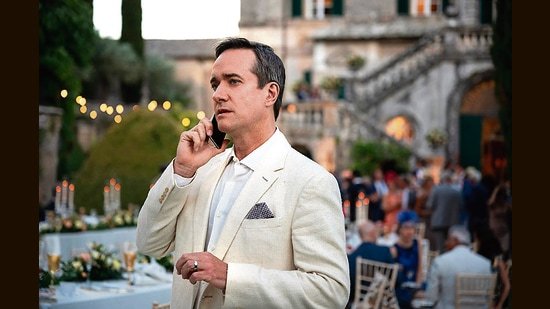
Matthew Macfadyen as the social climber Tom Wambsgans in Succession. It can take all one’s energy to live this way, fretting over fripperies and desperate to impress.
A former collegemate is of the latter kind. Which is strange, because if there’s anyone one ought to notice, it’s him. He is a Renaissance Man, with a doctorate in neuroscience from Leeds and a mind trained to move easily across disciplines. Mention a historical narrative, a cricket statistic from the ’70s, or wonder aloud how we recognise familiar faces in a crowd, and he will fill in the gaps, and one will leave more informed than before.
His is not the cocktail-party version of “knowledge” either (loosely assembled and often only partially accurate). His knowledge has a depth born of innate curiosity.
People who spend time with him invariably walk away charmed. So, why does he choose to stay invisible? For years, I put it down to a degree of introversion. He isn’t cut out for the theatre of professional networking, I thought. Over multiple conversations, it turned out the reason was something quite different: he is determined not to pay the “status tax”.
One sees it everywhere. We all understand it. The jargon is deployed not-so-subtly. A casual mention of a big deal is thrown in at just the right moment; the elite school one’s child attends is mentioned in passing; the big conference one just flew back from finds its way into conversation. And on and so.
It takes a remarkable amount of energy to manage perception in this way. One is constantly doing the math: Did I sound intelligent? Should I mention my next project? Was that joke calibrated right?
It’s exhausting.
Far simpler, as my friend points out, to watch and listen more than one speaks. And when one speaks, move the conversation forward rather than draw it in until it is focused on oneself.
Of course, not everyone who appears indifferent to status actually is. By way of example, years ago, I was introduced to a venture capitalist who also appeared unwilling to pay the status tax. He dressed casually, even when everyone else was in suits. He spoke softly in rooms where people competed to sound authoritative. He appeared almost amused by the rituals that animated the rest of the table.
He looked like someone who no longer needed to play the game. But something about it felt off. There was a dissonance I ignored, because there was no evidence to justify the suspicion. Then allegations surfaced years later during the #MeToo movement.
I realised then that what had looked like indifference to status was really a carefully constructed mask. The ease was cultivated. The T-shirts, carefully chosen. It turned out the legends of his exploits in Silicon Valley had been a lie as well.
All of us had bought into it. Because pretending to opt out of the status tax can be a powerful move too.
In hindsight, I can see that those who truly escape its gravitational pull do not make a point of signalling their indifference, because that would defeat the purpose. They are, if anything, more attentive to the moods of the room. Their focus on others is a quiet kind of rebellion. To them, conversation are not competitions; a way to get in and make one’s presence felt. They are even comfortable with silence in a professional setting. Often, as a result of such silences, the conversation around them deepens.
That’s the thing about the status tax. It consumes time and attention. One must make these sacrifices to it daily. I admire people who won’t make these sacrifices; who move through rooms unhurried and almost invisible, wielding, when needed, a mind most of us would give an arm and a leg to have.
Not for them this game of uncertainties and shifting sands, and of self-image contingent on the whims of others.
They have already won those rounds, and now can afford to stop playing.
(Charles Assisi is co-founder of Founding Fuel. He can be reached on assisi@foundingfuel.com. The views expressed are personal)