


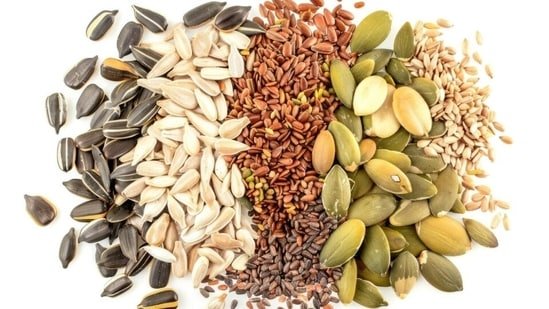
Seeds have become the go-to superfood for those looking to improve gut health and overall wellbeing. Moreover, the latest wellness trend, seed cycling, which involves consuming different seeds at different stages of the menstrual cycle, has gained popularity among menstruating women to balance hormones and improve fertility.
Also Read | Tip of the day: Eat this much protein per kilo of your body weight daily if you’re pregnant
However, consuming seeds without knowing their potential disadvantages might undo any health benefits they offer. In a March 21 Instagram post, Dr Saurabh Sethi, a board-certified gastroenterologist trained at AIIMS, Stanford, and Harvard universities, listed 8 things people get wrong about seeds.
8 things people get wrong about seeds
In the post, Dr Sethi listed 8 facts about seeds that people commonly get wrong, from thinking they can consume all seeds raw to believing they are low in calories and don’t benefit the gut as much as is claimed. Let’s clear all these claims.
1. All seeds are the same
It is often believed that all seeds are the same and can be eaten interchangeably. However, that is far from the truth. According to the gastroenterologist, they’re not. He clarified that chia seeds are not the same as flax seeds, and pumpkin seeds and sunflower seeds are not interchangeable. Each one has different fibres, fats, and benefits. “Smart gut health = smart variety,” he added.
2. Flaxseed is great raw
According to the gastroenterologist, whole flax goes right through you. Therefore, you need ground flax seeds to unlock the omega-3s and fibre present in them. Otherwise, it’s gut-inactive, he stressed.
3. Seeds don’t need water
Dr Sethi noted that chia, flax, and basil seeds absorb liquid; they swell when added to water. Therefore, when you eat them dry, you could get bloated or constipated. He stressed that hydration is the key when consuming these seeds.
4. Seeds are just toppings
Dr Sethi stressed that seeds aren’t just toppings, which is why one tsp won’t do much. “You need enough to matter, usually one to two tbsp daily. Dose over drizzle,” he noted.
5. Chia and basil seeds are interchangeable
It is claimed that chia and basil seeds are the same or interchangeable. However, that is far from the truth. Dr Sethi noted that although both need to be soaked in water, their benefits differ. “Basil seeds cool the gut and may ease reflux. Chia is better for omega-3s and satiety. Same texture. Different function,” he highlighted.
6. Seeds = Low calorie
Seeds are not low in calories, Dr Sethi pointed out. “Seeds are nutrient-dense, packed with fats, fibre, and calories. One to two tbsp daily is great. Six tbsp or more at every meal isn’t so great. Portion = power,” he explained.
7. Seeds cause diverticulitis
The gastroenterologist noted that large studies show no link between eating seeds and diverticulitis. According to the Mayo Clinic, diverticulitis is inflammation of irregular bulging pouches in the wall of the large intestine. In fact, fibre-rich foods can help support colon health.
8. Seeds don’t help the gut
Lastly, Dr Sethi noted, the fibre, prebiotics, and anti-inflammatory fats in seeds can support digestion, reduce bloating, and boost microbes. “Seeds are tiny, but mighty. Seeds aren’t magic, but they’re powerful when used right. Don’t waste their potential,” he added.
Note to readers: This article is for informational purposes only and not a substitute for professional medical advice. Always seek the advice of your doctor with any questions about a medical condition.
This report is based on user-generated content from social media. HT.com has not independently verified the claims and does not endorse them.
