


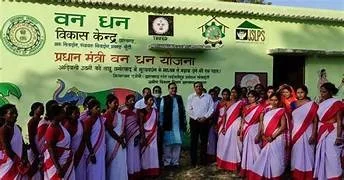
Over two-thirds of such centres functional across India
Srinagar, Mar 20: A flagship Centre-run programme to boost incomes of forest-dependent communities has yet to take off in Jammu and Kashmir, with not a single Van Dhan Vikas Kendra operational in the Union Territory despite 100 being sanctioned.
As per the official data available with Rising Kashmir, while 29,791 beneficiaries have been identified under the scheme in J&K, zero centres are functional, and no sales have been recorded so far, pointing to a complete absence of on-ground rollout.
The VDVKs, conceived as decentralised processing and marketing units for minor forest produce (MFP), are a key component of the Pradhan Mantri Janajatiya Vikas Mission (PMJVM), meant to enable tribal communities to aggregate produce, undertake value addition, and access formal markets, reducing dependence on intermediaries.
In J&K, however, the scheme appears to have remained confined to sanction. The contrast with the national picture is stark. Across the country, 4,162 VDVKs have been sanctioned, of which 2,817 are operational, with reported sales exceeding Rs 158 crore, the data shows.
The gap assumes significance in a Union Territory where a large tribal population, particularly Gujjars and Bakarwals, depends on forest produce for livelihood. In the absence of functional centres, the intended value chain from procurement to processing and marketing remains broken.
Raising questions about the reach of other linked interventions, the Minimum Support Price (MSP) scheme for minor forest produce, which covers 87 items and is aimed at protecting tribal gatherers from distress sales, relies on local procurement and aggregation mechanisms. Without operational VDVKs, its effectiveness in J&K is likely to be limited.
At the national level, the government has reported progress under the Forest Rights Act (FRA), with over 41,000 Individual Forest Rights (IFR) titles and more than 8,400 Community Forest Rights (CFR) titles distributed since late 2024. But the absence of disaggregated data for J&K makes it difficult to assess how far these gains extend to the UT.
Officials have pointed to improved incomes and branding of tribal products in several states under the VDVK model.
In J&K, however, the absence of operational units suggests that the scheme has yet to translate into tangible economic outcomes.
