


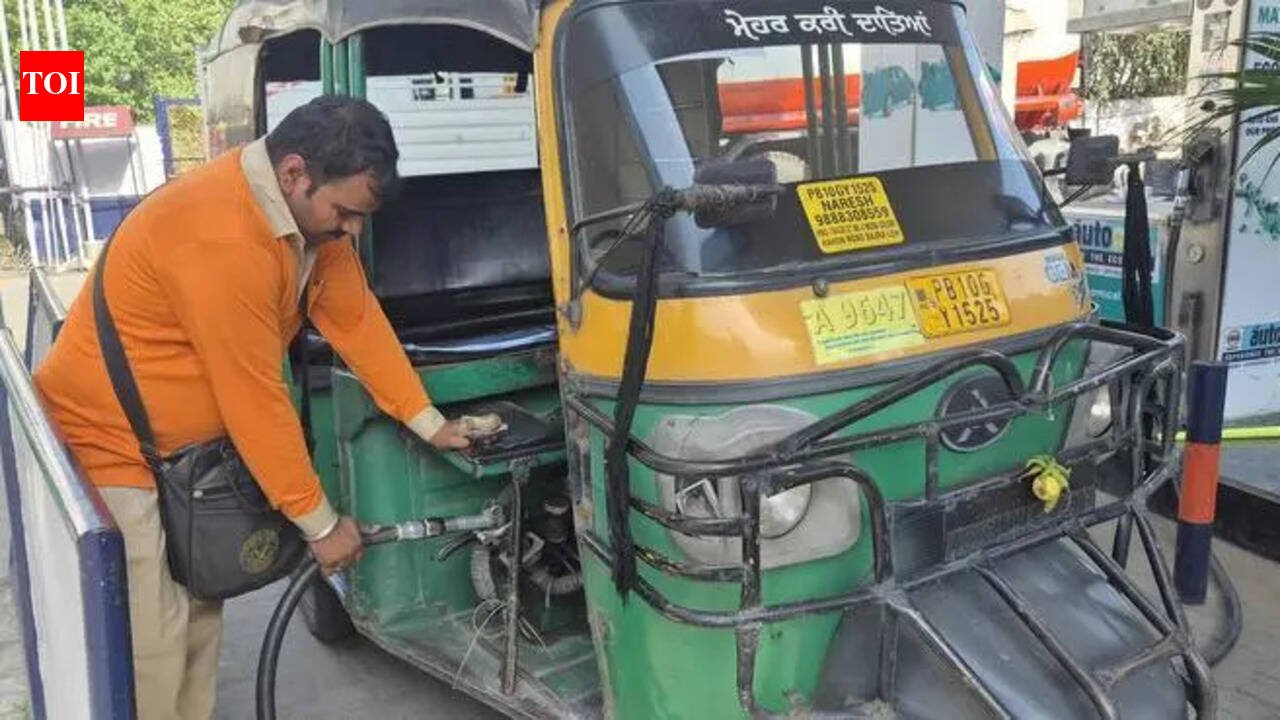
Ludhiana: The ongoing shortage of domestic LPG cylinders has created an unexpected ripple effect in the city, pushing auto-rickshaw drivers towards the two petrol pumps that legally supply LPG for vehicles. Both outlets have reported an unprecedented surge in demand over the past few days, driven largely by auto-rickshaws that previously relied on domestic cylinders for cheaper fuel.Petrol pump owners said the inflow of vehicles has increased considerably. Ashok Sachdeva, chairman of the Petrol Pump Dealers Association Punjab, said daily LPG sales at his Ferozepur Road outlet have risen sharply. “If we were selling around 300 litres earlier, the figure has now crossed 3,000 litres,” he said, attributing the increase to disruption in availability of domestic LPG cylinders.For years, many auto-rickshaw drivers have been illegally sourcing LPG from domestic cylinders because of the lower cost. LPG supplied in cylinders typically costs around Rs 80 per kg to Rs 85 per kg. With one kilogram of LPG equivalent to roughly 1.85 litres, drivers effectively get gas worth nearly Rs 120 for just Rs 80. In comparison, authorised LPG for vehicles at fuel stations is priced at around Rs 63.44 per litre, making legal refuelling significantly more expensive for auto drivers.“From cylinders, we get gas in kilograms, which costs less. Here at petrol pumps, it is around Rs 64 per litre, so it becomes costlier for us,” said an auto-rickshaw driver, requesting anonymity.Another auto driver, Aman, said aligning LPG pump prices with cylinder rates could eliminate the illegal practice. “If the govt reduces the rates at fuel stations to match cylinder prices, people will automatically shift to legal refuelling,” he said.With the shortage restricting access to domestic cylinders, auto-rickshaw drivers have had no option but to switch to authorised pumps despite higher costs. Staff at these pumps said the easy and illegal availability of cylinders among auto drivers had been suppressing their LPG sales for years. “We were even considering shutting down the LPG facility because of limited sales. Now suddenly, demand has shot up,” a staff member said.Dealers have raised concerns that using domestic cylinders for vehicles is not only illegal but also unsafe, as auto-rickshaws lack the fittings and safety standards required for such usage. “It is highly unsafe and also results in revenue loss for the government. There needs to be stricter enforcement to stop this malpractice,” the staff member added.While there is little difference in one kg and one litre in water and milk, but in LPG, 1kg of gas is equivalent to 1.96 litres. There are nearly 35.3 litres of LPG in an 18kg cylinder. So purchasing one kg of gas for Rs 80 is more cost effective for LPG auto-rickshaw drivers. Equivalent of this in litres would be Rs 120.
