


Last Updated:
The BJP has largely stayed away from handing tickets to film stars or turncoats, so as to avoid a repeat of 2021 when many defectors distanced themselves when the party lost
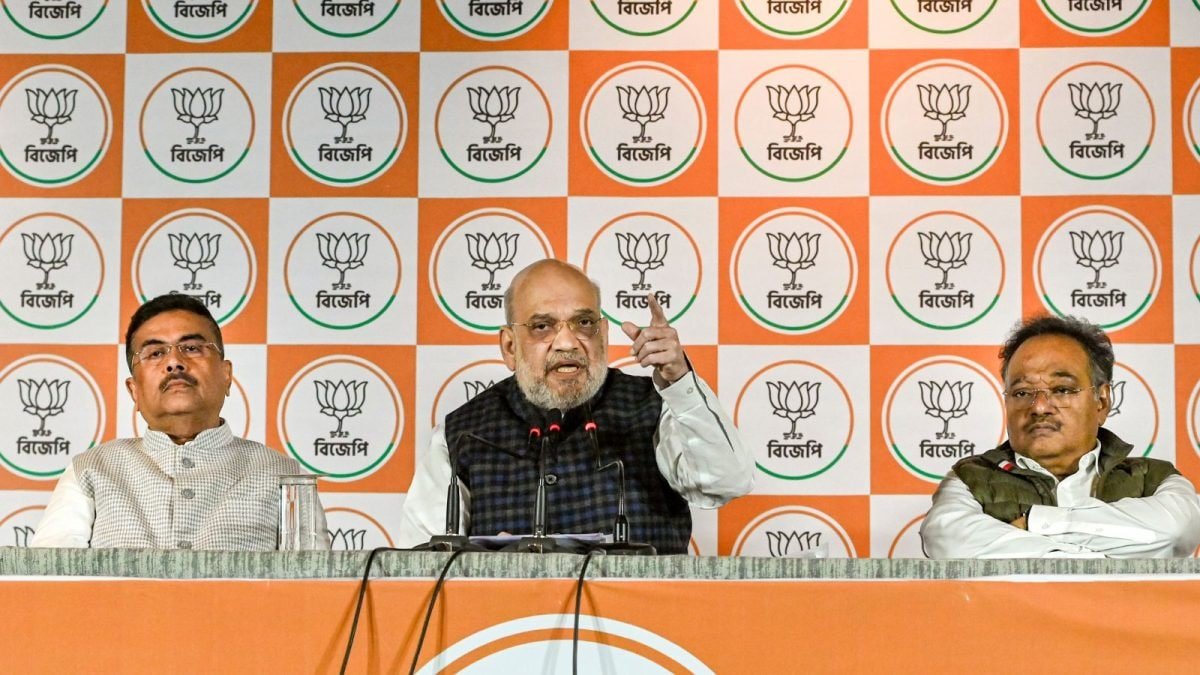
The BJP released its first list of candidates for the West Bengal assembly election on March 16, 2026. (Image: PTI/File)
The BJP’s first list of 144 candidates for the West Bengal assembly election features several prominent names – from Suvendu Adhikari and Dilip Ghosh to Swapan Dasgupta and Agnimitra Paul.
The headline moment from the list is Adhikari stepping into Chief Minister Mamata Banerjee’s political bastion of Bhabanipur, raising the prospect of another high-voltage electoral contest reminiscent of their dramatic 2021 battle in Nandigram.
But beyond the big names, the more understated story of the list lies elsewhere. This time, the BJP appears to have placed a deliberate emphasis on its grassroots cadre.
Unlike the previous election cycle, it has largely stayed away from handing tickets to film stars or political turncoats – a clear attempt to avoid a repeat of 2021, when several defectors distanced themselves from the party soon after its defeat. Another notable aspect of the list is the space given to candidates from socially and economically marginalised backgrounds.
Many of them are long-time workers, who see their association with the saffron party not as a temporary political stopover but as a reflection of ideological commitment built over years of organisational work.
Check Full List Of BJP Candidates, Constituencies For West Bengal Assembly Polls
KALITA MAJI: THE HOUSE HELP CANDIDATE
In the Ausgram assembly constituency, the BJP has once again turned to a grassroots face by fielding Kalita Maji, underlining its effort to project leaders from humble backgrounds.
Maji, who works as a house help, has been associated with the BJP for several years and has remained active in organisational work despite her modest circumstances.
Coming from an economically weaker section, Maji has slowly built her political presence through local engagement and party work. She had also contested the 2021 assembly election from Ausgram on a BJP ticket.
Although she lost the race by around 12,000 votes, she secured close to 41 percent of the vote – a performance that helped establish her as a recognisable local face. By giving her another opportunity, the party appears to be signalling that long-time workers who have built the party at the grassroots level will continue to find space in its political strategy.
CHANDANA BAURI: FROM HOUSE HELP TO MLA
For much of her life, Chandana Bauri’s days were defined by hard work and financial struggle. She worked as a house help – washing dishes, cleaning homes and doing whatever work she could find to support her family.
Bauri’s life took a dramatic turn in 2021 when the BJP fielded her from the reserved Saltora assembly constituency.
Defying expectations, Bauri went on to win the seat quickly emerging as one of the most talked-about grassroots leaders in West Bengal politics. During her tenure as MLA, she focused on local development projects in her constituency.
Boroshal Road was constructed, sheds were built at several temples, solar lights were installed in rural pockets, and drinking water facilities were improved. She worked on strengthening infrastructure at the Ananda Marga School, addressing long-standing demands from residents.
The MLA’s work on the ground has helped cement her reputation as a leader with strong local roots. Recognising her performance and connect with voters, the BJP has once again fielded her from Saltora reaffirming its faith in a leader whose journey reflects resilience and grassroots politics.
TARUN KANTI GHOSH: FROM FOOT SOLDIER TO CANDIDATE
In another example of its focus on organisational workers, the BJP has given a ticket to long-time party worker Tarun Kanti Ghosh from the politically sensitive Deganga assembly constituency.
Ghosh’s political journey has been marked by a gradual rise through the ranks. He began his career at the block level as a local organiser, helping build the party’s network in the area.
Over time, Ghosh moved into local governance becoming a panchayat member and later serving as the upapradhan of a panchayat in the Deganga region. He currently serves as the president of the BJP’s organisational district of Barasat, placing him at the centre of the party’s activities in the region.
Within the organisation, he is seen as one of the many grassroots workers who quietly keep the party machinery running. From organising community gatherings to arranging public listening sessions for Prime Minister Narendra Modi’s ‘Mann Ki Baat’, he has maintained a steady presence on the ground.
Party workers said Ghosh regularly takes part in local religious and cultural events, and conducts door-to-door outreach to strengthen the BJP’s connection with voters. By fielding him from Deganga, the party appears to be sending a clear message: long-time organisational workers, who have helped build the party’s base at the grassroots level, will not remain confined to the background.
March 17, 2026, 06:30 IST
Read More
