


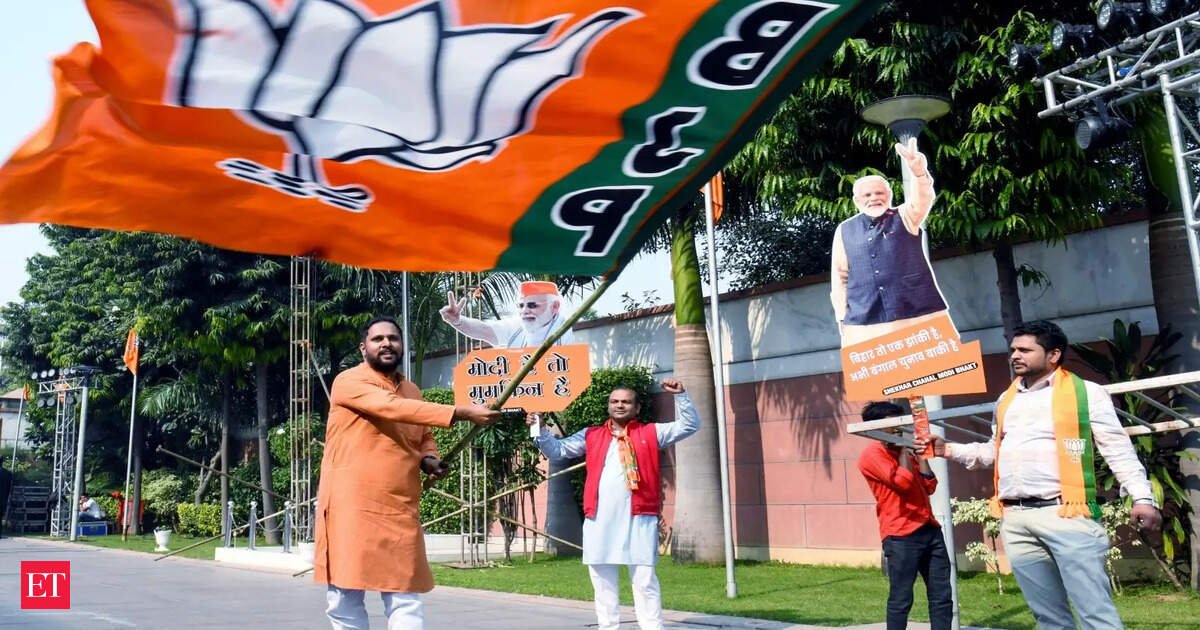
While recent state elections reaffirmed the BJP’s dominance and dampened the opposition’s hopes after their relative gains in the parliamentary polls, the next electoral cycle will indicate whether the party can translate that momentum into breakthroughs in politically challenging territories.
Also Read: Election dates 2026: EC announces poll dates for five assemblies; West Bengal in two phases
The election announcement comes at a time when opposition parties have stepped up attacks on the Narendra Modi government over issues including the proposed trade agreement with the United States, energy concerns arising from the West Asia crisis, and the Special Intensive Revision (SIR) of electoral rolls. The polls are expected to offer a window into the public mood amid these debates.
The BJP enters the contest in Assam where it has been in power since 2016, with confidence. However, the party is approaching elections in Tamil Nadu, Kerala and especially West Bengal with varying degrees of expectation, as it has never governed in these three states.
More than the Congress, regional parties have emerged as the BJP’s principal challengers in these states. West Bengal Chief Minister Mamata Banerjee and Tamil Nadu Chief Minister M K Stalin both vocal critics of the BJP will lead their respective parties in the upcoming electoral battle.
Of the four poll-bound states, the BJP is currently in office only in Assam. The party is also part of the ruling alliance in the Union Territory of Puducherry.
Outside Assam, West Bengal remains the BJP’s most significant battleground, where it is the principal challenger to the Trinamool Congress (TMC). In Tamil Nadu, the BJP has taken the lead in stitching together an alliance under the AIADMK’s leadership to challenge the ruling DMK-led bloc.
In Kerala, the contest traditionally remains between the CPM-led Left Democratic Front (LDF) and the Congress-led United Democratic Front (UDF). However, the BJP which secured nearly 17% vote share in the 2024 Lok Sabha elections is seen as a potential factor that could influence the final outcome.
Also Read: CPI(M), CPI candidates begin poll campaign as UDF, NDA finalise lists
Prime Minister Narendra Modi has spearheaded the BJP’s outreach campaign in these states, combining development programme launches with political rallies. His latest stop was West Bengal, where he addressed a rally in Kolkata on Saturday.
The BJP believes its campaign focusing on Hindu identity, concerns over alleged infiltration from Bangladesh, and accusations of misgovernance against the TMC has resonated with voters. During his rally, Modi sharpened his criticism of Banerjee, alleging that her policies were aimed at reducing Hindus to a minority in the state.
Banerjee, who has been in power since 2011, has so far managed to blunt the BJP’s challenge. However, the party’s steady vote share of around 38–39% in recent elections has given it a strong base to mount a renewed challenge.
In Assam, under Chief Minister Himanta Biswa Sarma, the BJP has made alleged illegal immigration from Bangladesh a key campaign issue, combining it with appeals to regional identity in the northeastern state.
With inputs from TOI
