


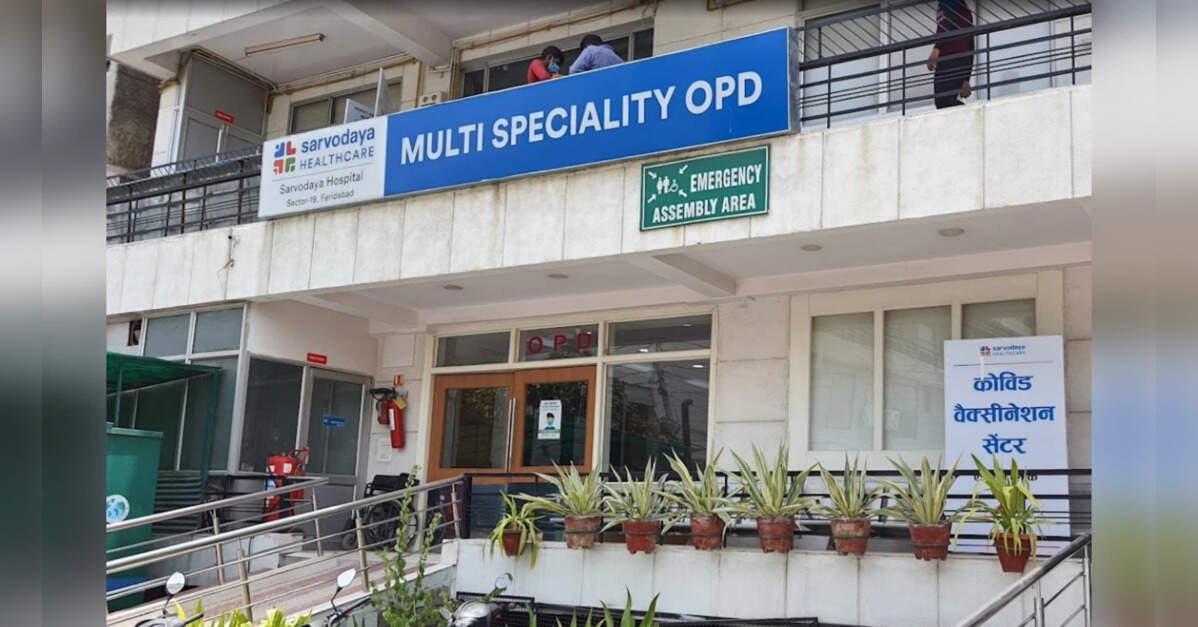
New Delhi: Sarvodaya Healthcare has acquired Nayati Hospital in Mathura through the Insolvency and Bankruptcy Code process, following approval from the National Company Law Tribunal (NCLT), in a move aimed at strengthening access to advanced tertiary healthcare services in western Uttar Pradesh.
With the acquisition, Sarvodaya Healthcare’s total bed capacity has expanded from 800 to 1,200 beds across the group. The Mathura facility, which will operate under Sarvodaya Healthcare’s management, has a capacity of 400 beds and is expected to become fully operational by June 2026.
The hospital will focus on key specialties including cardiology and cardiac surgery, oncology, orthopaedics and joint replacement, neurosciences, gastroenterology and critical care. The group also plans to pursue national quality accreditations such as National Accreditation Board for Hospitals & Healthcare Providers (NABH) and National Accreditation Board for Testing and Calibration Laboratories (NABL).
The facility includes 100 ICU beds, nine modular operation theatres, advanced diagnostic services, and 24×7 emergency and trauma care. Sarvodaya Healthcare said it plans to invest in technology upgrades, strengthen clinical infrastructure, and recruit specialist doctors as part of the hospital’s operational revival.
Commenting on the development, Rakesh Gupta, Group Chairman of Sarvodaya Healthcare, said the acquisition reflects the group’s commitment to expanding access to “world-class, affordable and compassionate healthcare.”
“The hospital has been developed as a comprehensive super-speciality facility with modern operation theatres, advanced patient wards, specialised critical care units, and a 24×7 emergency and trauma centre, enabling the delivery of round-the-clock medical services,” Gupta said.
With this acquisition, Sarvodaya Healthcare now operates 1,200 beds across its facilities, supported by 29 operation theatres, 275 ICU beds and a workforce of more than 5,500 healthcare professionals. The group continues to expand its presence across North India, building on its footprint in the Delhi-NCR region while strengthening access to specialised care in emerging urban centres.
