


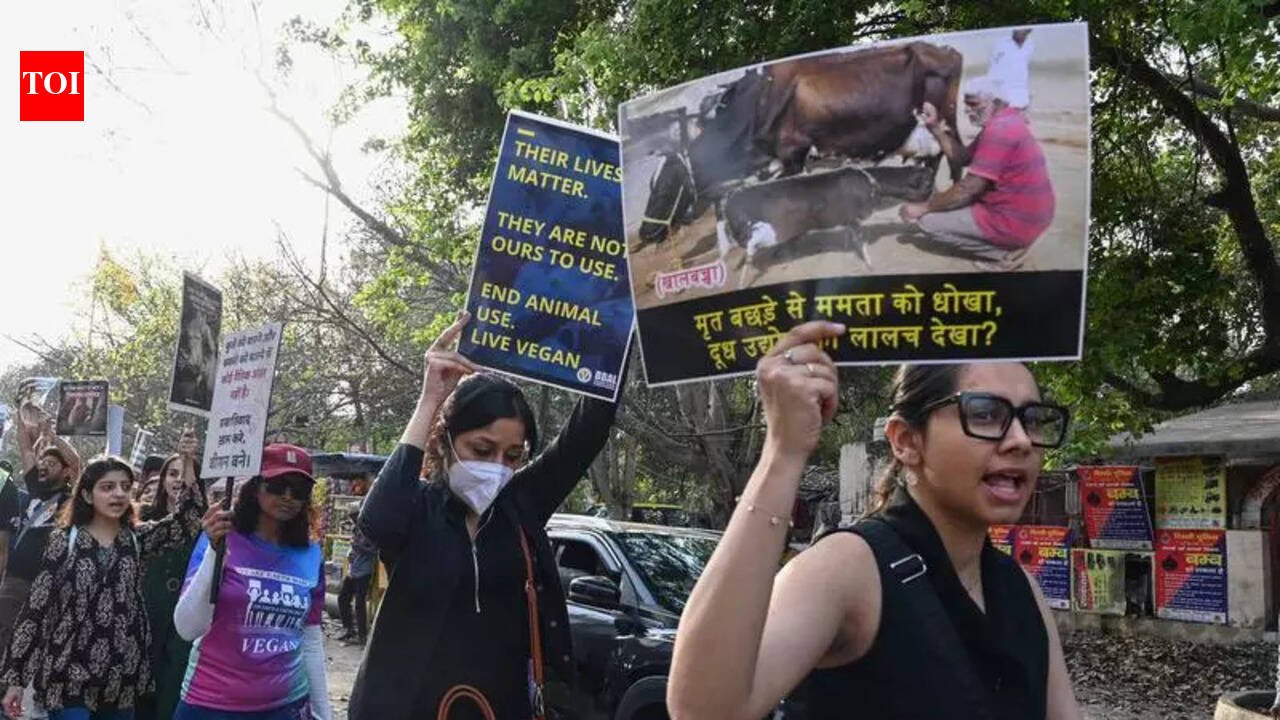
New Delhi: Hundreds of citizens walked from Tagore Garden to Rajouri Garden on Sunday as part of Animal Rights March Delhi 2026, a peaceful yet powerful demonstration calling for structural reforms to end institutional animal cruelty.Activists, professionals, students and families walked side by side, united by a shared call for compassion and justice for animals. Their message was clear: break every cage, liberate all animals, and challenge speciesism in society.As the marchers held their posters towards passing traffic, cars slowed and some drivers rolled down their windows to read the messages. Others looked on with curiosity.Among the marchers was Sabir, a man in his 30s who works in the IT sector. Behind his simple placard was a journey of 20 years. He was vegetarian for a decade before becoming vegan 10 years ago, a decision that set him apart from his community.“We are conditioned to believe we cannot survive without these things,” the Faridabad resident said while walking. “For instance, humans don’t need the milk of other animals. A baby needs only the mother’s milk. After that, it’s unnecessary. The same applies to leather and many other products. We believe they are essential, but they are not. The first step should be shutting down slaughterhouses and dairy farming.” Organised by Delhi Unites for Animal Liberation, in collaboration with YV Care, One Just World, Vegan India Movement and World Vegan Vision, the march called for stronger enforcement of animal protection laws and phasing out industrial animal farming.Manjira Banerjee, part of the organising team, said, “We speak up for animals through regular protests, including a march on World Vegan Day, because the punishment for animal cruelty is negligible. Billions of animals are killed every year for food, fashion and experimentation, which is unacceptable in this day and age. We demand stricter laws and stronger punishment to stop such cruelty.” Further down the road walked Pratik, who travelled from Indore to attend the march. “Leather, dairy, honey, silk,” he said, shaking his head. “We rarely think about what animals go through to give us these things. They deserve freedom just like us. If people simply knew the truth, many would change.” Not far from him were Pankaj Sharma and his wife, who came from Ghaziabad. They left their eight-month-old child at home with family so that they could attend the march. Pankaj gently held his wife’s hand as they walked. “When you become parents,” he said, “you understand what separation means. A baby needs its mother. When we learned that animals are separated from their babies for dairy and other industries, it felt unbearable.“Their journey began two years ago with an Instagram post that led them to a documentary about animal slaughter. What they saw changed them completely. Within months, they became vegan and started attending animal rights movements.Walking at the front of the march, Banerjee said, “People are often told animals are ‘happy’ before slaughter, but the reality is very different. Billions of animals are killed every year for food, fashion and experimentation. The punishment for cruelty is negligible. We need stronger laws and real accountability.” As the crowd reached Rajouri Garden, the voices echoed louder, and the marchers knew they were raising their voices for those who had none.
