


KOLKATA: Bengal will go to the polls in two phases in April — on 23rd and 29th — the fewest in an assembly election in the state since the 2001 fight.In 2001, Bengal saw a single-phase assembly election. In 2021, the polls were spread across eight phases. In between, the assembly elections were held in five or six phases.Announcing the schedule on Sunday, chief election commissioner Gyanesh Kumar said the 294 assembly seats in Bengal will go to the polls on April 23 and April 29 and the results will be out on May 4, along with the election outcome in 3 other states and 1 UT.In the first phase, scheduled for April 23, polling will be held in 152 assembly constituencies across 16 districts: Cooch Behar, Alipurduar, Jalpaiguri, Darjeeling, Kalimpong, North Dinajpur, South Dinajpur, Murshidabad, Malda, Jhargram, Purulia, Bankura, Birbhum, East Midnapore, West Midnapore and West Burdwan. In the second phase, 142 constituencies in seven districts — Kolkata, Howrah, Hooghly, North 24 Parganas, South 24 Parganas, Nadia and East Burdwan — will go to the polls on April 29.
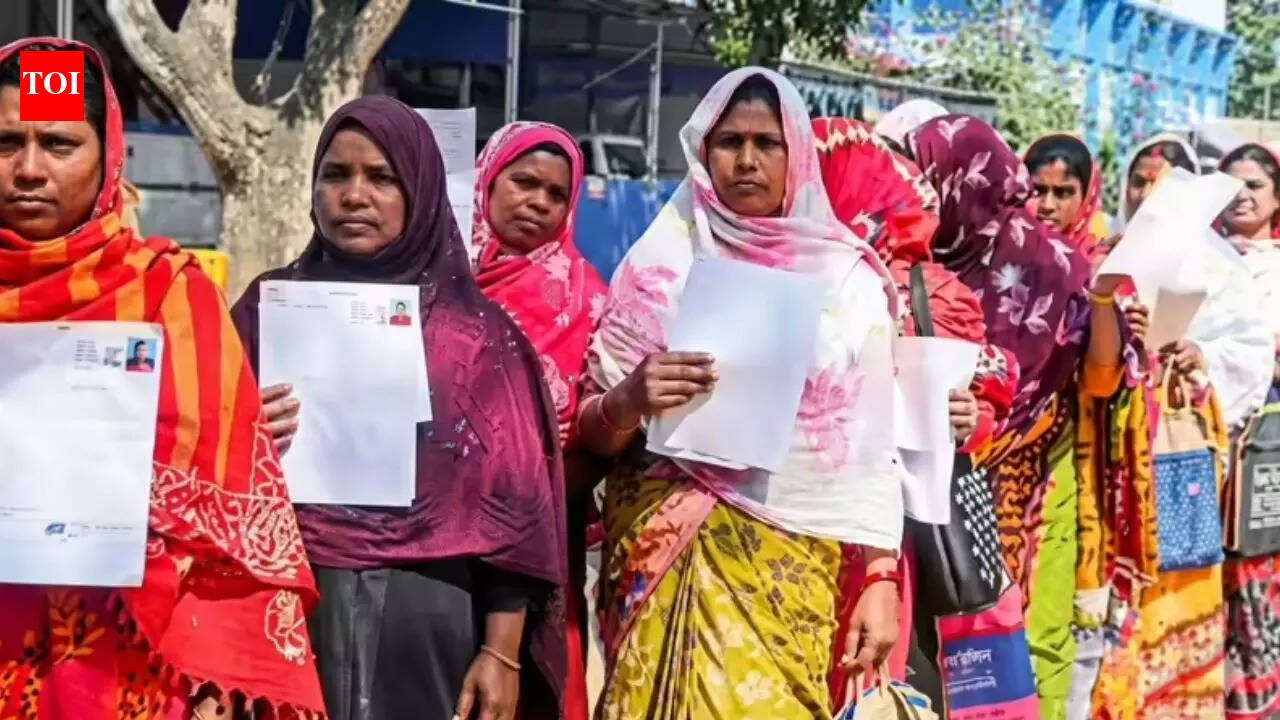
Responding to a query on the reduction of phases in the Bengal assembly elections, the CEC said, “With regard to the West Bengal elections being held in two phases instead of the previous eight, the commission has held detailed deliberations. In its considered opinion, it was found necessary to reduce the number of phases to an extent where it is convenient for everyone.”He added that all necessary arrangements would be made to ensure the polling is free, fair and violence-free.According to sources, EC will deploy a general observer in each of the 294 constituencies and around 100 police observers across the state.During EC’s full bench visit to Kolkata last week, CPM and BJP pleaded for a two-phase election, while Congress favoured a maximum of three phases. Trinamool Congress did not indicate any preference.The reduction in the number of phases comes amid intense political controversy over the Special Intensive Revision of the electoral roll, which saw the deletion of 63 lakh names and placed around 60 lakh electors in the “under adjudication” category.Defending the SIR, the CEC said, “Pure electoral rolls are the bedrock of free and fair elections. SIR was conducted to ensure that no eligible elector is left out and no ineligible elector is included in the roll.”Asked about the supplementary voters’ list, to be released based on the disposal of “under adjudication” cases by judicial officers, Kumar said, “As far as the list under adjudication is concerned, as I mentioned earlier, the learned judges are looking into cases individually. Whichever cases are approved by them shall be included in the final electoral rolls by way of a supplementary list, in terms of the orders of the Honourable Supreme Court.”The gazette notification for the Bengal polls will be issued on March 30 for the first phase and on April 2 for the second.The last date for filing nomination is April 6 for the first phase and April 9 for the second. Nomination papers will be scrutinised on April 7 for the first phase and April 10 for the second. The last date for withdrawal of nomination is April 9 for the first phase and April 13 for the second.Responding to a query regarding the request for detailed information on officers-in-charge of police stations and their supervisors for violence after the 2021 assembly elections and the 2024 Lok Sabha polls, the CEC said, “With regard to the police officers who were involved in violence in earlier elections, the list has been sought — as was shared with the media during our visit to West Bengal — and necessary action shall be taken as per the law.”
