


Guwahati: The 2026 Assam assembly elections will unfold on a radically transformed political map caused by the delimitation exercise of 2023 which has redrawn boundaries, dismantled old bastions, and re-engineered voter demographics for the first time in nearly half a century.This new political geography has not only altered the balance of power but also forced every major party to rethink its strategies in a battlefield in the state.
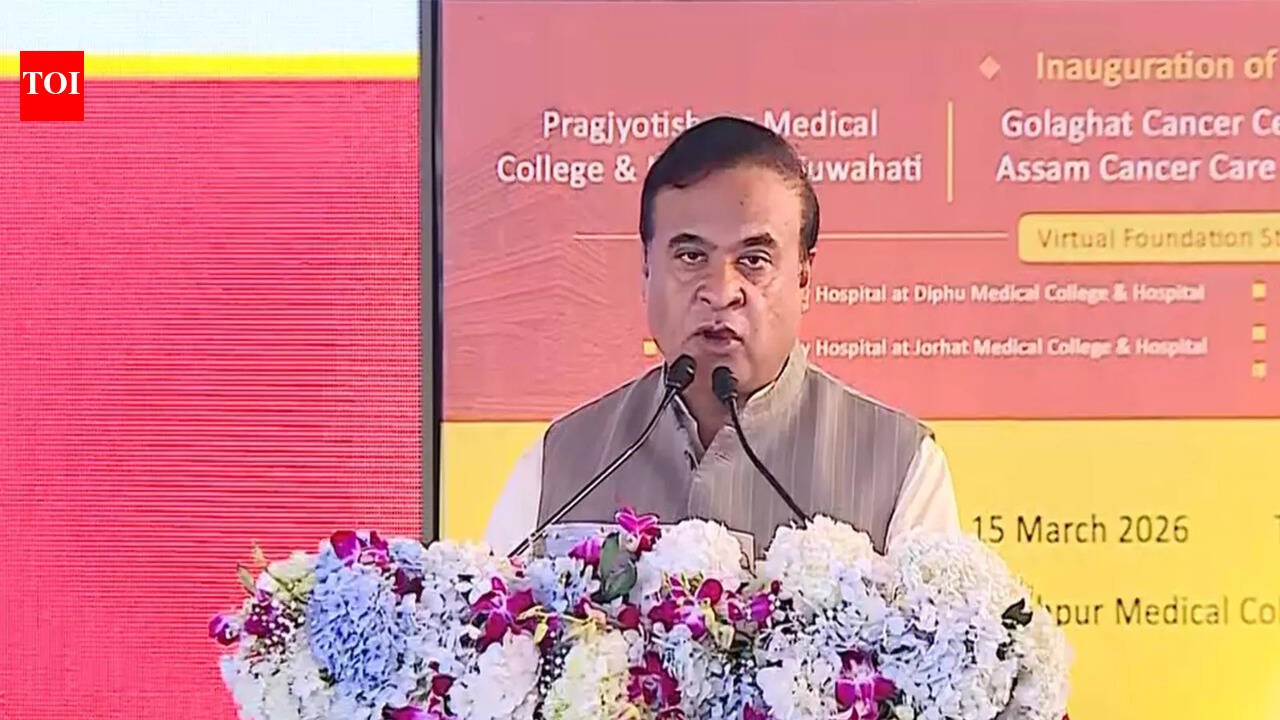
The delimitation has diluted several constituencies where Bangladesh-origin immigrant Muslims have been the decisive voters. This has reduced the number of seats where parties such as the All India United Democratic Front (AIUDF) and Congress traditionally held sway.This shift has also increased the influence of tribal voters with an increase in number of reserved seats for ST from 16 to 19.CM Himanta Biswa Sarma said the delimitation exercise has made indigenous communities decisive voters in as many as 103 of 126 seats. The state for long has been plagued by Muslim infiltrations from Bangladesh, many of whose citizenship have been regularised under the Assam Accord of 1985, yet their original identity remains firmly entrenched.In 2021 election 31 Muslim candidates had won, 15 of them from AIUDF and rest from Congress. The redrawing of constituency boundaries has resulted in many of these constituencies getting fragmented and merged with indigenous-majority areas, diluting their demographic heft. This has shrunk the number of Muslim-decisive seats to 23 now.BJP, which is already in govt for two successive terms, appears to have consolidated its advantage under this new setup, focusing on identity politics, welfare schemes, and grassroots mobilization to secure support among indigenous groups.The BJP-led govt’s relentless drives to evict encroachers from forest and govt lands, nearly all Bangladesh-origin Muslims, coupled with land pattas granted to indigenous landless families and descendants of tea garden workers brought by the British from Chota Nagpur plateau 200 years ago, have positioned CM Sarma as a no-nonsense leader and the sole protector of the indigenous Assamese people’s ‘jati’, ‘mati’, ‘bheti’ (identity, land, and homeland), which has been BJP’s unyielding poll plank since 2016.Coupled with the BJP’s potent identity politics, the govt’s pre-poll 2025-26 Assam budget unleashed over ₹5,000 crore of financial benefits to women and youth empowerment, undergraduate and graduate students, young entrepreneurs, NFSA subsidies, one-time aid to tea workers, and funds for namghars (Vaishnavite temples).On top of this, BJP has fulfilled its 2021 promise of providing one lakh jobs — and gone beyond with an additional 60,000 appointments. The clinching factor has been the revival of the state public service commission, once mired in corruption but now cleansed and restored as a credible recruitment body.With indigenous and tribal constituencies gaining prominence, BJP’s allies, Asom Gana Parishad (AGP), Bodoland People’s Front (BPF), United People’s Party Liberal (UPPL) and Rabha Hasong Joutha Mancha are also well-positioned to expand their reach.For Congress, the delimitation has posed a serious challenge. The party’s traditional bases have been fragmented, forcing it to stitch a mega alliance of several regional parties — Assam Jatyia Parishad, All Party Hill Leaders Conference and CPM and CPI(ML). While the party remains the principal opposition, its ability to consolidate anti-incumbency sentiment is weakened.Further, chief minister Sarma’s direct attack on APCC president Gaurav Gogoi and his British wife over their alleged Pakistan links, armed with an SIT investigation report is seen as an electoral dynamite ahead of the polls.Congress cries “political vendetta,” with Gogoi dismissing it as “bogus propaganda” tied to his wife’s legitimate work, but BJP smells blood, amplifying it via rallies to paint the opposition as soft on infiltration.Without a strong regional narrative, Congress risks being overshadowed by BJP’s dominance in the reconfigured constituencies.Amid BJP’s identity push, AIUDF led by Badruddin Ajmal, faces perhaps the most severe impact. Its strongholds in Muslim-decisive areas have been diluted, leaving the party with fewer winnable seats. The once minority-based party appears to struggle to remain relevant in the new political setup, with its minority-centric strategy losing traction in constituencies now dominated by indigenous voters.The last delimitation of assembly and parliamentary constituencies in Assam was carried out in 1976, based on the 1971 census. For nearly five decades, the state’s political geography remained unchanged, even as demographic shifts, migration patterns, and population growth altered the ground realities.This makes the upcoming elections not just a contest for power, but a turning point in Assam’s political trajectory, with the first realignment of constituencies in 50 years, reshaping who holds influence and who risks marginalization.
