


To a casual observer, everything in south Florida’s real estate garden is looking rosy. There’s a “gold rush” in Miami as ultra-wealthy buyers snap up mega-mansions and luxuriously appointed condos as soon as they hit the market; and the Guardian has also reported recently on the “Mamdani effect” of elite New Yorkers arriving in the sunshine state with bulging pocketbooks in search of a high-priced escape from the city’s new mayor.
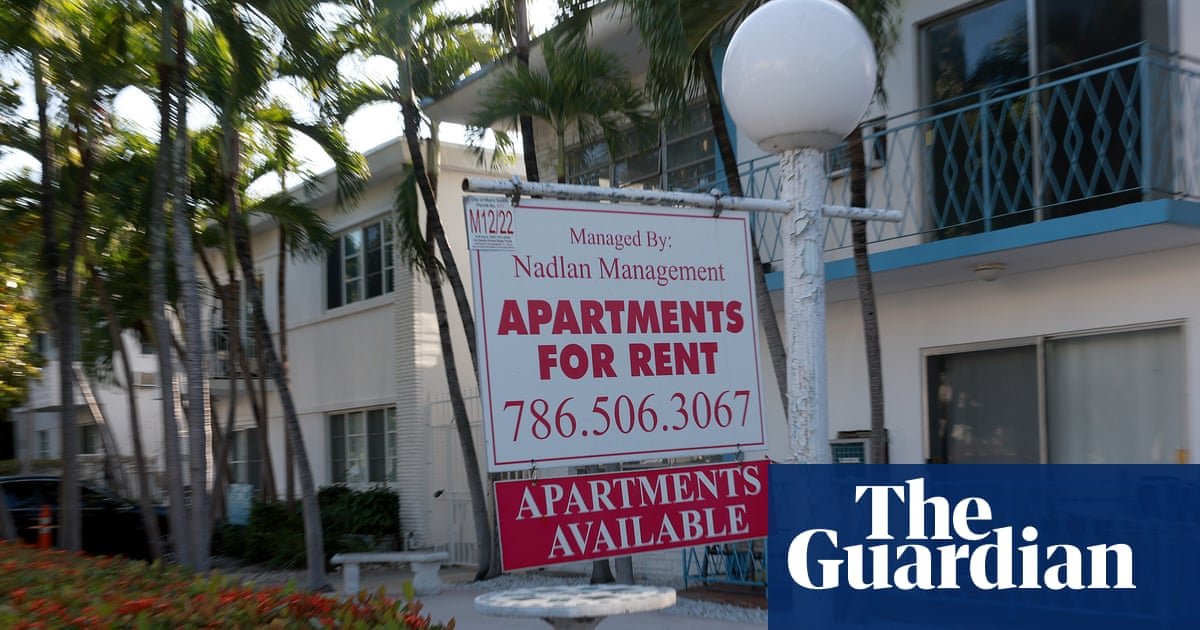
Yet alongside the boom, there are rumblings of a more troubling parallel reality. Undoubtedly, the billionaire class is helping to pump even more dollars into an already thriving Florida economy. But as prices rise and the less affluent find everything from housing and insurance to gas and groceries increasingly expensive, many are considering doing something about it.
A recent poll by Florida Atlantic University (FAU) showed at least half of the state’s residents were thinking about leaving because of the cost of living, with 80% of those citing concerns with housing affordability.
Experts say there is no full blown panic, and little indication that traditionally lower-paid essential workers in education, healthcare and other service industries that cater to the newcomers are yet leaving in droves. Even Eric Levy, senior business economist at FAU and co-author of the poll, said he prefers to see it as confirmation that the American Dream is alive and well as families make plans to better their circumstances.
Evidence pointing toward trouble to come is more than just anecdotal. Significantly above-average housing costs in many areas have helped propel Florida into the top 10 most expensive states to live; and the popular metropolitan region incorporating Miami and Fort Lauderdale – where new-built condos can reach well into the tens of millions of dollars – is also notoriously “house poor”. It has three cities in the top six of a Consumer Affairs report into affordability where the percentage of household income spent on housing is 32% or above, compared to the national average of 24%.
A May 2025 report in the Miami Herald, meanwhile, said that while Miami’s population of millionaires increased by 94% between 2014 and 2024, Miami-Dade county experienced a net migration deficit of more than 130,000 people between 2020 and 2023, largely but not entirely because of soaring housing costs.
Some who have moved away speak of high prices and choking traffic driving them out.
“Floridians believe in the American Dream, but they are paying dearly for it,” Monica Escaleras, chair of FAU’s department of economics, said in a statement accompanying the poll. “The Florida promise of sun, growth and upward mobility remains alive, but it is getting expensive to hold on to.”
Levy said the “grass is greener” sentiment was not exclusive to only Florida residents, but the growing wealth disparity of those coming and going was notable.
“It’s certainly thought provoking that if a lot of wealthy people are moving in, are they going to displace the lower income and middle income folks?” he said.
“It’s definitely an interesting question. I don’t think that our data shows that, but I guess the shocking thing from our survey was that a lot of people were considering leaving Florida.”
A scratch around of other related data points to the same conclusion, which is that while superrich buyers are pouring in, enticed by year-round good weather and no state income tax, others are being priced out.
Pediatricians, for example, are becoming increasingly scarce in hospitals and private practice. There are other reasons, including Florida’s unorthodox vaccine policies deterring medical professionals, but few graduating doctors with substantial college debt can afford to lose outsized chunks of their incomes to housing, and choose to find employment instead in states with lower costs.
The steady flow into Florida of new residents also appears to have slowed. A 2025 migration patterns study by Atlas Van Lines survey recorded an almost equal split between numbers arriving and leaving. Between 2023 and 2024, 1,200 people a day were moving in, according to a separate Consumer Affairs study. More recent estimates reflect a sharp slowdown to about 500.
Retaining residents who work in the hospitals, schools, retail stores and other crucial industries and services has become a priority of municipalities and private sector partners, and several affordable housing projects are under way in Miami.
The urgency of the vision is shared by Sebastian Lüdke, chief executive and founder of Germany’s ALP.X Group, co-developer of the upcoming Cloud One Residences, 85 loft style apartments paired with a hotel, and retail and dining hub in Miami’s Wynwood neighborhood.
He opted to build in the popular, revitalized former industrial district away from the opulence of the waterfront multimillion condos of South Beach, and equally expensive, fast-paced downtown Brickell neighborhood. While Cloud One is not an affordable housing development, Lüdke said the project was designed to enhance Wynwood, including providing jobs for local workers.
He said he also believed developers had a moral obligation to the communities in which they chose to build.
“The price point we’re setting starts around $400,000 to $500,000, so local people would definitely be able to afford living and buying in the building,” he said. “But in general, the entire aspect of affordability in the city is an important one, and it goes beyond affordability and into livability.
“What is extremely important for Miami to evolve as one of the great three cities next to New York and Los Angeles is education, improving that from kindergarten to schools to universities. With affordable and accessible education, a certain amount of upskilling of people takes place, which helps them get access to good jobs that will help them with affordability in the long run.
“Also super important is investment in infrastructure, affordable housing, public transport, healthcare… with the growth that Miami has seen, and with the challenges Miami has with traffic, education, the availability of housing, this really needs to be a core focus for public administration and business people that contribute to investments in all these sectors.
“My perception is that local people and business people are well aware of that.”
