


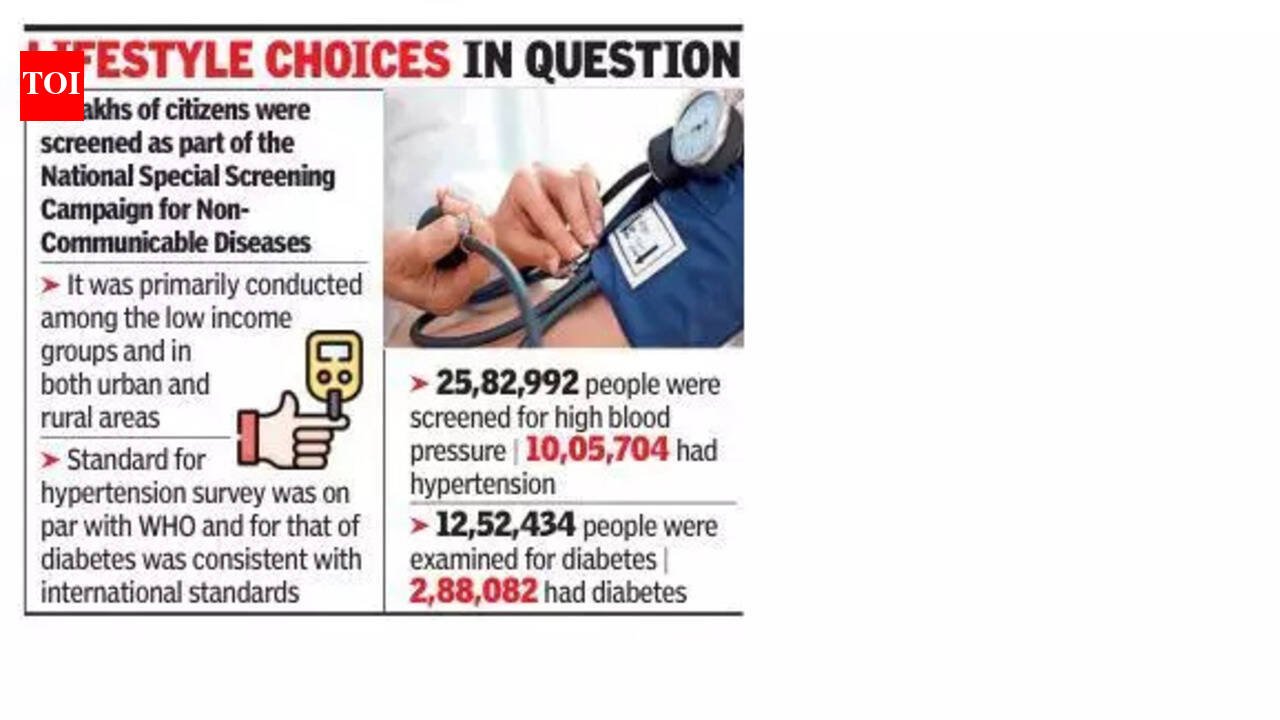
Pune: The state health department’s survey in Feb revealed that out of nearly 26 lakh people, 10 lakh were diagnosed with hypertension. For diabetes, the department screened over 12.5 lakh people. Out of these, nearly 2.9 lakh were found to have diabetes.Against the backdrop of rising rates of high blood pressure and diabetes, lakhs of citizens were screened as part of the National Special Screening Campaign for Non-Communicable Diseases. It was primarily conducted among the low income groups and in both urban and rural areas.It was the first in the state that the health department had conducted a mass campaign to screen lakhs of people in such a short period of time. The numbers indicate the high prevalence of non-communicable diseases in the community.State health minister Prakash Abitkar said, “Thanks to this special campaign, awareness regarding non-communicable diseases was growing among citizens. Moreover, early-stage diagnosis would help prevent serious complications. In the future, emphasis would continue to be placed on conducting such campaigns to screen an even greater number of citizens.”The campaign ran from Feb 1 to 28. Among 25,82,992 people, who were screened for high blood pressure, 10,05,704 had hypertension and out of 12,52,434 people, who were examined for diabetes, 2,88,082 had diabetes. According to the survey, two in every five people had hypertension. Additionally, diabetes was detected in one in every four people. Treatment for these people has begun after diagnosis.Officials in the health department said in many of these cases patients were unaware of their condition.As per the National Health Mission, the standard threshold for hypertension diagnosis was consistent with WHO, India, guidelines at equal or more than 140 mmHg-systolic or more than or equal to 90 mmHg-diastolic.While for diabetes diagnosis in India follows guidelines similar to international standards, primarily using fasting plasma glucose (more than 126 mg/dL), 2-hour post-glucose load (more than 200 mg/dL) or HbA1c (more than or equal to 6.5%)Dr Dattatraya B Patil, consultant – internal medicine at Noble Hospitals and Research Centre, said, “The rise of lifestyle disorders like diabetes and hypertension in Maharashtra was primarily driven by rapid urbanization, sedentary habits and poor dietary choices. Desk-bound work, combined with high-calorie processed sugary and fatty foods, has increased obesity and stress levels. Environmental factors like air pollution and substance use like alcohol, tobbaco, smoking etc, further exacerbate these risks. To combat this, a holistic approach is essential; prioritising regular physical activity, balanced nutrition and stress management. Increasing public awareness and seeking early medical consultations were critical steps for prevention and effective management.”Consultant physician and lipidologist at KEM Hospital, Dr Rashida Melinkeri told TOI, “We know that non-communicable diseases surge from urban air pollution (endothelial injury), high-salt/ultra-processed foods and sugary drinks, sleep loss/shift-work circadian disruption, sedentary time, alcohol binges and chronic stress. The other vulnerable groups include those with central obesity, South Asian ancestry, family history of premature heart diseases, gestational diabetes or preeclampsia, polycystic ovary syndrome, CKD and long-term corticosteroids.““Once diagnosed, the patient must set a tight target and regular monitoring for BP, glucose and LDL/apoB and ensure adherence and monitoring, vaccination and lifestyle changes including tobacco/alcohol cessation support. To limit systemic damage, one must focus on early LDL/apoB reduction, 7–10% weight loss, resistance/aerobic training, sleep regularization, depression care and regular checkups of eye, kidney, foot and coronary artery calcium (CAC) screening,” Melinkeri added.From an ophthalmological perspective, Dr Sharoon Shitole, consultant ophthalmologist in Vencer Hospital, told TOI, “the rise in hypertension and diabetes was deeply concerning because both conditions silently damage the body’s microvascular system long before patients experience symptoms.”“The retina has been one of the few places where these changes can be directly visualised. We increasingly detect ‘hypertensive retinopathy and early diabetic retinopathy even in patients in their 30s and 40s’, particularly among individuals with sedentary work patterns, high digital screen exposure, obesity, sleep disorders and chronic metabolic stress. Those with a family history of metabolic disease, abdominal obesity or pre-diabetes were especially vulnerable,” Shitole said.Dietician Pritee Lale, Inamdar Multispeciality Hospital, said, “The rising cases of hypertension and diabetes were largely linked to modern lifestyle changes, especially in urban areas like Pune. Long working hours, sedentary jobs, processed foods, irregular eating habits, poor sleep and chronic stress contribute to metabolic imbalance. People over 35 years of age, those with family history, abdominal obesity or sedentary professions have been at higher risk. Managing these conditions requires more than just medication.”“A balanced diet rich in whole grains, vegetables, fruits and healthy fats, along with reduced salt and sugar intake, was essential. Regular physical activity, proper sleep, stress management and routine monitoring of blood pressure and blood sugar help prevent complications and maintain overall health,” Lale said.
