


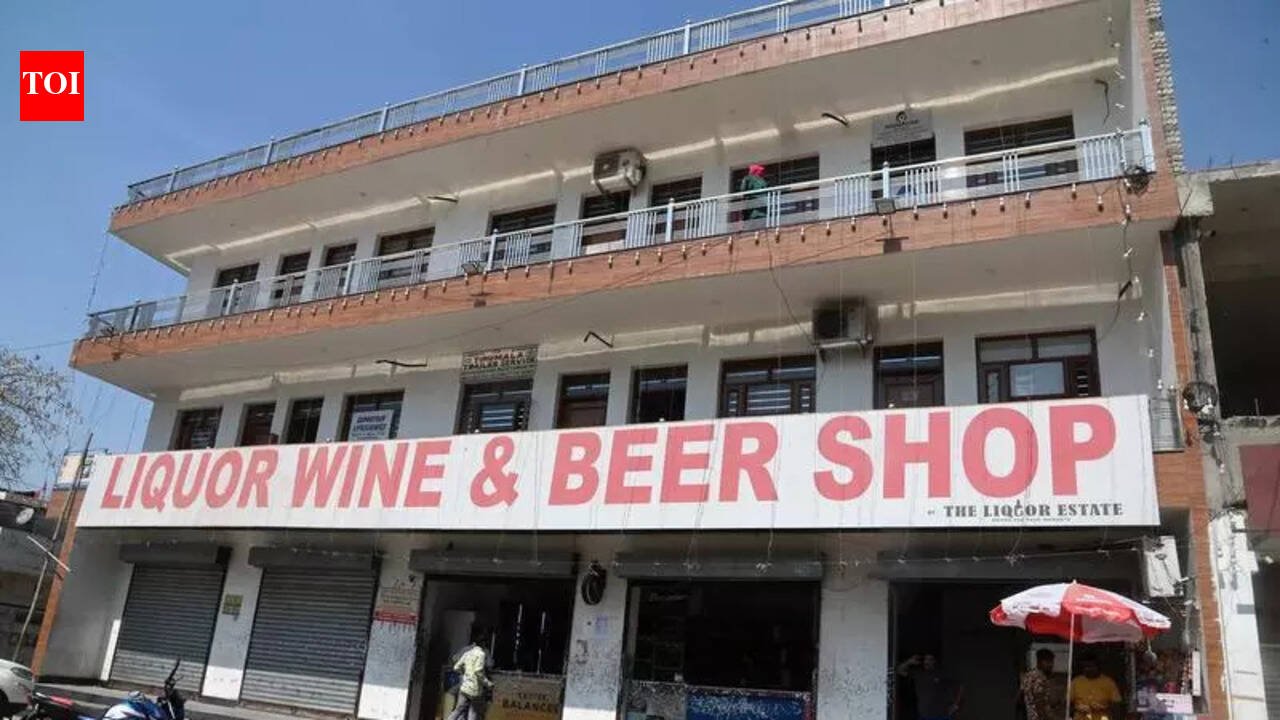
Chandigarh: Nearly 30% of the existing liquor trade groups in Punjab did not opt to renew their licences, indicating a cautious response from a section of contractors to the excise policy this year. Officials, however, said the response reflected strong appreciation for the new policy and termed it a success. At the same time, traders described the non-renewal by a large number of contractors as historically significant, noting that liquor contractors traditionally preferred to renew their licences whenever the option was available. According to official data, out of 207 groups across the state, only 147 renewed their licences, while 60 groups remained pending, translating into an overall renewal rate of about 71%. The response, however, varied significantly across districts, with several reporting a particularly low renewal rate. Nawanshahr recorded the poorest response, with only 1 out of 4 groups renewing the licence, resulting in a 25% renewal rate. Similarly, Fazilka and Ferozepur saw weak participation, each recording only 33% renewal, with 4 of 6 groups pending in Fazilka and 2 of 3 pending in Ferozepur. Other districts that witnessed a relatively poor response included Moga and Pathankot, where the renewal rate stood at 40%, and Kapurthala, which recorded 43% renewal, with 4 out of 7 groups yet to renew. In Hoshiarpur, despite a relatively large number of groups, the renewal rate remained modest at 46%, with 7 of 13 groups yet to opt for renewal. Mohali also saw a moderate response, with 7 renewals out of 13 groups, translating to a 54% renewal rate. Among the larger markets, Bathinda recorded a 60% renewal rate, with 4 out of 10 groups pending, while Ropar registered 67% renewal. On the other hand, several districts reported complete renewal, including Barnala, Faridkot, Fatehgarh Sahib, Gurdaspur, Mansa, Patiala, and Tarn Taran, where all existing groups opted to renew their licences. Major districts such as Ludhiana and Jalandhar reported relatively better participation, with 73% and 76% renewal, respectively, while Amritsar recorded 75% renewal. Sangrur also showed a strong response, with a 91% renewal rate. Punjab excise commissioner Jitendra Jorwal said that around 72% of the groups opted for renewal, which reflected strong appreciation for the new policy. He added that the remaining groups would be allotted through a fresh tender process. The current trend also reflects growing caution among liquor contractors. Traders attribute this largely to the open quota of IMFL under the excise policy, which many in the trade consider a key reason behind mounting financial losses. Industry representatives asserted that, for the excise regime to remain viable and sustainable, the govt may need to regulate the allotment of IMFL under the open quota more stringently. According to industry representatives, the single most important reason for non-renewal during 2025–26 was the heavy financial losses faced by contractors. They attributed these losses primarily to the policy of open quota for IMFL (Indian Made Foreign Liquor), which led to excess supply in the market, intense price competition among retail contractors, and shrinking profit margins that placed many licence holders under financial stress. Retail traders suggested that the oversupply situation largely benefited factories and distillery owners, while retail contractors bore the brunt of aggressive market competition and falling margins. MSID: 129573908 413 |
