


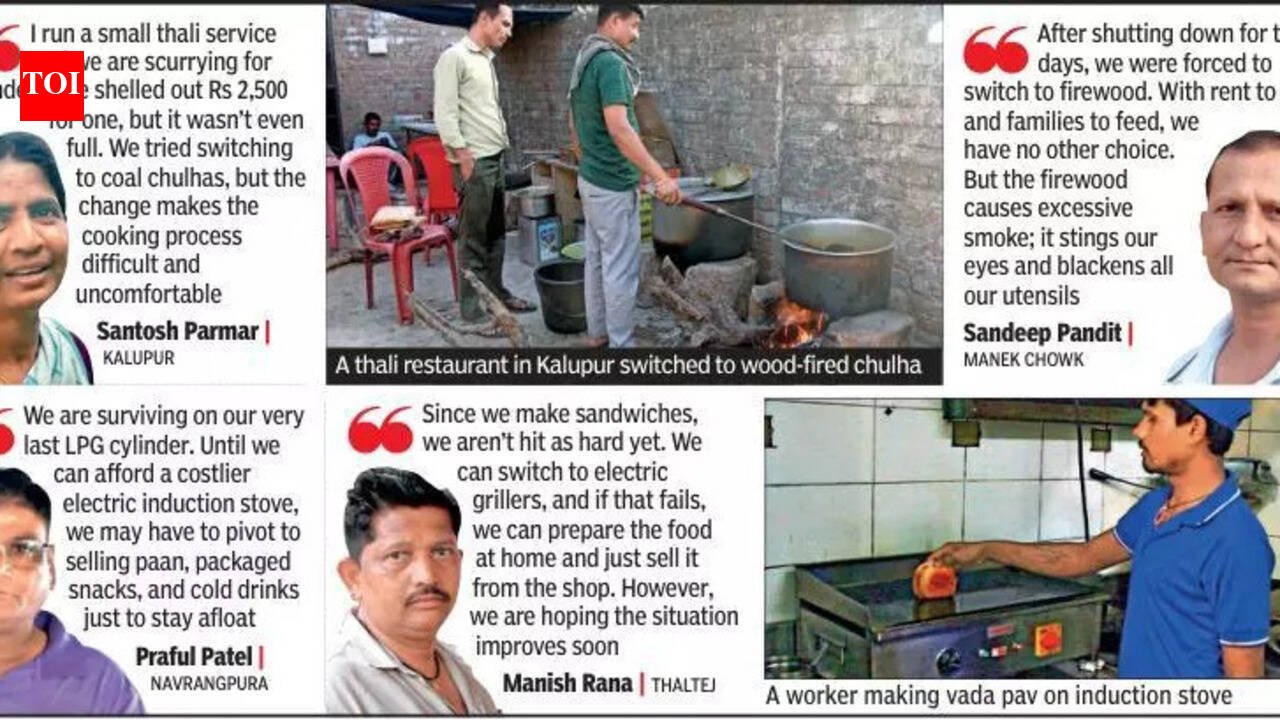
Ahmedabad: At a vada pav eatery in Navrangpura, owner Bhimraj passed the orders to the kitchen on Saturday afternoon as two workers flipped the vada pav on induction plates. “We already switched to electric stoves due to the ongoing issue with the availability of LPG cylinders. They are more practical as commercial LPG cylinders are being sold for as much as Rs 5,000,” he says. The staff is not all that happy, as the induction plates have constant temperatures and cannot be regulated beyond a point.As LPG availability remained an issue primarily for commercial establishments, small eateries and restaurants were busy finding solutions. City-based associations agree that the crunch has yet not reached a critical level, but many are staring at a bleak future if the supply of cooking gas does not resume soon.Skyrocketing demand has made the induction stove expensive and scarce. Chirag Pattani, owner of a food stall in Kalupur, said that he recently enquired about the same, and it was priced at around Rs 15,000 for the quality and quantity he required. “It is a costly investment for us, but if we want to keep the business running, I may have to purchase it. Currently, we are on our last cylinder, and we are also enquiring about getting a cylinder,” he says.“We serve dishes such as dosas and pav bhaji. We already have an induction stove, which is handy and serves the purpose,” says Vishal Patel in Manek Chowk. He also relies on other items like packaged food, beverages, and confectionery to run the shop.In Thaltej, a dhaba has already switched from LPG to coal. Owner Gurpreet Singh said the change was unavoidable. “We moved to coal because of the LPG shortage. Coal currently costs around Rs 35 per kg,” he says. “But it is not as efficient as gas. We are unable to cook deep-fried items properly, so we removed some dishes from the menu.”Coal suppliers also noticed a surge in demand. Narendra Patel, owner of Bhagwati Coal Depot, said the energy crisis significantly increased coal purchases. “Since the shortage began, the demand for coal increased by about 20%,” he said. Emphasising the shift in energy sources, he added, “Many hotels are now choosing coal as an alternative to LPG.”
