


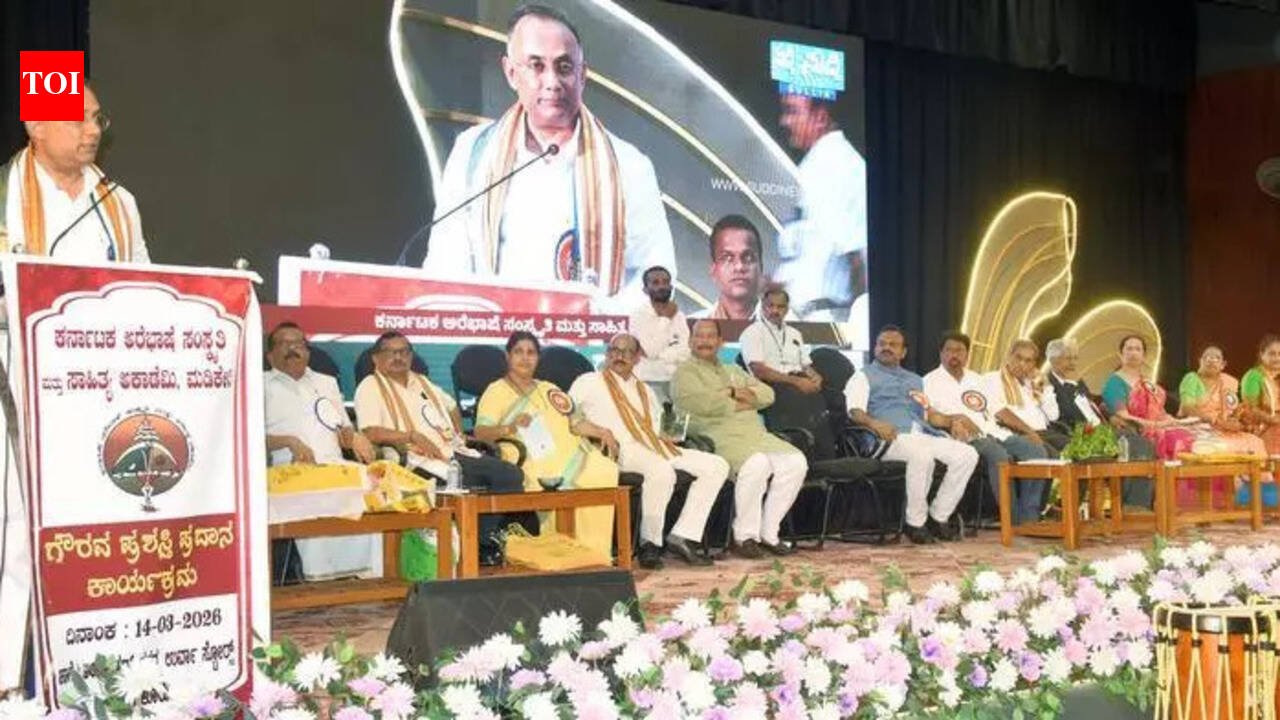
Mangaluru: Dakshina Kannada district minister Dinesh Gundu Rao Saturday said attempts to divide society on the basis of language or caste were unacceptable, asserting that the Constitution upholds equality and inclusiveness for all Indians.“Our Constitution was framed with every Indian in mind, reflecting the spirit of equality and inclusiveness,” Rao said.He was speaking after conferring Karnataka Arebhashe Samskruthi Mathu Sahitya Academy honorary awards on three achievers for their contributions to the growth of Arebhashe language and culture. The awardees were Puttur Anantharaja Gowda (research and literature), Lokeshwari Vinayachandra (organisation and social service) and Katrathana Lalitha Ayyanna (Arebhashe literature).Highlighting India’s linguistic and cultural diversity, Rao said speakers of different languages coexist harmoniously across the country. “India’s unity in diversity is a model for the entire world. Our strength is rooted in respecting and celebrating our differences. Mutual respect among people of different languages and faiths must be protected, as it forms the foundation of India’s social fabric,” he said.Arebhashe, primarily spoken in three districts of Karnataka, forms an important part of the cultural identity of people in those regions, he said, urging academies to ensure that no regional language fades away. “Special emphasis should be given to research, documentation and the promotion of literature,” Rao added.The minister said the state govt was committed to supporting the academy’s activities and promoting the language and its rich culture. While Arebhashe is concentrated in specific regions, its use is not limited to any single caste or community. Though the Vokkaliga Gowda community accounts for a large number of speakers, people from several other communities also use Arebhashe in daily life.The govt has established a language academy to promote Arebhashe literature and ensure its preservation and growth through research, publications and cultural activities. Such institutions are vital to safeguarding linguistic heritage for future generations, Rao said.
