


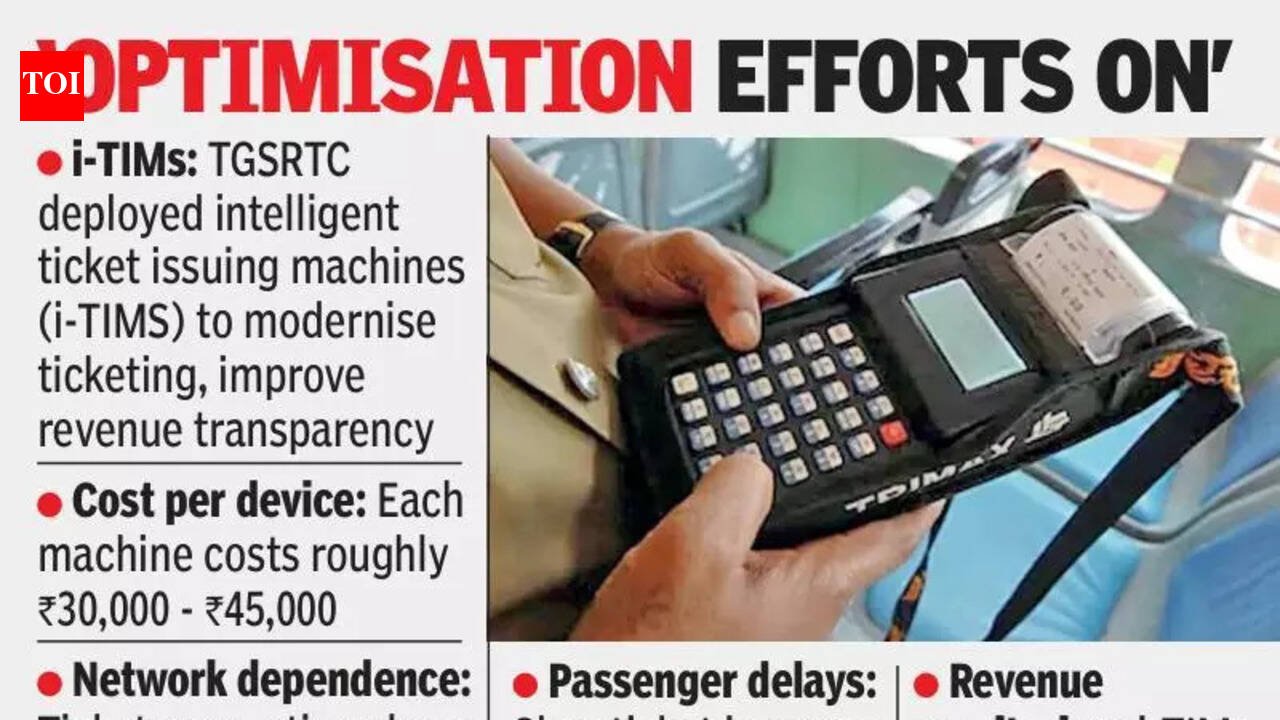
Hyderabad: The introduction of electronic ticketing machines in buses operated by the Telangana State Road Transport Corporation (TGSRTC) is facing operational hurdles, with conductors and passengers reporting delays and technical difficulties in issuing digital tickets.The RTC introduced electronic ticket issuing machines, known as intelligent ticket issue machines (i-TIMs), to modernise ticketing and improve revenue transparency. Around 6,500 devices were procured and deployed across depots as part of the initiative. Each machine costs roughly Rs 30,000 to Rs 45,000, according to officials. However, the transition was not seamless. Conductors said the devices depend heavily on network connectivity to generate digital tickets. In areas where signal strength is weak—particularly in rural and semi-urban routes—ticket generation takes 30 to 45 seconds per passenger. This delay often leads to long queues inside buses, slowing down operations and causing inconvenience to commuters. The machines also generate QR-coded digital tickets, intended to improve transparency and reduce manual errors. However, the system’s dependence on mobile data networks created frequent interruptions. Conductors reported that when connectivity drops, the device either slows significantly or temporarily stops issuing tickets, forcing them to wait until the network stabilises. A bus conductor from Kushaiguda bus depot told TOI that the delays create pressure during peak hours, especially when buses are crowded. With passengers waiting and buses scheduled to maintain tight timings, the slow processing speed complicates routine ticketing work. In some cases, disputes arise when passengers become impatient over the delay in ticket issuance. Revenue leakageOfficials in the corporation acknowledged the initial challenges but said the system is part of a broader effort to digitise operations and curb revenue leakage. The i-TIMs are designed to record transactions in real time and transmit data directly to the central server, allowing the organisation to monitor ticket sales and operational performance. “The electronic ticketing machines are part of TGSRTC’s broader effort to modernise operations and improve transparency in revenue collection. We are aware that conductors are facing delays in some areas due to network connectivity issues, particularly on rural routes. Technical teams are working to optimise the system and improve connectivity so that ticket issuance becomes faster and more seamless for both staff and passengers,” Sudha Parimala, regional manager, Hyderabad, told TOI. Field staff are urging authorities to improve network support and optimise the device software to reduce processing time.
