


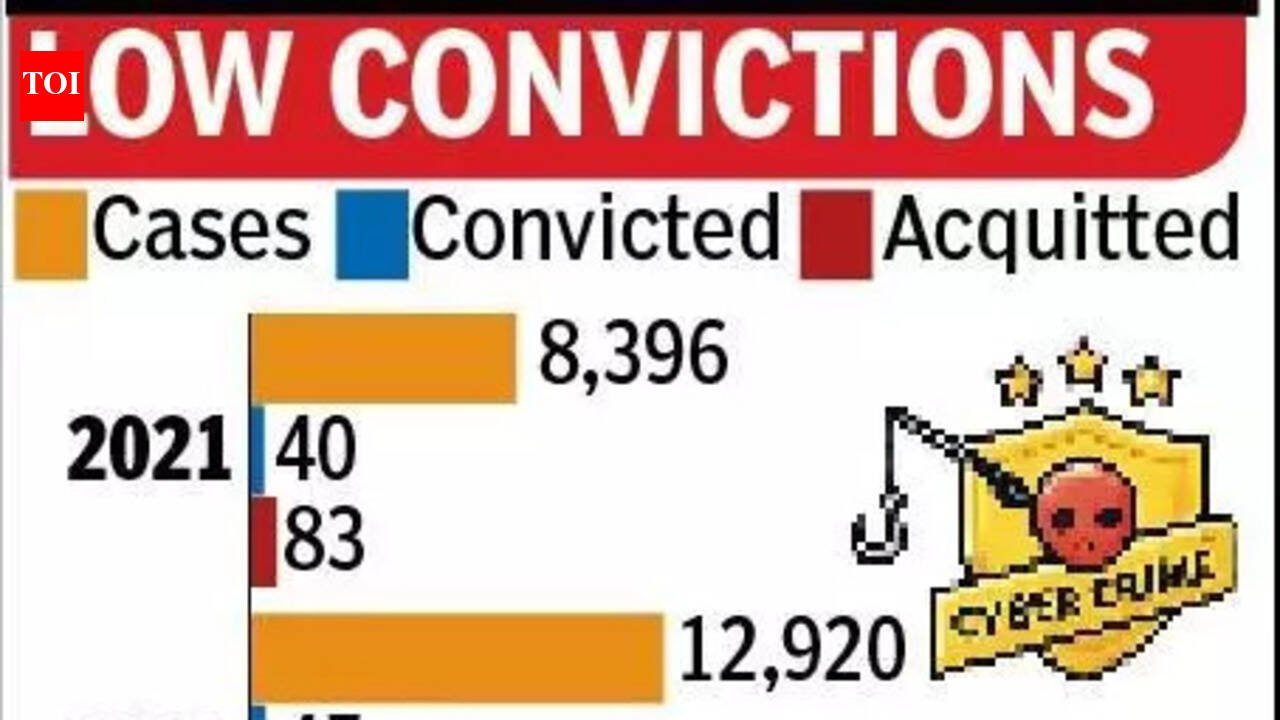
Bengaluru: Statistics released by home minister G Parameshwara in the legislative council Wednesday show cybercime is a booming business and digital deceit often remains unpunished as convictions in Karnataka remain extremely low — at a mere 0.2% over the past five years. Even acquittals were higher — 402 (0.5%), to 178 convictions. Financial recovery has also been limited. Police recovered Rs 626 crore of a staggering Rs 4,699 crore defrauded over the past two years, translating to a recovery rate of about 13%. Speaking on the issue in the council, home minister G Parameshwara said cybercrime cases had initially risen sharply, but enforcement efforts are now yielding fruit. “We were the first to launch a cybercrime police station in the country, with the Infosys Foundation funding Rs 20 crore for the project that was initiated at CID headquarters,” he said. “International experts who recently visited the facility lauded it as one of the best.” Parameshwara said cybercrime cases rose by 72% in 2023, reaching 22,255 cases. However, the number dropped to 14,899 in 2025 due to stronger enforcement measures. But national data presents a different picture. Information from ‘Crime in India’ report by National Crime Records Bureau and cited in the Union home ministry’s Lok Sabha reply in Dec 2025 showed that between 2019 and 2023 Karnataka filed only four chargesheets in cybercrime cases. During the same period, no trials were completed and there were zero convictions. Reports from a neighbouring state suggest the low conviction rate may stem from challenges in collecting digital evidence, procedural delays and technical complexities during trial stages. The issue also came into focus following a major ‘digital arrest’ fraud in Nov last year, where a senior executive of a Bengaluru company lost Rs 32 crore — the highest amount reported in this type of scam. “We arrested the perpetrator and are proceeding legally,” Parameshwara said. He said the usual modus operandi is for fraudsters to make a video call to a potential victim, claiming they are senior CBI or Enforcement Directorate officials. The setting resembles an office with agency logos in the background, and they threaten victims with arrest. Victims are often pressured to isolate themselves in their homes and are instructed not to contact anyone, while fraudsters force them to transfer money. Parameshwara said police have identified about 42,000 mule bank accounts used to route cyberfraud money and arrested nearly 500 people operating them. Mule accounts are typically opened in the names of unsuspecting individuals or those willing to rent out their bank accounts for a commission. Cyber fraudsters then use these accounts to move and withdraw money taken from victims across different states. Council member K Govindaraju pointed out that several vacancies remain, despite the creation of a cybersecurity vertical and upgrading of posts in the police department,
