


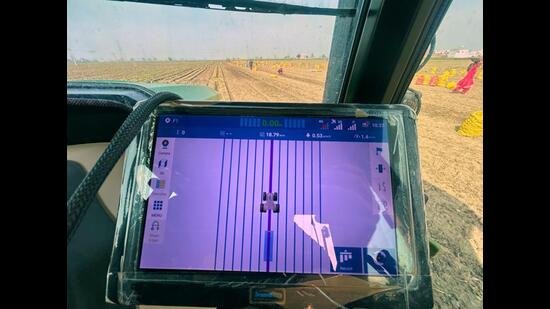
India has a rare advantage in the global race to modernise agriculture, leveraging emerging technologies such as Artificial Intelligence (AI). The country benefits from a vision to deploy digital public infrastructure (DPI) at scale, a fast-growing agritech ecosystem, and clear policy intent — from Aadhaar and UPI to initiatives like the Digital Agriculture Mission and Agri Stack.

Few countries have built such a level of digital foundation before transforming agriculture. India has.
But infrastructure alone does not change lives.
The real test is whether AI reaches the “first mile” with relevance, affordability and trust, turning fragmented data into usable decisions for small-scale farmers facing climate volatility, input inflation and market shocks. If India succeeds, it will not just transform its own farms — it will redraw the digital agriculture playbook for the Global South.
This matters because global food demand is rising even as the climate crisis, water stress and land degradation intensify. For India, where over 80 per cent of farmers cultivate on less than 2 hectares of land, the challenge is not only producing more, but producing better: sustainably, resiliently and inclusively.
That is where AI enters the conversation — not as hype, but as a practical tool. Done right, AI can translate climate and agronomic data into real-time advisories that help farmers optimise water, fertiliser and inputs. It can strengthen early warning systems for pests and extreme weather, improve traceability and enable smarter decisions across value chains. At its best, AI turns uncertainty into foresight.
When paired with inclusive digital infrastructure and public–private partnerships, AI can expand access to finance. Alternative credit scoring, better insurance risk modelling and climate finance can unlock capital for farmers long excluded from formal systems. In rural economies defined by risk, better data can mean cheaper credit and faster recovery.
Globally, investment in AI for agriculture is accelerating, and India is well placed to lead. From multilateral forums to the AI Impact Summit in Delhi, the country is increasingly seen as a laboratory for population-scale digital innovation. Strong DPI, including farmer registries, mobile connectivity and a vibrant agritech ecosystem, combined with initiatives such as the Digital Agriculture Mission and Agri Stack, signal both ambition and replicable lessons.
But impact is not guaranteed.
Adoption of digital tools remains uneven, especially among women and small-scale farmers, who often lack reliable, timely advisory services. Information is often generic, delayed, or inaccessible. The risk is clear: A digital divide layered onto an already unequal system.
Global experience shows that AI delivers results not when it replaces human systems, but when it strengthens them. This is where IFAD’s experience across the Global South offers insight. Over the past decade, IFAD has invested in more than 200 digital agriculture initiatives spanning advisory services, climate analytics, market access, digital finance and traceability. The most successful share one feature: they are embedded within trusted extension networks and delivered through channels farmers already use — voice calls, SMS and platforms like WhatsApp. Trust travels through familiar channels, not cutting-edge interfaces.
A recent pilot In Nigeria’s Niger Delta illustrates the point. IFAD and Digital Green tested Farmer.Chat, a WhatsApp-based AI advisory tool trained on local agronomy and weather data. Within three months, more than 1,500 farmers joined — a third of them women — and over 90 per cent reported better farming decisions. Farmers valued the tool not because it was “AI”, but because it gave advice they could act on, quickly and confidently. These insights matter for India. The country is digitally advanced, yet advisory gaps persist across regions and crops. With strong digital foundations already in place, AI could help close these gaps — but only if designed around farmers’ realities. Technology that ignores lived experience rarely scales.
India is also generating its own impactful models, increasingly being driven by the private sector, both independently and in partnership with public institutions. From fintech innovators to advisory platforms and input providers, India is emerging as a global hub for AI- driven agricultural solutions. Through South–South cooperation, these models are already travelling beyond India.
Scale, however, depends on getting the basics right. Interoperable digital farmer registries — living systems that make farmers visible and serviceable across advisory, inputs, finance and markets — can form the backbone of inclusive ecosystems. Without clear standards and safeguards, digital public goods can fragment as quickly as they scale.
Delivering scale and impact will require focus around four priorities: 1) Invest in interoperable farmer registries and data governance frameworks while enabling innovation; 2) Embed AI tools in extension systems, farmer producer organisations and cooperatives, with explicit focus on women and youth. 3) Mobilise blended finance and crowd-in private capital to de-risk innovation and reach farmers at scale; and 4) Build trust through privacy and effective guardrails.
AI can help make agriculture more productive and resilient — but technology alone is not enough. The real opportunity lies in partnerships, institutions and financing models that ensure innovation reaches those who need it most.
If India gets this right, it will not only strengthen its own food system; it will help offer something far more valuable: A scalable, democratic model of agricultural modernisation for the rest of the developing world.
Brende Mulele Gunde is the Global Lead of ICT4D (Digital Transformation for Agriculture) at the International Fund for Agricultural Development (IFAD), an international financial institution and a United Nations specialized agency. Brenda also leads IFAD’s global digitalisation agenda, championing the strategic use of emerging technologies, data and digital public infrastructure to transform agriculture and strengthen opportunities for smallholder farmers. The views expressed are personal
