


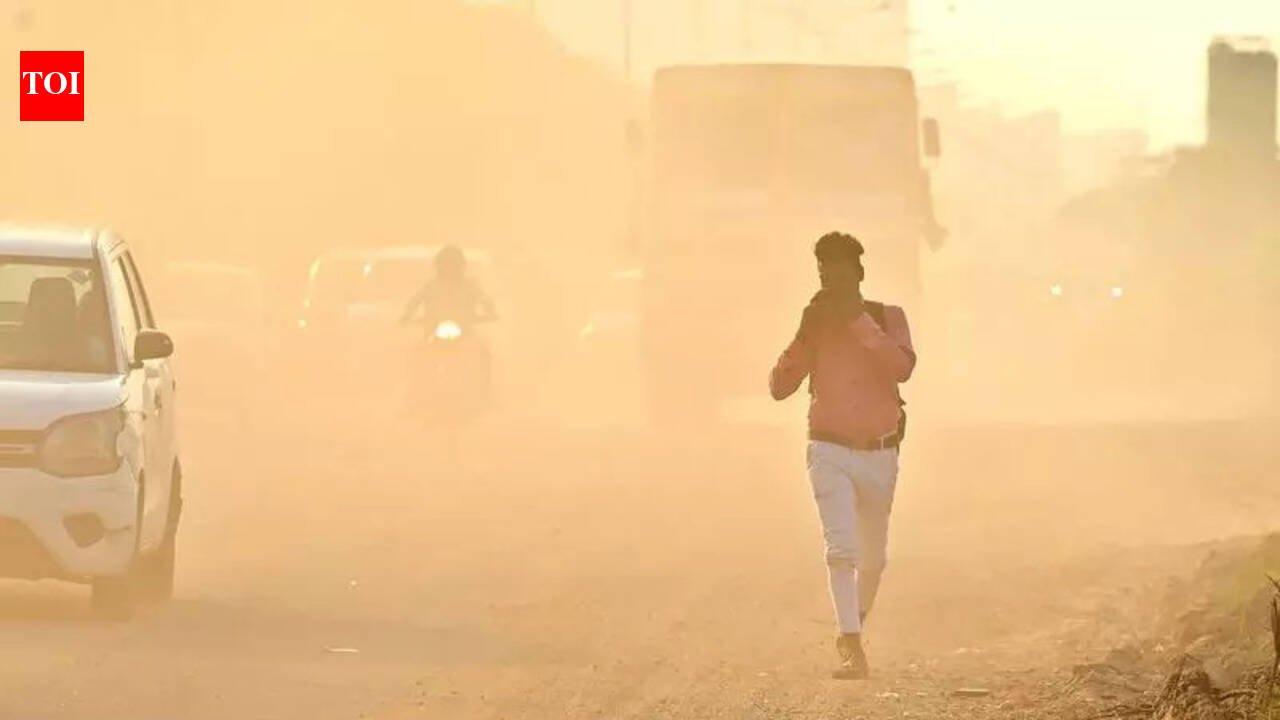
Chennai: Air pollution levels in cities such as Chennai can shift by as much as 40% due to weather conditions alone, even without any change in emissions, according to an analysis by Climate Trends, based on Central Pollution Control Board (CPCB) air-quality data from 2024–2025.The study found that meteorological factors such as low wind speeds and high humidity can significantly amplify PM2.5 (particle matter of 2.5 microns or less) pollution levels by trapping pollutants close to the ground. Researchers said the interaction between emissions and atmospheric conditions is becoming increasingly important in shaping urban air quality.In Chennai, the analysis pointed to emerging winter deterioration in air quality, a pattern historically associated more with northern cities. The coastal city, once considered relatively less polluted, is now recording higher PM2.5 concentrations during winter months, when weak winds and stagnant atmospheric conditions limit the dispersion of pollutants.“High wind speeds (more than 3m/s) dominate Chennai’s climate and promote effective pollutant dispersion. While the city has historically been less polluted, it is now showing signs of air quality deterioration during winter months, a new vulnerability trend,” the report said.The study also observed that Chennai’s annual average PM2.5 levels increased in 2025, suggesting the city may be moving beyond occasional seasonal spikes towards a more persistent pollution challenge. Atmospheric stagnation — characterised by low wind speeds and high humidity — allows pollutants from vehicles, construction and other sources to accumulate near the surface.The report proposed reforms in National Clean Air Programme (NCAP) Phase III, including separate winter targets, meteorology-adjusted metrics and dynamic weather-triggered action plans, alongside integrated airshed-based planning.The analysis covered Delhi, Patna, Kolkata, Mumbai, Chennai and Bengaluru. The findings highlighted a similar vulnerability in Bengaluru, another southern city where winter pollution episodes are becoming more noticeable. Delhi continues to record the most severe pollution levels with frequent “severe” air-quality days, while Patna remains the second-most polluted city. Kolkata experiences strong winter spikes due to poor atmospheric dispersion, whereas Mumbai and Bengaluru show comparatively moderate trends.“This study shows that a 20–30% reduction in annual PM2.5 does not translate into winter air-quality compliance in stagnation-prone cities such as Delhi and Patna, where over 70% of days fall under low-wind, high-humidity meteorological regimes. NCAP Phase III must therefore adopt season-specific targets, meteorology-triggered interventions and airshed-level management frameworks to achieve meaningful public-health gains,” said Aarti Khosla, founder and director of Climate Trends.
