


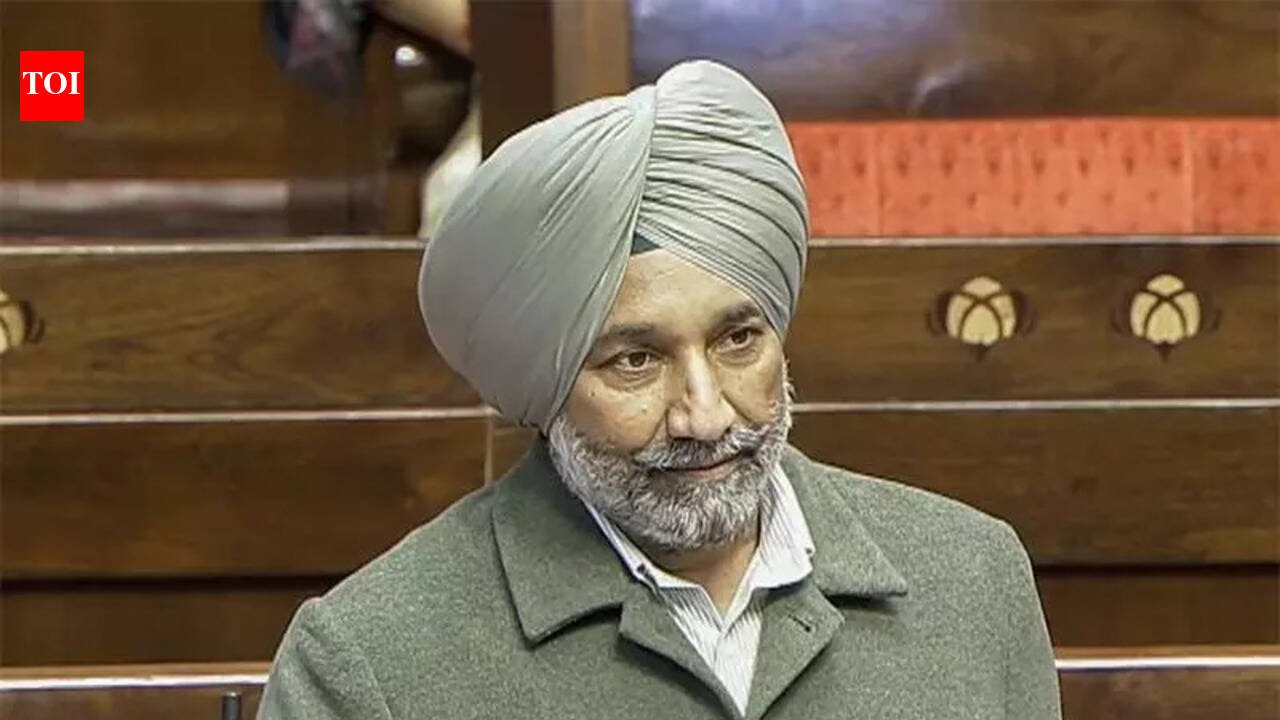
Mohali: Rajya Sabha MP Satnam Singh Sandhu on Monday raised serious concerns over the rapid depletion and contamination of groundwater in Punjab, warning that the state is facing a “water emergency” as a majority of its districts fell into the dark zone category due to over-extraction.Raising the issue during the Question Hour in the Rajya Sabha, Sandhu said 19 out of the 23 districts in Punjab were classified as dark zones, meaning groundwater resources in these areas are severely over-exploited. He also highlighted the alarming presence of uranium in the state’s groundwater, stating that more than 62% of groundwater samples in Punjab contain uranium levels above the safe limit, the highest contamination intensity recorded in the country.In a supplementary question to Union jal shakti minister CR Patil, Sandhu said the situation was largely driven by extensive paddy cultivation in the state, which requires large quantities of groundwater for irrigation. “Punjab is facing a water emergency. Due to paddy cultivation, 19 districts are in the dark zone and more than 62% of the groundwater samples contain uranium levels higher than anywhere else in the country. The high uranium content poses a potential risk of cancer,” he said.The MP said Punjab’s groundwater extraction rate reached 156.36%, which is the highest in the country compared to the national average of around 60%. He cited findings of the National Green Tribunal’s monitoring committee, which warned that if the current trend continues, the groundwater table in Punjab could drop below 300 metres by the year 2039, potentially leading to severe water scarcity in the state.Sandhu also referred to a report by the Central Ground Water Board which indicated that around 62.5% of groundwater samples in Punjab contain uranium levels above the permissible limit, raising serious public health concerns.Responding to the issue, Union jal shakti minister CR Patil informed the House that the Union govt allocated Rs 32,000 crore in the current financial year for water conservation and revival of dark zones across the country under the Viksit Bharat Guarantee for Rozgar and Ajeevika Mission (VB-GRAMG), previously known as MGNREGA.The minister said although the Atal Bhujal Yojana was discontinued, the govt is continuing large-scale water conservation initiatives under other programmes. He said while the earlier scheme had a budget provision of Rs 6,000 crore, the allocation for water conservation under the new initiative increased significantly.Patil also said water-stressed regions are now being prioritised for funding and intervention. Emphasising public participation, he said Prime Minister Narendra Modi called for turning water conservation into a mass movement.The minister informed the House that, with public participation, around 44 lakh water conservation structures were already created across the country. He added that the govt also launched the “Karmabhoomi se Matrabhoomi” initiative to encourage NRIs and migrants to contribute towards water conservation efforts in their native villages, with a target of constructing 1 crore such structures nationwide.
