


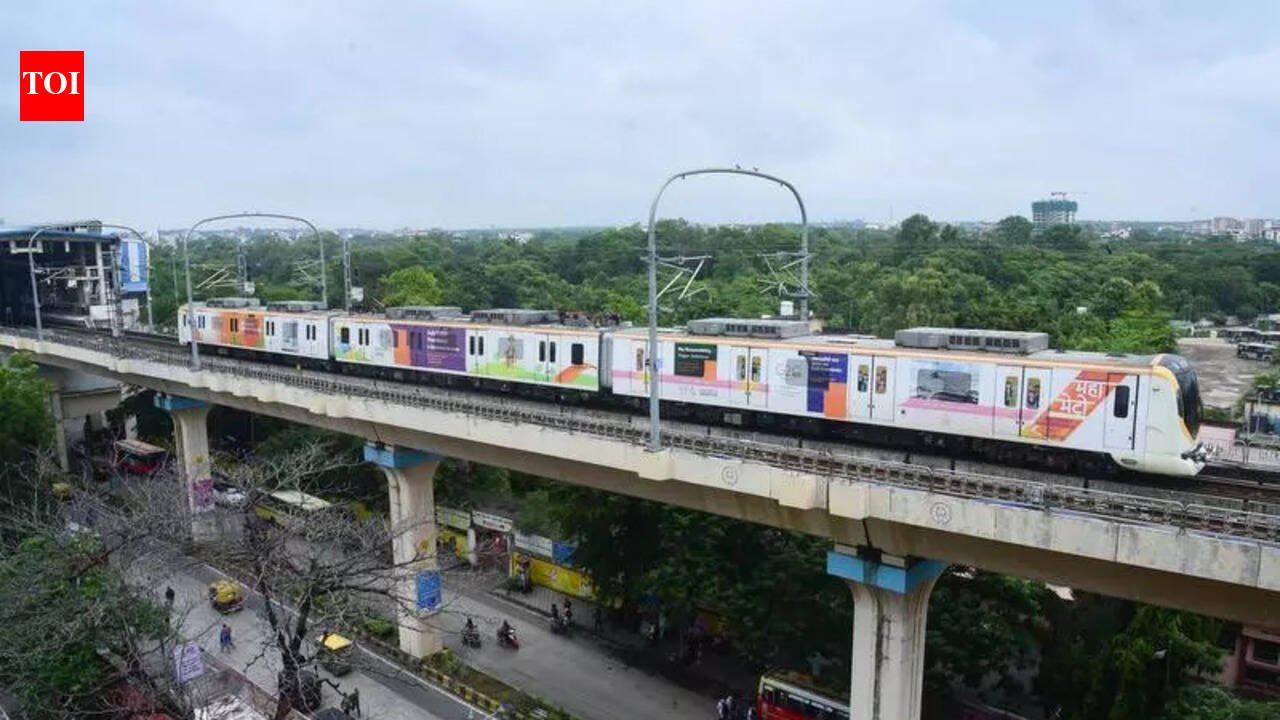
Nagpur: Digital payments are fast becoming the preferred mode of travel on Nagpur Metro, with the metro’s official data indicating that nearly one cashless ticket is generated every two seconds during operational hours.Figures from the Maha Metro Annual Report 2024–25 show that the network recorded 2.69 crore passenger journeys in 2025, a 5% increase over the previous year. Of the total fare box revenue collected during the period, 45% came through digital payment channels, including National Common Mobility Cards (NCMC), UPI, and point-of-sale (POS) terminals.A closer reading of the numbers indicates the scale of the transition. The annual ridership translates to an average of around 73,700 passengers daily. With trains operating for 16 hours, from 6am to 10pm, this works out to roughly 4,600 commuters per hour, or about 77 passengers per minute. Applying the 45% digital revenue share to this average flow suggests that roughly 32 to 39 commuters per minute chose cashless modes. In practical terms, that is nearly one passenger tapping, scanning, or swiping a ticket every 2 seconds.Metro officials, however, said the digital shift accelerated further in the current financial year. A senior Maha Metro official told TOI that the 45% figure reflects data only up to FY25. “The annual report captures transactions until March 2025. Since then, digital usage has increased further and is now well above 50% of total ticketing transactions,” the official said.The official added that MahaCards account for the bulk of digital transactions, nearing 50% of digital transactions, particularly among regular commuters and pass holders. UPI payments, WhatsApp ticketing, and POS-based card transactions make up the remaining share. Currently, over 1 lakh commuters hold MahaCard. The growing preference for MahaCards is attributed to faster gate access and ease of recharge, reducing queues at ticket counters, especially during peak hours.The trend in Nagpur mirrors a broader pattern within the Maha Metro network, as in Pune, where digital payments already account for over 75% of total fare transactions. Urban mobility experts say the rise in digital payments not only improves operational efficiency but also enhances revenue transparency and reduces cash handling costs. For commuters, the appeal lies in speed and convenience.With ridership continuing to grow and digital transactions crossing the halfway mark this year, Nagpur Metro’s ticket counters may increasingly see fewer cash exchanges and more quick taps at entry gates, signalling a steady move towards a predominantly cashless commute.
