


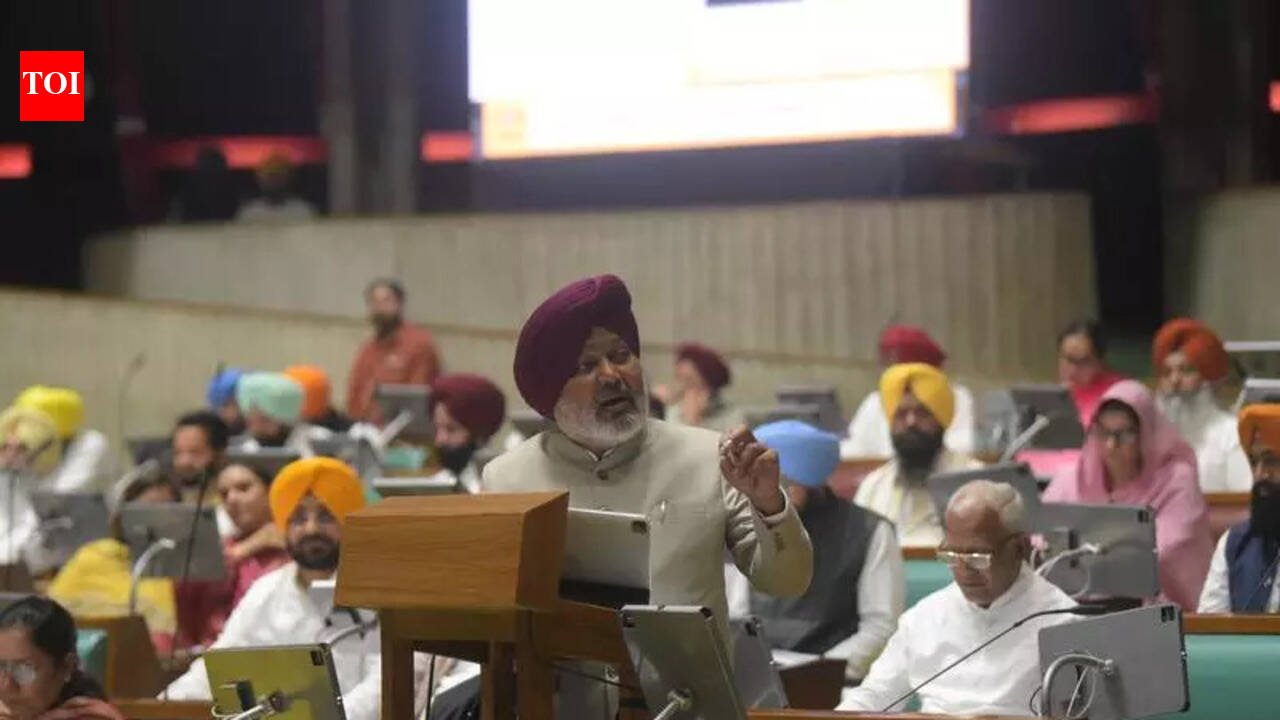
Chandigarh: Despite an increase in Punjab’s health budget, experts say the allocation may still fall short of addressing critical infrastructure gaps and shortages of medical personnel, particularly in rural areas, where the public health system continues to face challenges.The CM Bhagwant Mann-led govt did not announce major new initiatives aimed specifically at expanding healthcare infrastructure or significantly improving service delivery. Much of the allocation in the health sector was directed towards existing programmes and schemes announced earlier. Health experts urged the govt to substantially increase the budget to bridge the widening gap between demand and available healthcare services.Finance minister Harpal Singh Cheema proposed a budgetary allocation of Rs 6,879 crore for the financial year 2026–27, compared to Rs 5,598 crore in 2025–26. Out of the total allocation, Rs 2,000 crore, nearly 29% of the health budget, was earmarked for the Mukhya Mantri Sehat Yojana, which provides universal health insurance coverage to residents of Punjab. Under the scheme, each family in the state is entitled to cashless treatment of up to Rs 10 lakh annually at more than 900 govt and empanelled private hospitals. The scheme is expected to benefit 65 lakh families.Besides, Rs 750 crore was allocated to National Rural Health Mission. The govt also proposed Rs 351 crore to expand the network of Aam Aadmi Clinics (AACs) by opening 143 more such disepensaries. In addition, 308 subsidiary health centres will be upgraded to AACs. With these additions, the total number of AACs established over five years will reach 1,432. A provision of Rs 175 crore was made for the creation of cancer and drug addiction treatment infrastructure, while Rs 60 crore was allocated to Punjab Urban Health Infrastructure.A provision of Rs 1,220 crore was earmarked for medical education and research. At the Govt Medical Colleges in Patiala and Amritsar, work related to trauma centres, hostels, and residential facilities is in progress, with funding provided in 2026-27 budget. The Punjab Institute of Liver and Biliary Sciences in Mohali is also being expanded, including the completion of a diagnostic block and development of a 175-bedded hospital, aimed at strengthening tertiary care.The govt also proposed establishing seven medical colleges in Hoshiarpur, Kapurthala, Sangrur, Nawanshahr, Lehragaga, Malerkotla, and Ludhiana, which would add 600 MBBS seats. To strengthen medical education infrastructure, the govt purchased 38.5 acres of land at Rs 49 crore for setting up a medical college in Malerkotla.However, health experts questioned whether the overall allocation is sufficient. Dr Arun Mitra, president of the Indian Doctors for Peace and Development (IDPD), along with Dr Inderveer Singh Gill, said the Rs 6,879-crore allocation out of the total Rs 2,60,437-crore state budget, appeared inadequate. They said a large portion of the budget was expected to be spent on the insurance scheme, while a significant part of the remaining funds would go towards routine expenses such as salaries, leaving limited scope for strengthening infrastructure or expanding services. “With costs rising steadily, such an allocation is unlikely to deliver the improvements people expect in the healthcare sector,” they said.Amulya Nidhi, national convener of Jan Swasthya Abhiyan India, called the allocation meagre, saying it would not be sufficient to bridge existing gaps. He said instead of relying primarily on an insurance-based model, govt should focus on strengthening public health services that are provided free of cost. He added that while the govt has made efforts at the primary healthcare level through AACs, a similar approach needs to be adopted at the tertiary care level by ensuring adequate manpower, availability of medicines, and stronger infrastructure in hospital. 7% HIKE IN EDUCATIONThe govt allocated Rs 19,279 crore to education, marking a 7% increase over the previous year. In the previous budget, the allocation increased by 12%. Out of the total outlay, Rs 1,435 crore was allocated to Samagra Shiksha Abhiyan, and Rs 690 crore to strengthen school infrastructure, including whitewashing and beautification works aimed at ensuring govt schools reflected cleanliness, pride, and aspiration. In addition, Rs 467 crore was allocated to PM Poshan Scheme, Rs 300 crore to PM SHRI Scheme, and Rs 121 crore to Rashtriya Uchchatar Shiksha Abhiyan (RUSA).The govt also proposed Sikhya Kranti 2.0 initiative, aimed at transforming the education system, with an outlay of Rs 3,500 crore over the next six years. For grant-in-aid to universities and constituent colleges, Rs 1,760 crore was earmarked for the financial year 2026–27 to support academic excellence, promote research, and strengthen infrastructure in these institutions. In addition, a budgetary allocation of Rs 569 crore was proposed for initiatives under technical education.
