


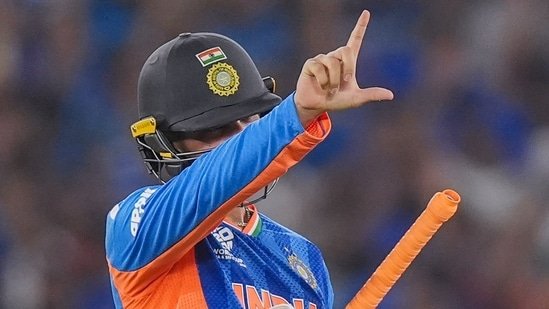
Abhishek Sharma’s words after India’s T20 World Cup triumph were not the usual winner’s lines thrown out in the afterglow of a title. They came with the weight of a difficult tournament, the vulnerability of a player who had spent weeks searching for a way out, and the gratitude of someone who knew exactly who had kept him afloat when things were not going well.
That is what made his post-match reaction stand out. India had won the World Cup, and Abhishek had finally delivered on the biggest night. But when he spoke, he did not begin with the innings. He began with the people who had refused to give up on him.
“Of course, but the one thing was very clear. I wanted to share it before as well. But today is the right day,” Abhishek said.
This was not just a celebration. This was a disclosure. This was a batter finally choosing the day of triumph to explain what the journey had really felt like from inside the dressing room and inside his own head.
“The coach and the captain had the belief in me. I was facing this for the first time. I haven’t experienced it before. But they were saying you will play one innings. You will perform in one match. The way they treated me when I was going through it, I have never faced it before.”
Abhishek Sharma delivers on the biggest night
That is the heart of his statement. Abhishek Sharma had entered the tournament as one of India’s most explosive options at the top, but the returns had not matched the reputation for most of the campaign. The runs had not come consistently, the scrutiny had grown, and each failure only sharpened the focus on his place and his method. For a batter whose game is built on instinct, freedom and immediate impact, a prolonged lean phase on a stage this big can become as mental as it is technical.
Abhishek admitted as much. “I have told you before. It wasn’t easy before. The whole year, you are doing good for the thing. But the confidence the coaching staff and the coach and the skipper showed in me was great.”
There is something revealing in the way he says that. He is not presenting himself as a player who never doubted anything. He is acknowledging that the period had been hard, that the contrast between his broader form and his tournament returns had been difficult to process, and that what mattered most in that moment was not advice alone, but trust.
That trust, he made clear, was not casual reassurance. It was sustained backing. “I even got emotional in the middle of the tournament. I wanted to talk to someone,” said Abhishek.
That may be the most important line in the entire reaction. Players often speak of confidence and support in broad, polished terms. This was more personal than that. Abhishek was admitting that the pressure had got to him, that the struggle had become emotional, and that there were moments during the tournament when he needed an outlet simply to cope with what he was feeling.
And yet the message from within the camp remained uncomplicated and consistent: stay ready, because one innings can change everything.
By the final, that message had found its moment. Abhishek produced the kind of contribution India had waited for, and suddenly the entire arc looked different. The poor run no longer stood alone. It now led into a payoff. The anxiety, the patience, the faith, and the delay all took on meaning because the release came on the night that mattered most.
“A great day to play an innings like this,” Abhishek concluded. That closing line works because it is understated. He does not dress it up. He does not need to. In a single sentence, he captures the scale of the occasion and the relief of finally delivering when the team needed it most.
So this was not merely a post-final soundbite from a player basking in a World Cup win. It was the completion of a tournament narrative. Abhishek Sharma struggled, endured, was backed, nearly broke emotionally, and then found the innings that justified the faith shown in him.
