


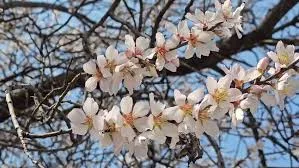
Srinagar, Mar 07: Almond trees across Kashmir have burst into bloom weeks ahead of their usual schedule this year, with pale pink and white blossoms appearing in orchards even as winter has yet to fully recede. The early flowering is widely being linked to rising temperatures and shifting seasonal patterns across the Valley.
The unusually early bloom has transformed orchards into picturesque landscapes, drawing visitors to traditional almond-growing areas. Yet, behind the scenic spectacle lies growing concern among experts and orchardists, who say the development reflects the increasing impact of climate change on Kashmir’s agricultural calendar.
Recent temperature readings across Jammu and Kashmir highlight the unusual warmth this season. Several locations in the Valley recorded maximum temperatures between 6°C and 9°C above the seasonal average. Srinagar registered 20.2°C, which is 8.2°C above normal, while Qazigund recorded 20.4°C, nearly 9.4°C above average. Kupwara recorded 20.3°C, 8.9°C above normal, and Kokernag 18.9°C, about 9.1°C higher than usual.
The Meteorological Department has forecast rainfall in the coming days, a development that experts say could pose a risk to the delicate almond blossoms. Moisture or sudden rain during this stage can cause flowers to fall prematurely, reducing the chances of fruit formation and potentially affecting the almond yield this season.
“This year the almond trees have bloomed earlier than usual. We are worried that if rainfall occurs in the coming days due to changing weather conditions, the blossoms may fall and affect the crop,” said Akhtar Ali, an orchardist.
Kashmir’s winters were once characterised by prolonged cold spells, frequent snowfall and sustained frost that kept fruit trees dormant for months. The gradual arrival of spring would then trigger a predictable cycle of budding, flowering and farm activity. In recent years, however, that seasonal rhythm has begun to shift as winters grow shorter and milder.
Badamwari Garden in Srinagar is also witnessing an exceptionally early bloom this year. Almond trees in the historic 300-kanal garden at the foothills of Hari Parbat began flowering in late February instead of the typical mid-March period. The garden has turned into a sea of blossoms, traditionally regarded as one of the earliest signs of spring in Kashmir.
Dr Ashaq Pandit, Professor and Head of the Division of Fruit Science at SKUAST-K, said the recent rise in temperatures has advanced the season by nearly 20 days, triggering early flowering in crops such as almond and apricot.
“The season has advanced because of temperature, and crops like almonds and apricots are already in bloom,” he said, adding that the development could be viewed as an extreme weather event for early-blooming crops, though it may not necessarily cause widespread damage.
Pandit said that the main concern lies in erratic weather during the pollination period. “Most of these crops depend on cross-pollination by insects, especially honeybees. When temperatures fall below 13°C, honeybees do not come out of their hives, which affects pollination,” he said.
He added that sudden temperature drops or rainfall can wash away pollen and lead to flower abortion. “You may see many flowers but no fruit set,” he explained. “Peach, apricot and almond may be affected, while apple is still about 10 to 12 days away from this stage.”
The warm spell has coincided with a significant precipitation deficit across the region during the winter months, resulting in reduced snowfall and limited rainfall. These dry conditions are beginning to affect the natural rhythm of vegetation, with several fruit trees and ornamental plants showing early signs of budding and flowering across the Valley.
Almond trees typically require a period of winter chill that keeps buds dormant until spring. Warmer winters shorten this cold phase and prompt buds to open earlier than usual. Early blooming also increases the vulnerability of blossoms to sudden weather changes such as rain, strong winds or a brief return of frost, all of which can damage flowers and reduce fruit formation.
“There has been a prolonged dry spell in Kashmir, with February temperatures recorded nearly 9°C above normal. These conditions, driven by global warming and climate change, have led to the early blooming of almond, peach and other fruit trees across the Valley,” said environmentalist Ajaz Rasool.
He cautioned that rainfall during the flowering stage could harm fruit production if it is intense or prolonged. “If the rain is heavy, the delicate blossoms may fall, which could adversely affect fruit production in the horticulture sector. However, if it is only a light drizzle, it may not have much impact unless it continues for a longer period,” he said.
“The almond blossom has long symbolised the seasonal transition from winter to spring in Kashmir,” Rasool added. “But the unusually early flowering this year reflects a broader environmental shift as changing winter conditions and unpredictable weather patterns continue to reshape natural cycles across the region.”
