


Cast your mind back to 2013. This is the year that will see India’s Champions Trophy success, Sachin Tendulkar’s 100th international hundred, and then subsequently his retirement. Before all of that, in that year’s IPL, Mumbai Indians would go on to win the first of their five IPL titles.
In that very IPL, a 19-year-old from Kerala, reared in New Delhi, the son of a police officer, would make his debut. Sanju Samson suited up for the very first time for Rajasthan Royals, and put together a formidable season despite his youth. Playing alongside Rahul Dravid, Shane Watson, and Ajinkya Rahane, Samson would have the first of many fine seasons as he won the Emerging Player of the Tournament.
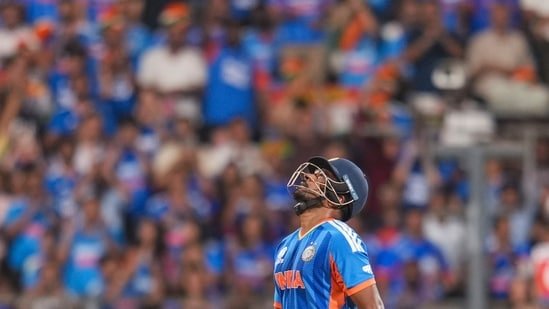
That was the first time most cricket fans would have heard the name of this brilliant young talent from the southernmost point of the mainland. 13 years later, he is the first name on the teamsheet, the form-man, as India gun for the T20 World Cup trophy.
Samson enters the final with two crucial innings in two can’t-lose matches for the team. He played the innings of a lifetime in the Super 8 match against the West Indies at the Eden Gardens, where he hammered 97* in one of India’s most famous chases in the format to haul down a target of 195. Four nights later, he scored 89 against England, a similarly sublime knock, laying the platform for a team score of 253 in the semifinal.
Next up is New Zealand in the final itself, where Samson is the big hope for India at the top of the batting order. Even 5 years ago, this position would have seemed so far away for Samson – a player who has been blessed with all the talent in the world and showcased it on the domestic level, Samson had to wait and wait, growing his argument to be a regular for India, as he always appeared to be on the periphery.
Samson’s long, painful wait for international matches
Samson earned a full-team debut with a single T20I contest against Zimbabwe all the way back in 2015 – a cap which would ensure he would forever be a capped player as he spent time with the Rajasthan Royals and Delhi Daredevils, but that was secondary to the ignominy of that being his sole international appearance for over five years.
The next time he would suit up for India would be in 2020, after a loud base of supporters argued that he was the man that should be moulded into being MS Dhoni’s replacement with the gloves. He also had to battle fellow wicketkeepers like KL Rahul and Rishabh Pant across formats. He found a decent chunk of playtime as India begin to rotate options, and as the numbers continued to add up and up.
After a certain point, it became impossible to ignore the weight of runs that Samson produced domestically and crucially, under the brightest lights in the IPL. Competing against top order options like Ruturaj Gaikwad and Yashasvi Jaiswal, Samson took pole position in the race to be the option to replace Virat Kohli and Rohit Sharma at the top of the order once they retired following the 2024 T20 World Cup success.
Joining Abhishek Sharma at the top of the order, Samson has had a golden time: in the period following his reinclusion, Samson has averaged 32 while striking at 165 in T20I cricket. Samson, over the last 27 months, has more than doubled his T20I appearances – 37 matches, in which he has struck three centuries, and taken to India’s new ultra-attacking approach from the top down like a duck to water.
A late Gill-shaped scare – but impacts outweighs it all
Samson looked set to be India’s go-to opener – but there was another hiccup. Samson was then made to sit out of India’s victorious Asia Cup campaign, as the BCCI made a concerted move to include Shubman Gill at the top of the order in his stead. Samson was once again on the outskirts of the team and running a risk of not being the opener – the story of his career, and it looked ready to haunt him again.
But Samson was included, and Gill was dropped after a string of subpar performances. Even then, Samson had to wait his turn as the in-form Ishan Kishan opened alongside Abhishek Sharma to start the tournament. Only the struggle of the Indian batting necessitated the inclusion of a different option at the top of the order. Samson was brought in with India in trouble – and he delivered, in some style, with innings that not many will forget any time soon.
In Sunday’s final, against New Zealand’s powerful bowling unit, Samson will need to be at the top of his game. But here is a player, now 31 years old, who has had to battle and to scrap, even just to get a chance. That chance is in his hands – what will be remembered in the story of his life years from now is only what he does with it.
