


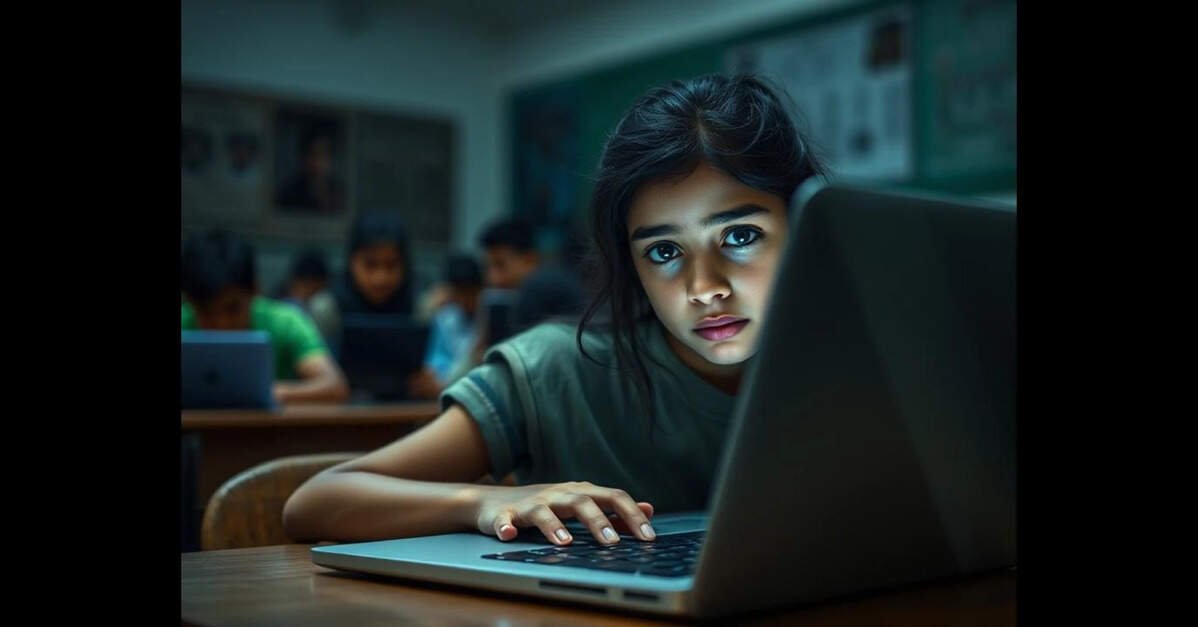
“To prevent the adverse effects of increasing mobile usage on children, the use of social media will be banned for those under the age of 16,” Chief Minister Siddaramaiah said while presenting the 2026-27 Budget in the Assembly.
The proposal by the Government of Karnataka has sparked discussions among educators, psychologists and parents about how best to regulate children’s online exposure while ensuring responsible use of technology.
The move comes alongside a record education allocation of ₹47,224 crore, signalling the state’s broader focus on strengthening school infrastructure, digital learning and student wellbeing.
Rising concerns around digital addiction
The proposal reflects growing global concerns about the impact of excessive screen time and social media exposure on children and adolescents.
Research suggests smartphone dependency among teenagers is increasing rapidly, with several studies estimating that nearly four in ten adolescents show signs of problematic smartphone use. Health experts have also warned that excessive digital exposure may contribute to anxiety, sleep disorders, declining attention spans and behavioural changes among students.
For many educators, the issue is visible inside classrooms.
Praneet Mungali, Trustee at the Sanskriti Group of Schools, said the Karnataka decision should be understood as a recognition of how social media platforms interact with the developmental vulnerabilities of adolescents.
“The Karnataka decision deserves to be understood in the right spirit. This is not an anti-technology position. It is simply a recognition that the adolescent brain is developmentally vulnerable and that social media platforms are engineered in ways that exploit exactly that vulnerability,” Mungali said.
He noted that teachers across schools have observed noticeable changes in student behaviour over the past decade.
“Teachers who have been in classrooms for twenty years will tell you something shifted around 2012 quite noticeably. Attention span degraded significantly, and the quality of peer relationships changed. Students who were physically present were increasingly mentally somewhere else,” he added.
Mungali pointed to research linking the rise of smartphones and algorithm-driven feeds with broader changes in childhood behaviour.
“In a relatively short period we moved from a play-based childhood to a phone-based one. The rise in anxiety and depression that followed is now widely documented,” he said.
Implementation challenges remain
While experts acknowledge the intent behind the policy, some say enforcing a blanket restriction may be difficult given how deeply digital technology is embedded in daily life.
Meghana Yadav, Head of Training and Development and Child Psychologist at KLAY, said the focus should also be on helping children build healthy digital habits.
“While the positive intention behind this ban is clear, enforcing it might be a challenge as the digital world is deeply integrated in our daily lives. The larger focus should be on helping children develop healthy relationships with technology,” she said.
Drawing on her experience in early childhood education, she added that excessive social media exposure can affect students in multiple ways.
“Excessive digital exposure can affect a child’s attention span, imagination power and patience. The constant need for validation driven by social media platforms has a major impact on their confidence and emotional well-being,” Yadav said.
Schools emphasise balanced digital habits
School leaders say social media’s influence on students is increasingly visible in classrooms. Dr. Alka Kapur, Principal of Modern Public School Shalimar Bagh, said the government’s move reflects a broader global concern about digital platforms shaping children’s habits and emotional wellbeing.
“From a school’s perspective, any step taken for the well-being and healthy development of children is extremely crucial. The intention behind restricting social media usage highlights the global concern regarding digital platforms influencing children’s habits, focus and emotional balance,” she said.
At the same time, she emphasised the importance of a balanced approach that combines regulation with education.
“Social media has become a significant part of children’s lives. While excessive exposure can affect students’ ability to maintain sustained attention during academic activities, digital platforms can also offer opportunities for creativity and learning when used carefully,” Kapur said.
She added that digital literacy programmes and parental involvement remain essential.
“Students should be encouraged and guided to build healthy digital habits and manage their screen time in a disciplined manner. Schools can contribute by integrating digital awareness into the learning process while parents play a crucial role in reinforcing responsible behaviour at home,” she said.
Parents call for awareness and monitoring
Parent groups say awareness programmes and family involvement should accompany any regulatory measures.
Anubha Shrivastava Sahai, Supreme Court advocate and president of the India Wide Parents Association (IWPA), said children today are increasingly immersed in the digital world.
“Digital literacy programmes and parental monitoring would be a more effective solution. Our kids are living in a virtual world and should be encouraged to participate in outdoor games and real-world activities,” she told while speaking with ETEducation.
A global debate on social media and teenagers
For some educators, the issue is part of a broader international conversation about regulating social media platforms for young users.
Dr. Ted Mockrish, Head of School at the Canadian International School responding to questions by ETEducation said governments around the world are beginning to recognise the risks associated with unrestricted social media access.
“Social media was designed to capture teen brains and keep them in a consumption loop rather than a creation route. It functions like a digitally addictive product that keeps young users constantly engaged while companies profit from their attention,” he said.
He added that research increasingly shows a link between rising social media use and mental health challenges among teenagers.
“It is encouraging to see governments beginning to take a stand on access to social media for minors,” Mockrish said.
Major education push in Karnataka Budget
Alongside the social media proposal, the budget outlined several initiatives aimed at strengthening the state’s education ecosystem.
A key highlight is a ₹3,900-crore investment to upgrade 800 institutions into the Karnataka Public Schools (KPS) model over the next three years.
Under the programme:
500 schools will be supported by the Asian Development Bank (ADB)
200 schools will be funded through the Kalyana Karnataka Regional Development Board
The government has also allocated ₹565 crore for school infrastructure improvements, while ₹125 crore will be transferred directly to School and College Development Committees.
Focus on inclusion, AI and skills
The budget also places emphasis on inclusion and future skills.
A ₹1,000-crore allocation has been announced for minority education, including the upgradation of 100 Urdu and Maulana Azad schools into the Karnataka Public Schools model.
The government also plans to introduce AI tutors in schools, reflecting a broader push toward technology-enabled learning.
Higher education reforms
In higher education, the state has proposed a ₹2,500-crore Asian Development Bank-supported transformation project to strengthen government colleges and polytechnics.
The government has also announced plans to fill 2,000 teaching posts and provide specialised training to 3,000 female STEM graduates.
Education leaders welcome investments
Education leaders say the budget reflects sustained investment in strengthening the state’s learning ecosystem.
Niru Agarwal, Managing Trustee of Greenwood High International School, said the plan to upgrade hundreds of schools into the Karnataka Public Schools model signals a strong commitment to improving academic standards and expanding opportunities for students.
Kumari Shibulal, Founder and Chairperson of Shibulal Family Philanthropic Initiatives, said the education allocation reflects the state’s focus on improving learning outcomes and expanding access to quality education.
Rajiv Gowda, CEO of East Point Group of Institutions, described the budget as a roadmap that reinforces Karnataka’s position as a leader in education and technology.
Balancing technology and student wellbeing
With proposals ranging from AI tutors in classrooms to restricting social media access for minors, Karnataka’s budget reflects a dual strategy: leveraging technology to improve learning while attempting to protect students from its potential harms.
Whether the social media restriction proves enforceable remains uncertain. But the announcement has already sparked a broader conversation on digital safety, responsible technology use and the wellbeing of young learners.
