


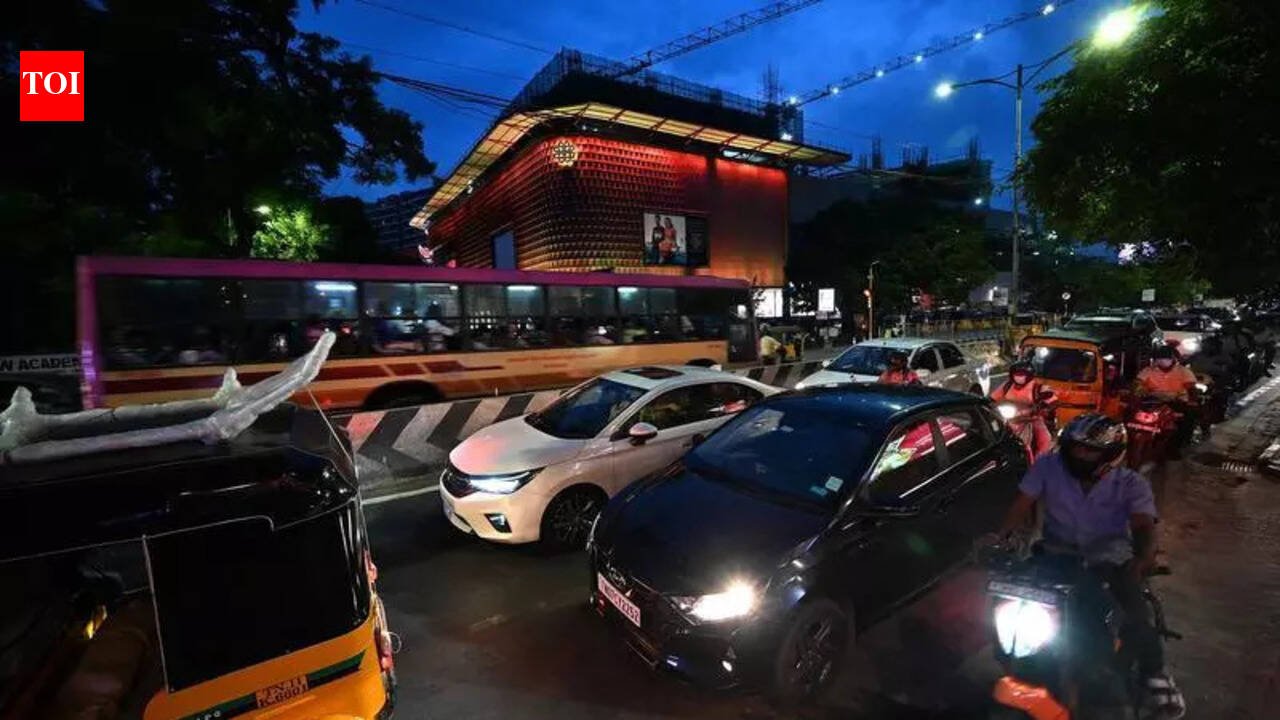
Chennai: With visitors predominantly relying on personal vehicles rather than public transport, traffic congestion around malls across the city has become a taunting issue over the past few years. A 2024 survey by Anna University researchers found that only one-third of mall visitors use public transport, such as buses, suburban trains, and metro rail.For instance, traffic congestion is worse during peak hours on Velachery Main Road or General Patters Road in Royapettah, where the city’s most popular malls are located. With more shopping malls being planned in Chennai, urban planners say integrating them with public transport will be critical to avoid worsening traffic congestion around these high-footfall zones. The recent study, based on responses from 5,091 mall visitors, found that personal vehicles were the dominant mode of travel. About 35% used two-wheelers, 9% used cars, and 21% used cabs and autos. About 1% used bicycles. The survey also found that a significant percentage of these visitors used private parking facilities outside these malls. While 12% used private parking areas, 15% parked in unauthorised areas, researchers said. One of the main reasons could be the parking fees collected by malls, which cost around Rs 100 for two hours.“Improving last-mile connectivity, increasing bus frequency, including AC buses, and creating dedicated bus stops near malls could boost public transport usage,” said Palani Ponnurangam, a researcher from the division of transportation engineering, department of civil engineering, Anna University, who conducted the survey.As of now, only Forum Vijaya Mall in Vadapalani and Aerohub have direct metro connectivity. He said visitors to shopping malls in other cities, such as Bengaluru, used public transport more.“Before giving approval to malls, regulatory authorities have to anticipate the number of vehicles expected, vehicle trips and the road network in the area to avoid traffic congestion in the future,” said professor Ganapathy Malarvizhi, one of the researchers from the division of transportation engineering, department of civil engineering, Anna University.The study also found that the purpose of visiting malls is not just shopping – more people visit to watch movies, eat, spend time in game zones, or relax. A smaller percentage said they visited for textile and accessories shopping, window shopping and festive shopping.“Designated bus bays, auto/taxi stands near the mall, and proper pick-up and drop-off zones for ride-hailing vehicles are required. Pedestrian facilities, including safe zebra crossings, signals, footpaths and plazas near entrances, will also play a role in reducing congestion near the malls,” said K P Subramanian, former professor of urban engineering from Anna University.“As traffic congestion increases in Chennai, proximity to public transport is becoming a critical determinant for the success of malls,” said Sanjay Chugh, city head and director of Anarock Property Consultants Private Limited in Chennai.“Developments located near Chennai Metro, suburban railway stations or major bus routes naturally attract more footfall. For malls that are not directly connected, shuttle services and better last-mile connectivity from transit points can serve as effective stop-gap measures,” he added.“For the malls inside the city, connectivity through metro and air-conditioned buses could be a game-changer. In other metros, malls close to metro stations get good footfall as it ensures seamless transition from transport hubs to shopping hubs. Mall owners can think of running electric vehicles from the nearest transport hub,” an official from CUMTA said.
