


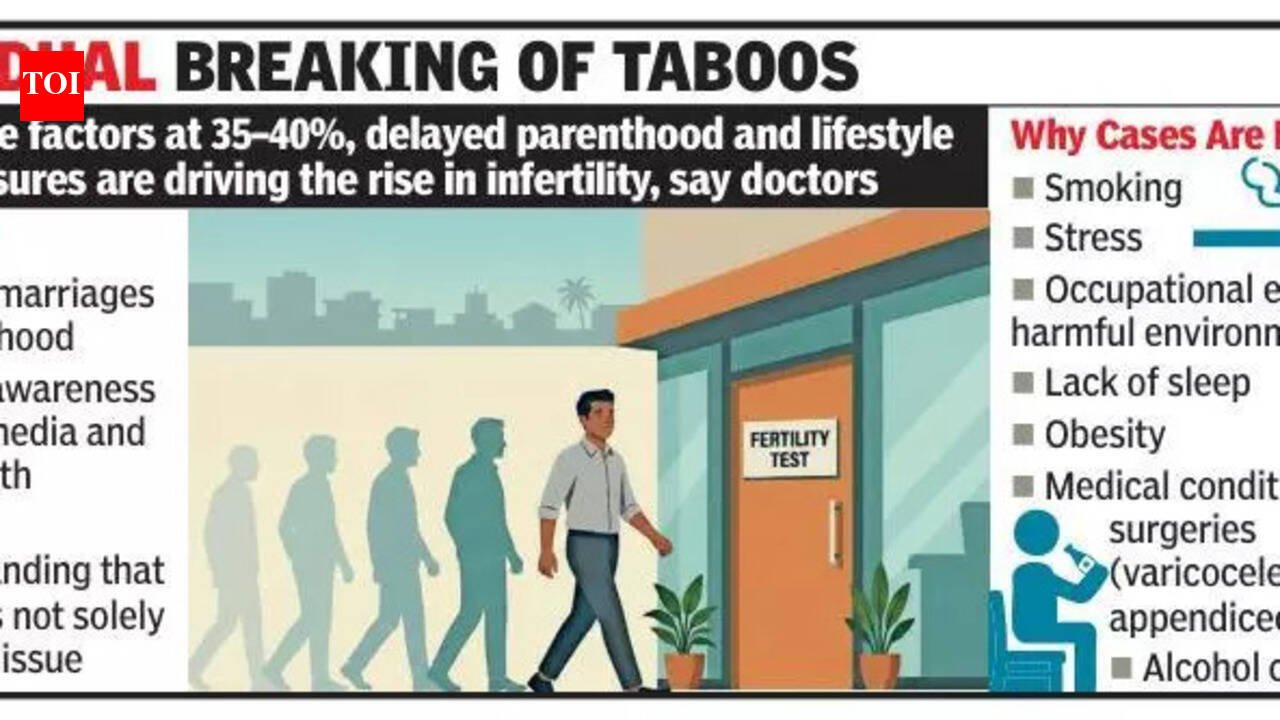
Mangaluru: Shedding old notions that linked fertility with masculinity, a growing number of men in Mangaluru are proactively getting tested, marking a clear shift in awareness despite lingering stigma.According to Dr Gaurav Gujarathi, senior consultant and centre head at Birla Fertility & IVF, Mangaluru, male infertility accounted for 35–40% of cases in 2025, and doctors are now seeing about a 5% rise. He said male factors alone contribute to 25–30% of infertility cases in the region, and combined male-and-female factors account for nearly 50–60%.
Doctors in Mangaluru said more men, especially from urban areas, are opting for fertility tests, reflecting a shift in attitudes. Experts attributed this to delayed marriages, later parenthood, greater awareness via social media and digital health platforms, and a clearer understanding that infertility is not solely a woman’s issue. They added that stigma persists, with long-held beliefs linking fertility and masculinity still delaying medical consultation.Listing causes, Dr Gujarathi said: “Smoking is one of the most significant contributors, followed by stress, lack of sleep, occupational exposure to harmful environments, obesity and alcohol consumption.” He added that certain medical conditions and surgeries, such as varicocelectomy or appendicectomy, also affect fertility. He said testing is generally affordable, though azoospermia may require genetic testing. He noted that more men are testing due to increased awareness, work-related stress, sexual dysfunction and exposure to high-temperature environments.From Bengaluru, Dr B Ramesh, an obstetrician, gynaecologist, laparoscopic surgeon, and IVF specialist, reported a 30–40% increase in male fertility testing over the last 3–4 years. “Younger men in their late 20s and 30s are more health-conscious, better informed and less hesitant to discuss reproductive health,” he said, citing online health content, corporate wellness programmes and fertility awareness campaigns. He added that couples now seek evaluation earlier than in previous generations.On stigma, urologist and surgeon Dr Shakir Tabrez said it has reduced but not disappeared. “Many men are still uncomfortable talking about fertility, which can delay testing. However, conversations are becoming more open and less judgmental than before,” he said.
