


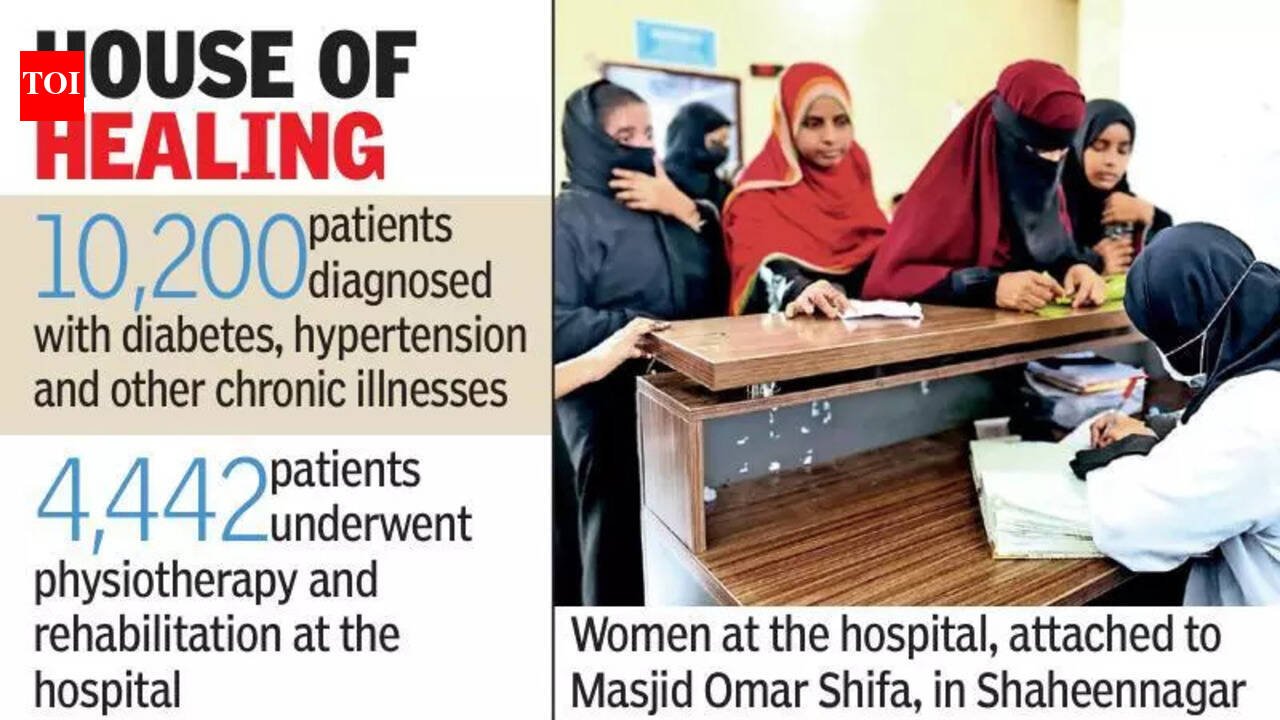
Hyderabad: A two-storey mosque in a slum in Old Hyderabad that also functions as a hospital has treated 1.4 lakh patients in the past year, almost five times the annual patient load of many govt-run primary health centres in Telangana.The hospital, attached to Masjid Omar Shifa in Shaheennagar, is run by a team of eight doctors, 15 nurses, six counsellors, two physiotherapists and four pharmacists, the facility also has a mini-operation theatre.The mosque-cum-hospital caters not only to local residents but also migrant labourers from north India. The hospital is largely funded through charity collected during Ramzan. About 60% of the patients are migrant labourers, cutting across religions and castes.While only a few primary health centres function round-the-clock, this mosque-run hospital provides free medical care 24×7. It also has inpatient facilities and ambulance services. The centre has treated thousands of poor patients, most of whom come from nearby localities such as Osmannagar, Saif Colony and Venkatapuram. The hospital began operations during the peak of the pandemic in 2020.The facility is managed by the Helping Hands Foundation (HHF) with support from the American Muslim Physicians of Indian Origin (AMPI), USA, and Support for Economic and Educational Development (SEED), USA.Spread across 3,000 sq ft, the hospital has 20 beds and facilities including a daycare centre, mini casualty ward, lactation management room, physiotherapy centre, dental and eye clinics, and a medical laboratory.According to HHF’s annual Ramzan report, 1,39,587 patients received free treatment in 2025. A majority of them were migrant workers from Bihar, Uttar Pradesh, Jharkhand, Maharashtra and Karnataka.“With the area being endemic to several water- and vector-borne diseases, 1,652 patients were treated in the tropical diseases ward, mainly for acute gastroenteritis, enteric fever, dengue and viral hepatitis,” said HHF managing trustee Mujtaba Hasan Askari.The hospital also provided services to 6,941 pregnant women. “We found that women’s health issues such as polycystic ovary syndrome, pelvic inflammatory disease, fibroids and irregular menstrual cycles were common among women patients who visited the hospital in 2025,” Askari said.Doctors also diagnosed 10,200 patients with diabetes, hypertension and other chronic illnesses, while 4,442 patients underwent physiotherapy and rehabilitation.“About 50% of the patients come to the hospital on foot as they cannot afford transport costs,” Askari added.Meanwhile, a pre-Ramzan survey found that 67% of households in the Old City view youth unemployment as a serious concern. Around 77.2% of BPL families said income and daily survival were their biggest challenges, while 68.6% cited family health as a major pressure.Despite financial constraints, 60.3% of families said they prioritise their children’s education, the survey found.
