


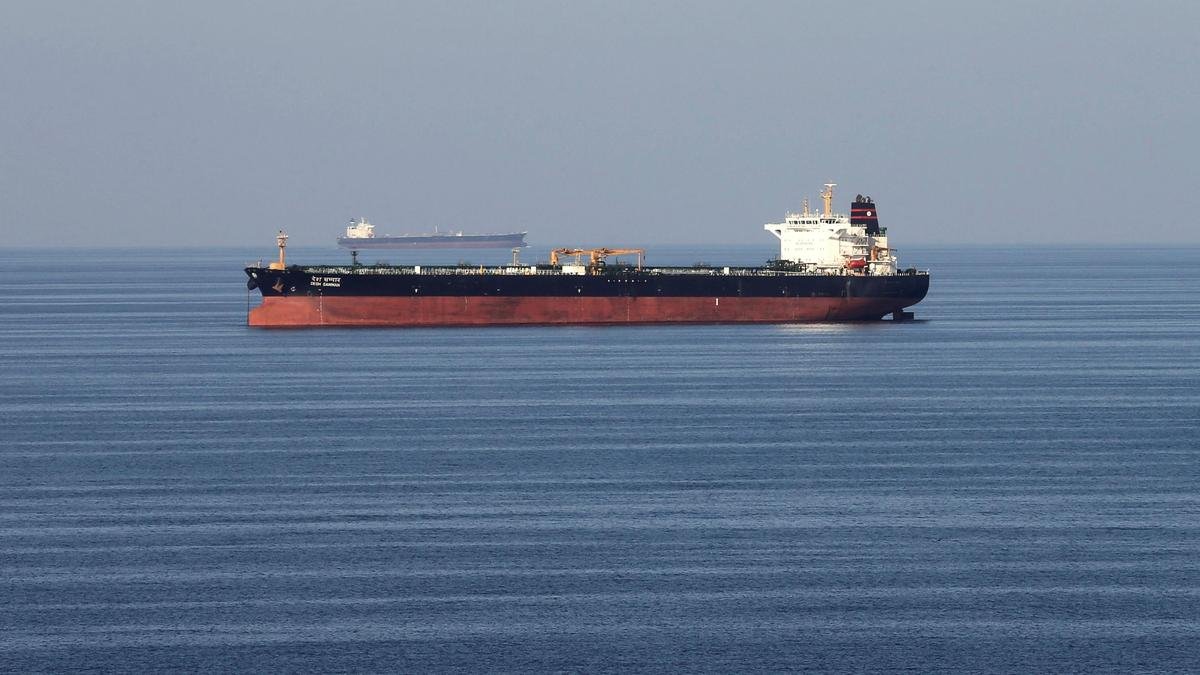
Oil and gas prices have surged following the closure of the Strait of Hormuz, a gateway to 20% of the world’s oil exports from the Gulf
| Photo Credit: Reuters
With Iran targeting U.S. bases in other countries in the West Asian region, the U.S.-Israel attack has created a massive ripple effect extending well beyond the region, threatening global energy security.
Following a drone attack from Iran on Monday, Qatar halted the production of liquefied natural gas at the world’s largest export facility. The suspension of operations across refineries in other Gulf nations such as Saudi Arabia and Iraq have also been announced. Oil and gas prices have surged following the closure of the Strait of Hormuz, a gateway to 20% of the world’s oil exports from the Gulf.
As shown in the chart below, oil prices soared to $78.31 on Monday, almost 12% higher than a week ago. Prices were slowly inching up last week even as negotiations between the U.S. and Iran were ongoing, largely due to the military build-up by the U.S. in the region.
According to the Iranian Red Crescent, the U.S.-Israeli attacks, dubbed Operation Epic Fury by the U.S.’s Pentagon, have killed more than 780 people in Iran as of March 2, hitting more than 500 locations since February 28. In retaliation, Iran fired missiles at Israel and nations across the region, particularly targeting U.S. bases in Qatar, the UAE, Saudi Arabia, Kuwait, Bahrain, and Jordan, pushing what was claimed to be a “pre-emptive strike” by the U.S. and Israel into an all-out regional war.
This region accounts for 31% of the global oil production in 2024, and includes five of the top 10 oil-producing countries — Saudi Arabia, the UAE, Iraq, Iran, and Kuwait. West Asia accounted for 38% of global oil exports in 2024.
Moreover, Iran’s Islamic Revolutionary Guard Corps have announced the closure of the Strait of Hormuz which is a narrow channel connecting major oil-producing nations with the Gulf of Oman and the Arabian Sea. Ships transporting oil have been effectively halted through threats, mine-laying, and direct attacks by Iran’s military, creating a chokepoint.
As shown in the chart below, several nations, including Saudi Arabia and Iraq, transport about 14 million barrels of crude oil and petroleum products through the Strait per day.
According to energy consulting firm Kpler, the Strait represents 31% of all seaborne crude flows.
Impact on China, India.
The closure could stall supply to countries like China and India that import millions of barrels daily via the Strait. China received 5.4 million barrels of crude oil per day via the Strait in FY25Q1, the highest in volume. India followed at 2.1 million barrels per day.
Iran, which exported more than 97% of its oil to China in 2024, was a major source of cheap crude for Beijing, a dependence precipitated by longstanding U.S.-led sanctions.
Notably, the Strait’s closure comes months after the disruption of China’s supplies from Venezuela, another key source of discounted crude, following the U.S.’s invasion and naval blockade of the Latin American nation.
With two of its major sources of cheap oil now effectively cut off, China faces mounting pressure on its energy security. About 56% of China’s oil imports came from West Asian countries in 2024. However, China has sought to mitigate this dependence by storing Iranian oil in tankers and onshore inventories.
Kpler estimates China has about 1.2 billion barrels in onshore commercial and strategic inventories as of Monday, with levels surging 30% since 2020. In India’s case, the Ministry of Petroleum has said that the country has sufficient crude oil stocks to last up to 25 days. The Strait’s closure can have detrimental effects if it persists.
Published – March 04, 2026 07:00 am IST
