


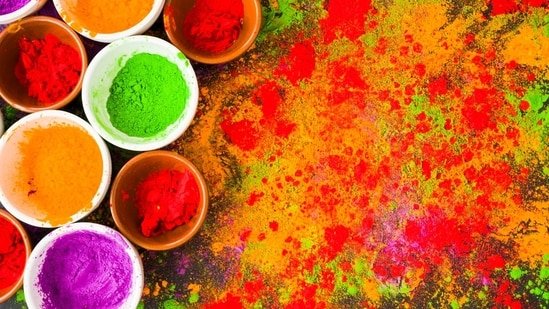
Holi 2026: Holi is just around the corner, and the final stretch of preparations is underway. This includes planning the much-anticipated playing with bright colours with friends and family. Powdered colours remain one of the most popular choices as loved ones smear vibrant hues on each other in celebration.
ALSO READ: Playing with colours this Holi? Dermatologists share 12 hacks to protect your skin
But here’s the catch: knowing which types of colours to use can save you a lot of trouble after Holi. As you apply colours to the face and sometimes engage in rough play with friends, there is a major risk of inhaling fine particles from these colours, which can travel deep into the lungs.
Let’s see what a pulmonologist has to say about it. HT Lifestyle connected with Dr Nitin Rathi, associate director and senior consultant – pulmonology, Dharamshila Narayana Superspeciality Hospital, Delhi. He raised an alarm that, in the days following Holi, clinics usually see an increase in patients complaining of breathing difficulty, chest tightness, and persistent coughing, even among those with no prior history of lung problems.
According to the pulmonologist, the root of the issue lies in the synthetic colours commonly used today,
Why should you avoid synthetic colour?
Holi colours, especially the synthetic ones, may pose breathing risks due to their chemical composition. Many commercially available powders actually contain toxic substances that are not meant to be inhaled. But Holi colours easily become airborne, whether they are thrown into the air or smeared on the face, increasing the chances of inhalation.
The pulmonologist described the substances of Holi colours, “A lot of Holi colours have super tiny particles, like PM 2.5 size, which can get way down into your lungs. Additionally, some of them even have heavy metals like lead and chromium, and industrial dyes that you really shouldn’t be breathing in.”
What happens to colour particles inside the lungs?
The bright colours may bring a lot of joy, but inside your body, they can create turbulence. Your respiratory system may take a hit as the lungs become irritated. When inhaled, these fine particles do not simply disappear; they travel through the respiratory tract and can settle deep within the airways.
Elaborating on the particular condition synthetic colours may trigger, Dr Rathi said, “When these particles enter the airways, they irritate the lining of the lungs. This irritation can trigger bronchospasm, which means the airways suddenly narrow and make breathing harder.”
He also highlighted another concern: in some cases, inhalation of fine particles may lead to reactive airways dysfunction syndrome. This condition can develop even in people with no previous history of asthma and may cause sudden asthma-like symptoms
There’s also another condition that he brought to notice, which is that in some cases, inhalation of fine particles may cause reactive airway dysfunction syndrome. This can happen in people who have no previous history of asthma and may cause sudden asthma-like symptoms like chest tightness, wheezing or breathlessness. This can happen even after a single intense exposure to the synthetic colours.
What should you use instead?
Playing with colours is an integral part of Holi celebrations. However, synthetic colours can come with several health risks that may turn pleasant memories sour if you are left dealing with breathing issues after the festivities.
So what is the solution? The pulmonologist advised switching to natural or organic Holi colours, as they are generally safer for both the skin and the lungs. He emphasised that making this change can make a ‘significant difference’ in reducing irritation risks.
Safe tips for playing on Holi
Dr Rathi listed out some tips that reduce your risks of inhaling holi colours:
- Playing outdoors also helps. Open air dilutes the concentration of particles and reduces the amount that is inhaled. Closed rooms and indoor celebrations increase exposure.
- If you or your kids have allergies, asthma, or get sick a lot with breathing issues, an N95 mask during colour play can really help. It might feel a little weird at a festival, but it can totally cut down on irritation.
Warning sign you should not ignore
How do you know if you need to visit a doctor? Dr Rathi said, “If you get a cough, feel breathless, or have chest tightness within a day or two after Holi, don’t just ignore it.” It is better to consult a doctor rather than brushing these off as a casual inconvenience that will go by itself, as then the chances of complications may increase if timely treatment is delayed.
Note to readers: This article is for informational purposes only and not a substitute for professional medical advice. Always seek the advice of your doctor with any questions about a medical condition.
