


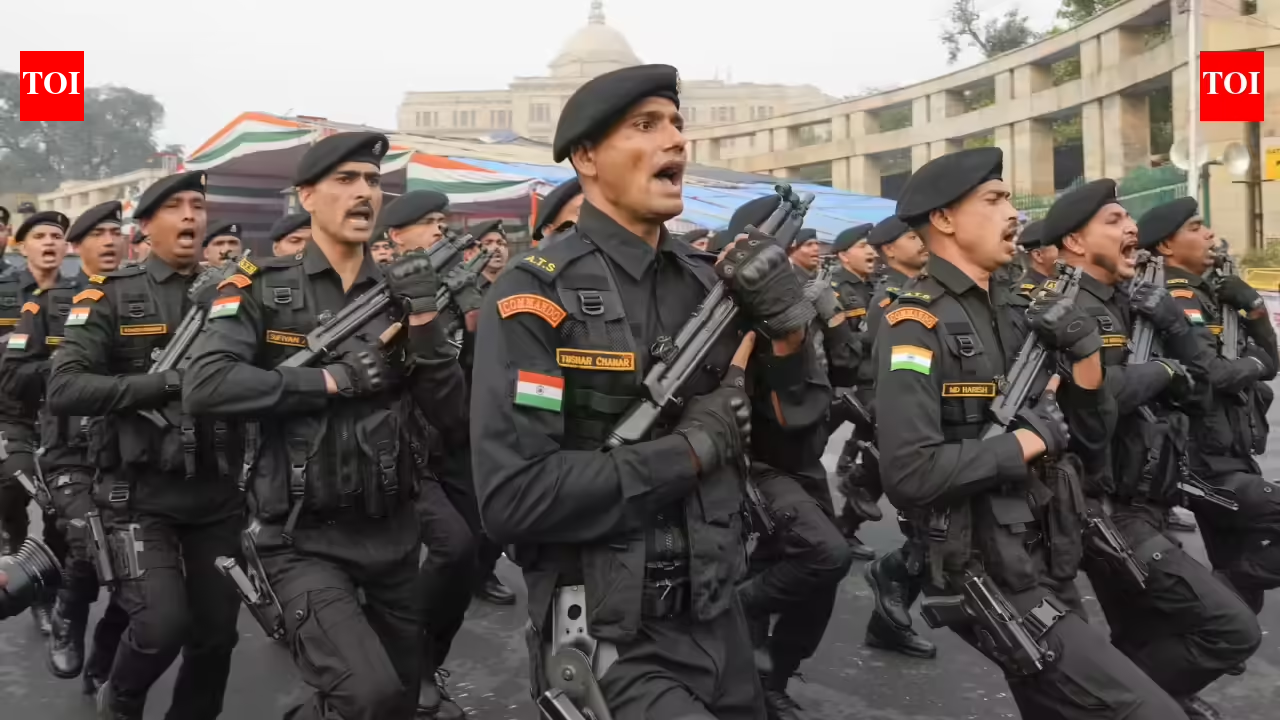
GURGAON: Months after the unmasking of a radicalised ‘white-coat’ terror module linked to Al-Falah University in Faridabad and a parallel trail of espionage cases traced to Nuh and other districts, chief minister Nayab Singh Saini on Monday announced the setting up of an anti-terrorist squad (ATS) for the state.Presenting the budget, Saini said the ATS would function under an officer of inspector general of police (IGP) rank. Two ATS police stations will be set up – one in Gurgaon and the other in Panchkula – at a proposed cost of Rs 35.5 crore. He also proposed the induction of women commandos into the unit.According to sources, the decision gathered urgency after agencies exposed the Al-Falah-linked module and made arrests connected to the Nov 10 car blast near Delhi’s Red Fort that killed 15 people and injured several others. The module, police found, was being run by a group of doctors and allegedly headed by Dr Shahin Shaheed, who is believed to have been in contact with terrorists operating from foreign soil.As the probe widened, searches around the university’s vicinity led to the recovery of nearly 2,900kg of explosive and flammable material, along with weapons and components. Police said a Krinkov assault rifle with three magazines, 83 live cartridges, a pistol with eight live rounds, additional magazines, timers, batteries, remotes and communication equipment were seized from rented premises near the campus. The recoveries were made from two houses in Dhauj village and Dehar Colony in Fatehpur Taga, both close to the university.Senior officials said the ATS would have a mandate separate from the state’s special task force (STF), headquartered in Gurgaon. While the STF primarily targets organised crime and gang networks, the ATS will focus on terror networks, radicalisation and related investigations. The new unit is also expected to act as a single-point coordination mechanism for intelligence sharing and joint operations with central agencies, including National Investigation Agency (NIA), and ATS units in other states.Officials said Haryana’s lack of a dedicated ATS had earlier created avoidable friction in sensitive cases. “In the Faridabad module for instance, the initial investigation was handled by Jammu & Kashmir Police and cops from Faridabad. Central agencies, including NIA, joined later – mainly after the Delhi blast. The state STF also came in much later,” a senior Haryana Police officer said. “Coordination could have been better. That experience showed why Haryana needs a specialised anti-terror unit for quicker response, smoother intelligence exchange and coordinated action,” he added.The push for a more standardised anti-terror architecture has also been flagged at the national level. At the ‘Anti-Terrorism Conference-2025’ in New Delhi last Dec, Union home minister Amit Shah called for a common ATS structure across states and urged police chiefs to adopt operational uniformity, including the use of investigative platforms such as ‘NIDAAN’ and ‘NATGRID’, to prevent isolated probes and detect hidden linkages.
