


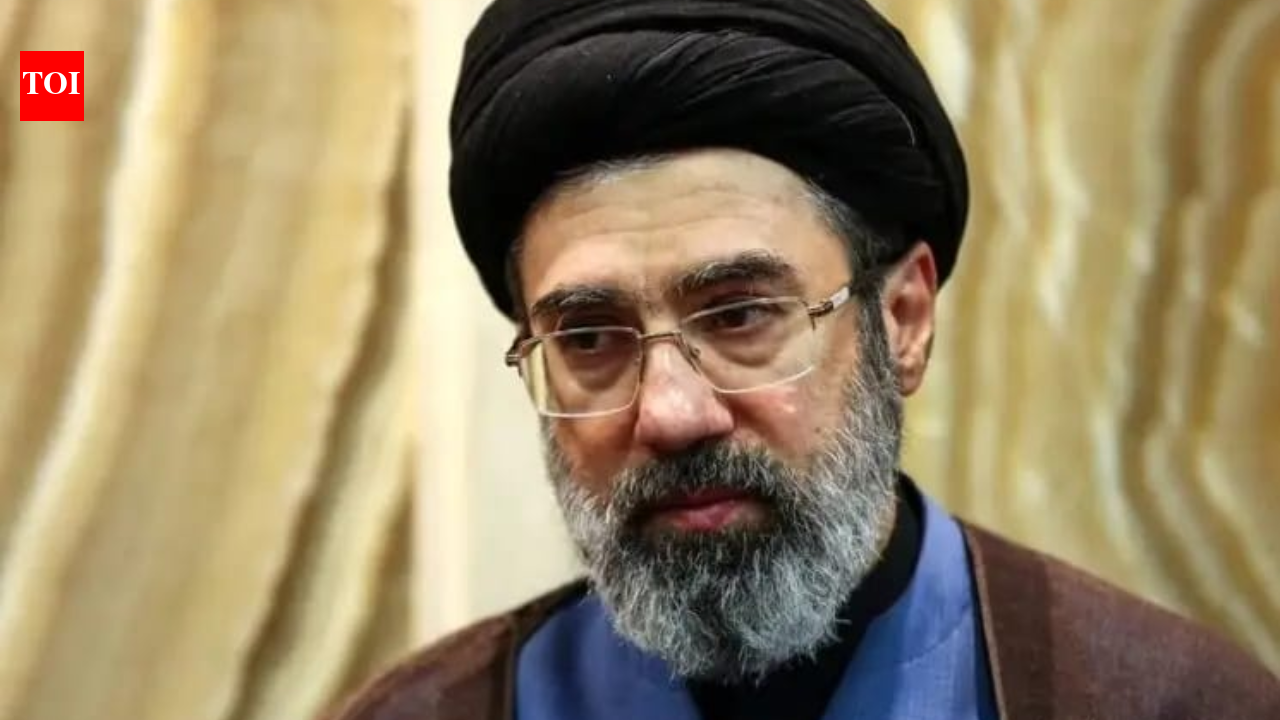
Iran’s Supreme Leader Ayatollah Ali Khamenei was killed in joint US-Israeli strikes, triggering a leadership vacuum at the top of the Islamic Republic and setting off intense speculation over his possible successor.Among the names drawing attention is Mojtaba Khamenei, the second-eldest son of the late leader, who has long been viewed as an influential but behind-the-scenes figure within Iran’s power structure.
Senior official Ali Larijani signalled that a temporary leadership mechanism would be activated to ensure continuity. He said that an interim council comprising the president, the head of the judiciary and a jurist from the Guardian Council would assume responsibilities until a new Supreme Leader is selected, according to Times of Israel.
Who is Mojtaba Khamenei?
Mojtaba Khamenei, 56, is widely regarded as one of the most influential yet opaque figures within Iran’s ruling system. Born in Mashhad in 1969, he grew up during the revolutionary struggle against the monarchy of Shah Mohammad Reza Pahlavi. His father, then a prominent cleric, was repeatedly arrested and exiled by the Shah’s security forces.After the 1979 Islamic Revolution transformed the family’s fortunes, Mojtaba moved to Tehran, where he attended the elite Alavi High School, an institution known for producing regime insiders. He later pursued religious studies in Tehran and Qom, studying under prominent conservative clerics, including Ayatollah Mohammad-Taqi Mesbah Yazdi, according to state news agency UANI.Although Mojtaba is a mid-ranking cleric and not an ayatollah, he has long been considered a powerful behind-the-scenes figure in the Office of the Supreme Leader. Analysts often compare his role to that played by Ahmad Khomeini, son of Ayatollah Ruhollah Khomeini, who served as gatekeeper and confidant during his father’s rule.Mojtaba’s influence is believed to stem from his close ties to the Islamic Revolutionary Guard Corps (IRGC). He served in the Habib Battalion during the Iran-Iraq War and is said to have built lasting relationships with figures who later rose to senior positions in Iran’s security apparatus, including intelligence and Basij commanders.Over the years, Mojtaba has been accused by political rivals and foreign governments of playing a role in election politics and security crackdowns. He was sanctioned by the United States in 2019 under an executive order targeting individuals linked to Iran’s Supreme Leader. The US Treasury said at the time that Ali Khamenei had delegated aspects of his authority to his son, who was described as representing the leader in an official capacity despite holding no elected office.Despite his proximity to power, Mojtaba’s potential succession would face significant hurdles.Iran’s constitution requires the Supreme Leader to be a senior cleric with recognized religious authority and political competence. Mojtaba does not currently hold the rank of ayatollah, and father-to-son succession is deeply sensitive in a system founded on overthrowing a hereditary monarchy.Nevertheless, some analysts argue that Mojtaba’s strong relationships within the IRGC and security establishment could bolster his candidacy, especially if influential factions rally behind him. Unofficial campaigns in recent years have reportedly sought to elevate his religious credentials, though critics within the clerical establishment remain wary.Under Iran’s constitution, the 88-member Assembly of Experts is responsible for selecting the next Supreme Leader. The body is tasked with assessing eligible clerics and appointing one who meets the required religious and political qualifications, according to CNN. The constitution allows for an interim leadership arrangement if necessary, ensuring that executive authority continues while the Assembly deliberates.
