


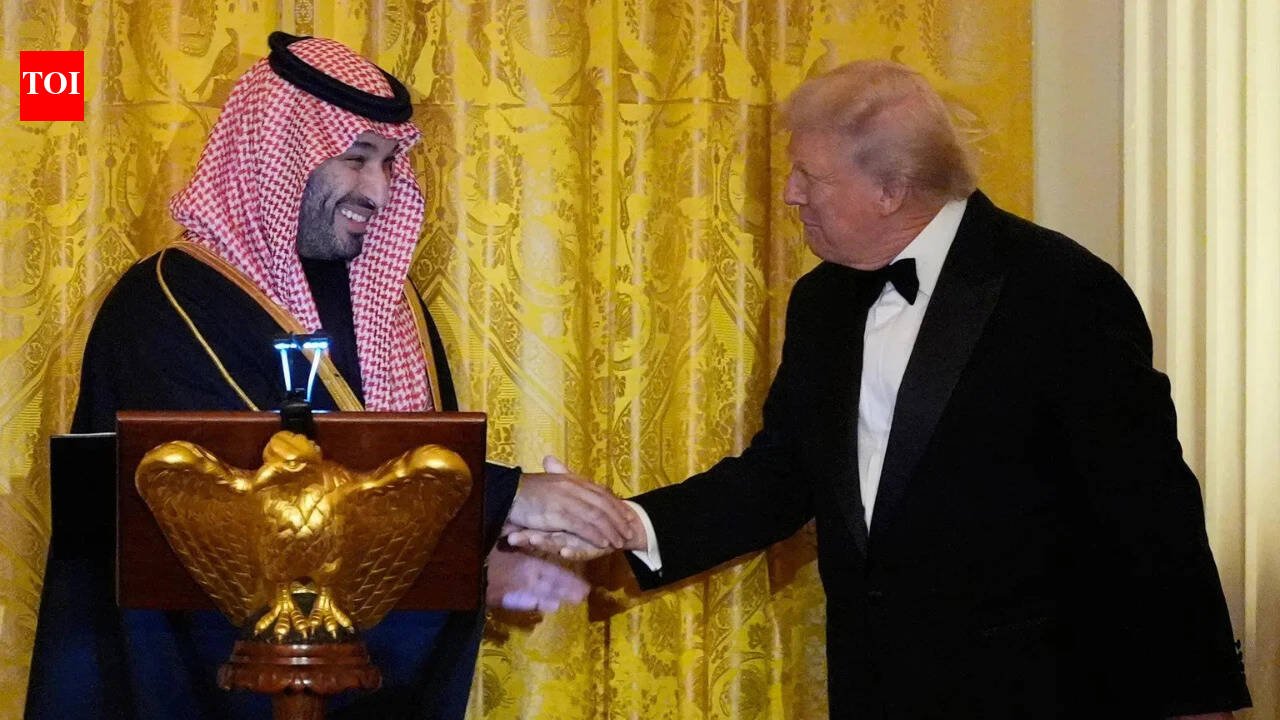
As Iran mourns the death of its Supreme Leader, Ayatollah Ali Khamenei, fresh details have surfaced about Saudi Arabia’s alleged behind-the-scenes role in the US strike on Iran. A report by The Washington Post claims that Saudi Crown Prince Mohammed bin Salman held multiple private calls with US President Donald Trump, urging him to launch military action against Tehran.Citing four people familiar with the matter, the report said that even as Riyadh publicly backed a diplomatic solution, the crown prince privately pressed Trump to act. The US, with Israel’s support, subsequently carried out strikes in Iran that resulted in Khamenei’s death.
After negotiations between US envoy Steve Witkoff, Trump’s son-in-law Jared Kushner, and Iranian officials, Saudi Arabia publicly stated that it would not permit its airspace to be used for strikes on Iran. This announcement followed reported phone conversations between the crown prince and Iran’s President Masoud Pezeshkian.However, in his conversations with US leaders, Mohammed bin Salman reportedly argued that failing to strike Iran immediately would allow Tehran to grow stronger and more dangerous. He is said to have warned that Iran now commands one of the largest military footprints in the Middle East since the 2003 US invasion of Iraq.His brother, Saudi Defence Minister Khalid bin Salman, echoed these concerns during closed-door meetings with US officials, cautioning about the potential consequences of inaction.According to the report, US intelligence assessments had indicated that Iran was unlikely to pose an immediate threat to the United States over the next decade. Despite its adversarial stance toward Tehran, Washington had until then refrained from launching a full-scale strike.The Saudi leader is currently performing a delicate diplomatic balancing act.The Saudi crown prince is torn between protecting his nation’s sensitive oil industry from Iranian attacks and managing a deep-seated rivalry with a country he considers his primary regional enemy, according to the sources cited by The Washington Post.This tension is the latest chapter in a long-standing power struggle. The two nations—Sunni-led Saudi Arabia and Shiite-led Iran—have spent years competing for influence, often clashing through indirect “proxy wars” across the Middle East.
