


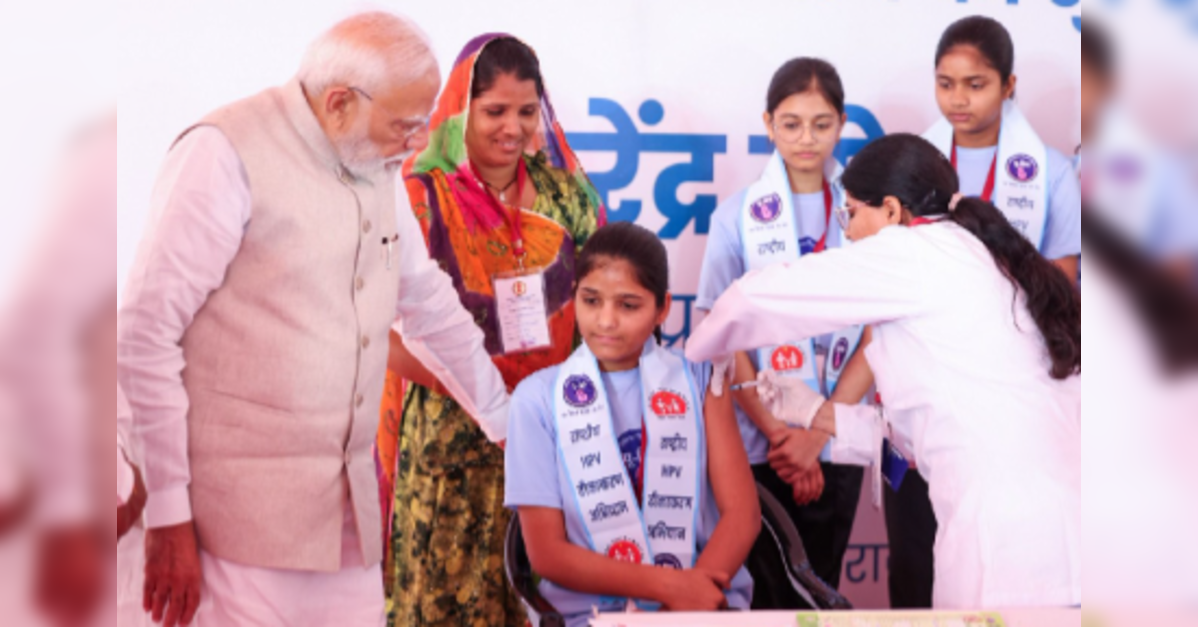
New Delhi: In a major step to tackle the rising burden of cervical cancer in India, which remains the second most common cancer among women with over 1.2 lakh new cases and nearly 80,000 deaths reported annually, Prime Minister Narendra Modi launched a nationwide Human Papillomavirus (HPV) vaccination campaign for 14-year-old girls from Ajmer, Rajasthan. The programme aims to prevent the disease at its source by offering a free, voluntary, single-dose HPV vaccine through government health facilities across the country.
Describing the campaign as a decisive public health intervention, the Prime Minister informed that protecting adolescent girls from HPV infection would significantly reduce future cervical cancer cases and strengthen the overall health of families and communities. He underlined that the government’s women-focused initiatives across sanitation, clean cooking fuel access and maternal nutrition reflect a broader shift toward preventive and dignity-led healthcare.
Medical experts attribute cervical cancer primarily to persistent infection with high-risk HPV strains, particularly types 16 and 18, which are responsible for the majority of cases. Vaccinating girls before potential exposure to the virus is globally recognised as the most effective strategy to prevent the disease and reduce mortality.
The vaccine introduced under India’s national programme has been validated by international and domestic scientific bodies, including the World Health Organization and India’s National Technical Advisory Group on Immunization, which have endorsed its safety, efficacy and long-term protection.
Globally, 160 of 194 countries have already incorporated HPV vaccination into their national immunisation programmes, with several adopting a single-dose schedule based on emerging scientific evidence and operational feasibility. India’s rollout aligns with these global trends aimed at accelerating cervical cancer elimination.
The campaign will target girls aged 14 years, covering an estimated annual cohort of about 1.2 crore beneficiaries. It will initially run in a 90-day campaign mode and will subsequently be integrated into routine immunisation services. Vaccination will be provided at public health facilities such as primary health centres, community health centres, district hospitals and government medical colleges, with administration subject to parental or guardian consent.
Health officials stated that the rollout has been planned with detailed safety and logistics protocols, including trained medical supervision, cold-chain management and monitoring systems to address any rare adverse events following immunisation. Vaccination will be deferred in cases of moderate or severe illness or known severe allergic reactions, in line with established medical guidelines.
Authorities emphasised that widespread immunisation can create a strong herd effect, reducing the circulation of cancer-causing HPV strains and offering indirect protection to the wider population. The Union Health Ministry has urged parents and guardians to ensure eligible girls receive the vaccine during the campaign period, calling it a transformative step in shifting India’s healthcare approach from treatment to prevention and in advancing the long-term goal of eliminating cervical cancer.
