


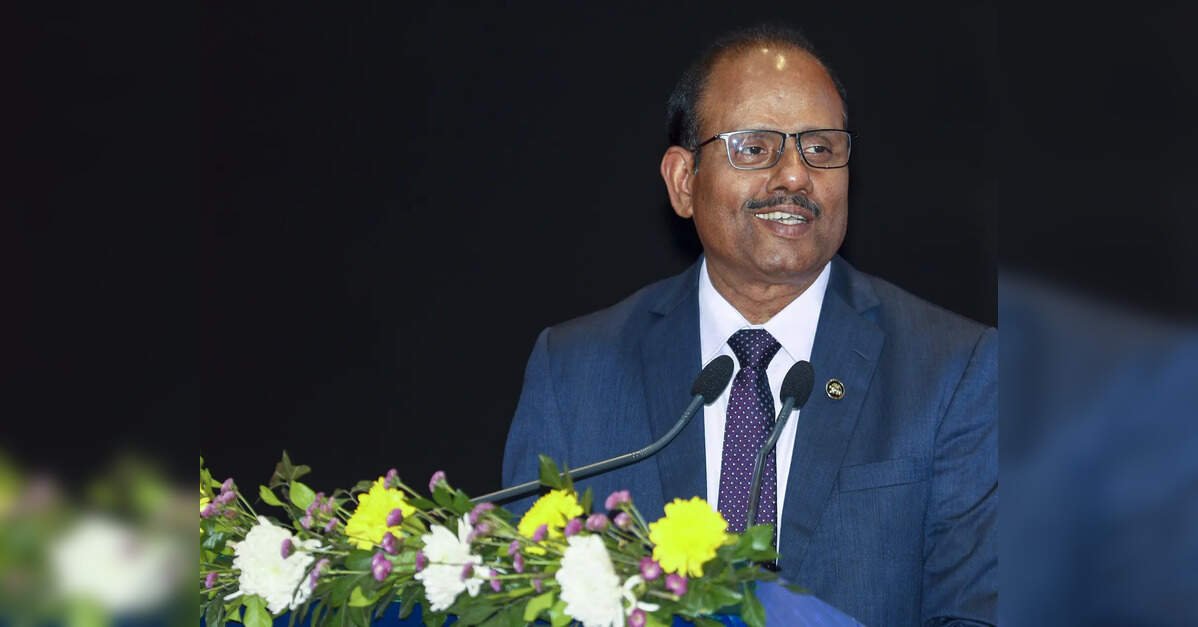
Jammu, Reserve Bank of India Deputy Governor Swaminathan J on Friday said that India’s financial system on the road to 2047 must be anchored in three pillars-safety, fairness and reliability.
Delivering the keynote address at the 3rd International Finance and Accounting Conference hosted by the Indian Institute of Management Jammu, Swaminathan said, “Future leaders must keep these principles at the core while shaping the country’s financial architecture”.
The two-day conference, being held at IIM Jammu’s Mandapam Auditorium, is themed “Financial Strategies for Inclusive and Sustainable Economic Growth to achieve Viksit Bharat@2047.
Addressing scholars, experts and students, Swaminathan framed his remarks as a dialogue with future leaders, stressing that development goes beyond GDP to include quality of life.
“Finance is fundamentally people-centric and rests on trust, clarity and integrity,” he said, urging principled leadership, transparent discussion of risks and responsible system design in an era of rapidly scaling technology.
He said inclusive growth requires fair customer outcomes and performance rooted in strong values.
Highlighting key lessons for sound decision-making, the RBI deputy governor emphasised respect for customers, understanding financial sustainability, encouraging constructive challenge and discussing risks openly.
He noted that while technology amplifies value creation, it also multiplies vulnerabilities, making responsible design and fairness critical for inclusive growth.
Swaminathan added that the journey toward Viksit Bharat@2047 would require performance anchored in principles, and that platforms such as the conference help bridge classroom learning with real-world financial transformation.
Dean Faculty and Research, IIM Jammu, Prof Jabir Ali said higher education must transcend classrooms to foster a deeper understanding of public policy and its real-world impact, particularly in advancing inclusive and sustainable development.
Reaffirming IIM Jammu’s commitment to the vision of Viksit Bharat 2047, he highlighted the role of research-driven insights, ethical leadership and collaboration among academia, industry and government. PTI>
