


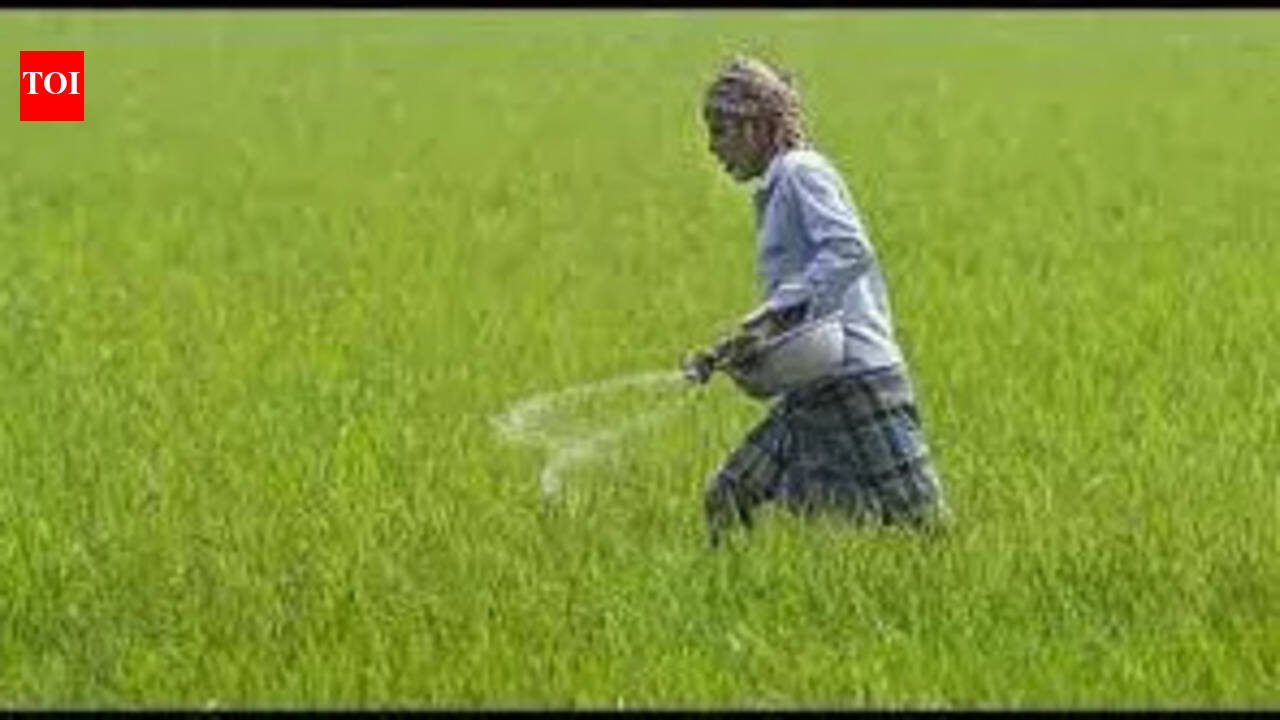
Bathinda: Punjab recorded 4.97% less consumption of urea and 12.49% less consumption of diammonium phosphate (DAP) in 2024-25 compared to the average of the previous 3 years of 2021-22, 2022-23 and 2023-24, while muriate of potassium (MOP) recorded an increase of 1.75% and nitrogen-phosphorus-potassium (NPK) recorded a 77.61% increase during this period. Overall, consumption of chemical fertilisers recorded a decrease of 2.82% in 2024-25 compared to the average of the previous 3 years, stated Punjab agriculture department director Gurjit Singh Brar in an affidavit submitted to the National Green Tribunal (NGT), which was uploaded on Thursday.The affidavit was filed in a suo motu cognisance by the NGT of a report, “Climate change imbalance in fertiliser use impacts soil’s organic carbon: ICAR study”, which appeared on November 10, 2025. It complied with directions of the tribunal regarding the scientific and judicious use of fertilisers, soil health management, maintenance of soil organic carbon (SOC) and prevention of environmental degradation.
As per the affidavit, the consumption of urea was recorded at 30,05,207 MT in 2024-25, down from the previous 3-year average of 31,62,393 MT, thus decreasing by 1,57,186 MT. The consumption of DAP was recorded at 6,00,609 MT in 2024-25, down from 6,86,309 MT as per the average of the previous 3 years, with a decrease of 85,700 MT. The consumption of MOP recorded an increase of 59,581 MT, while consumption of NPK recorded an increase of 71,402 MT. Overall, a decrease of 1,11,903 MT of chemical fertiliser was recorded, which was recorded at 2.82%.The rise in consumption of MOP and NPK was likely attributable to the promotion of balanced fertiliser use, which positively influenced the state’s NPK ratio.The reduction in chemical fertiliser usage was recorded due to the implementation of the programme for restoration, awareness, nourishment and amelioration of mother earth (PM-PRANAM), stated the state agriculture director.It was stated that, according to the Fertiliser Association of India, the annual fertiliser consumption was highest in Uttar Pradesh, Andhra Pradesh and Maharashtra, which reflected the intensity of agricultural activities in these states, where multiple cropping seasons, large cultivated areas and high-yielding varieties demanded greater nutrient inputs. Recent estimates indicated that in Punjab, each kg of fertilisers yielded nearly 16.24 kg of food grain, compared to 11.05 kg for the country. Punjab ranked among the toppers in cropping intensity, an indicator of agricultural efficiency. According to India Stat and the Directorate of Economics and Statistics, cropping intensity in Punjab stood at 189% against the national average of 145%. It was achieved with spring/summer maize emerging as the third high-yield crop, thus a high fertiliser-consuming crop.This indicated that farmers in Punjab took more crops per year from the same land than other states. Punjab continued to maintain top-tier productivity levels, as wheat productivity in Punjab was over 5 tonne/hectare above the national average of nearly 3.5 tonne/hectare, while paddy yields were around 6-7 tonne/hectare, which was among the highest in the country. It was also stated that Punjab recorded a steady increase in SOC over the years, which reflected improvement in soil quality and sustainability.It was also stated that during the current fiscal year of 2025-26, under the National Mission on Natural Farming, 5,410 farmers from 5 districts were enrolled to adopt chemical-free, climate-resilient agriculture, as 5,368 acres transitioned to natural farming practices. The mission for 2026-27 targeted 10 districts, increasing its regional footprint and increasing the area under natural farming.
