


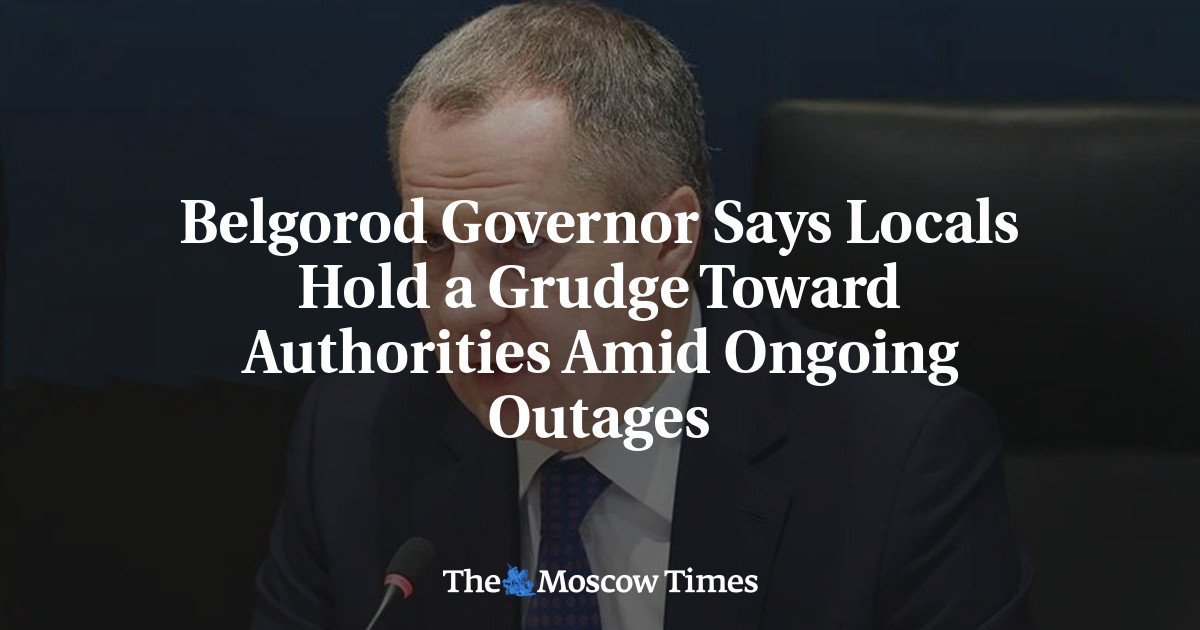
Residents of Russia’s Belgorod region, which has been hit by frequent Ukrainian attacks and recurring power outages, harbor an “internal resentment” toward local authorities, Governor Vyacheslav Gladkov said Thursday after a man allegedly refused to give him a ride.
Gladkov said the incident happened as he was returning from a business trip and his train broke down en route. After disembarking, he approached a local driver and asked the man to drive him to a nearby railway crossing where an official car was waiting.
“The local resident refused,” Gladkov said on his Telegram channel. “Honestly, it seemed to me like there is some internal resentment toward the authorities, whether they be regional or local.”
According to Gladkov, the man said he did not want to “wear out” his car unnecessarily.
The governor said he would ask the head of Yakovlevsky district, where the incident took place, to speak with the man to better understand possible grievances toward the authorities.
Gladkov’s account comes as the Belgorod region, which borders Ukraine, has faced intensified cross-border strikes amid devastating Russian strikes on Ukrainian energy infrastructure in recent months.
Thousands of Belgorod residents have complained of disruptions to electricity, water and heating supplies following damage to local power facilities.
Regional lawmakers have proposed allowing families to use state maternity capital payments to purchase electricity generators.
Residents have also reported delays in repairs to homes damaged in the attacks.
Earlier this week, residents of the Graivoron district which borders Ukraine called for a full evacuation and compensation payments amid shortages of essential goods following Ukrainian drone strikes, according to local media outlet Pepel.
Read this story in Russian at The Moscow Times’ Russian service.
A Message from The Moscow Times:
Dear readers,
We are facing unprecedented challenges. Russia’s Prosecutor General’s Office has designated The Moscow Times as an “undesirable” organization, criminalizing our work and putting our staff at risk of prosecution. This follows our earlier unjust labeling as a “foreign agent.”
These actions are direct attempts to silence independent journalism in Russia. The authorities claim our work “discredits the decisions of the Russian leadership.” We see things differently: we strive to provide accurate, unbiased reporting on Russia.
We, the journalists of The Moscow Times, refuse to be silenced. But to continue our work, we need your help.
Your support, no matter how small, makes a world of difference. If you can, please support us monthly starting from just $2. It’s quick to set up, and every contribution makes a significant impact.
By supporting The Moscow Times, you’re defending open, independent journalism in the face of repression. Thank you for standing with us.
Continue
Not ready to support today?
Remind me later.
×
Remind me next month
Thank you! Your reminder is set.
