


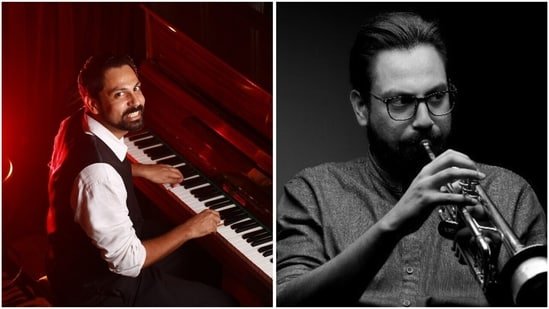
From performing in a fledgling jazz circuit in early-2000s Delhi to building one of the city’s most influential live music venues, Arjun Sagar Gupta has witnessed – and shaped – the evolution of India’s gig culture up close. The musician-entrepreneur, best known as the founder of The Piano Man Jazz Club, sat down with HT Lifestyle for a candid conversation on the changing landscape of live music in the country, the psychology of building audiences, and the infrastructural gaps that once plagued performing artists.
Reflecting on his musical education, the challenges of establishing a large-format live venue, navigating regulatory hurdles, and curating talent in an increasingly crowded market, Gupta offers both a 30-year snapshot of the industry and a forward-looking vision for where it needs to go next.
Excerpts from the interview:
What was your music education like?
Most of my music education was in Delhi itself, at the Delhi School of Music. The principal at that time was John Raphael, who was also my teacher and I studied with him for about 18 years. In the interim period in 2007, I also had the opportunity to attend a Fulbright program in Boston.
The most important takeaway I got from that international part of the education is how big the world is, because when you’re in Delhi, especially in the early 2000s, it’s such a small ecosystem for live music, especially for jazz or classical. So just watching musicians from all over the world and seeing the standards and the expectations of what is acceptable, when you’re a student of something, it was amazing. It really opened my eyes – a really good lesson because it kind of shifts your mind back into perspective.
Is there someone who influenced you into pursuing music?
My father actually loves music. I mean if he had the opportunity, he might have been a musician himself. When I started going into music, there was always support available – my parents, my grandmother – which is great.
Beyond that I think a large part of the continued interest in music was because of my teacher, John Raphael, because he didn’t force me to follow the standard classical music education process at the Delhi School of Music. When he realised that I love jazz he started teaching me what I liked and what made you happy, which is not a common thing you’ll get in an educational institute.
What inspired you into opening The Piano Man? Does it have anything to do with the live music scene in India?
Of course. So I had spent a fair amount of time performing, mostly in Delhi, but a little bit across the country as well, and there were a couple of really big gaping holes in the ecosystem. Absolutely no infrastructure in place. You start in an uncomfortable position using pretty B-grade quality of equipments and you’re expected to make great music out of it.
I don’t think I’ve gotten paid for half the shows I’ve played in my life through the early 2000s. I mean I’ve done full month-long contracts with venues and never seen a pen. So that was a big problem. Then the respect as well, more often than not, you were not really treated particularly well. So it was a combination of these factors, creating the right infrastructure, creating the right environment and ensuring that there’s professionalism that we wanted to sort of bring into the club.
How do you think the live music scene is fairing right now in India?
So, I have a 30-year snapshot of the live music scene, right? Because 30 years ago, I was a listener, a kid who would tag along to go for concerts in farm houses, to 20 years ago when I started getting actively involved in the organisation, till 10 years ago when I opened my own venues and today, where over the last 2 years there’s been a drastic change in what’s happened.
So let me take the last 10 to 12 years. The reason why we’ve created more venues and created more capacity is because we feel that there is room for growth. One of the reasons why you create capacity is because you have a growing audience listening to live music. One of the reasons you have a growing audience listening to live music is because you create spaces where they can go and experience live music and understand its importance.
It’s not just about entertainment. It’s a sort of psychological-sociological combination of many factors. So that you have the option to go out there, experience live music and make a subjective decision on the art. What that gives you is an opportunity to expand your worldview and your mind when you’re listening to different things.
The audience building aspect of live music happens at the club level because the cost of entry is low. You can go and listen to a concert for ₹300 to ₹500. It’s a very small barrier of entry and it’s an informal environment which allows you to be relaxed and absorb the music. I believe music venues are critically important in building that live music audience. What’s happening over the last few years is that these large format concerts have suddenly exploded in India. You’re seeing the biggest musicians in the world coming across and playing across India now. It’s a beautiful thing. It’s a great evolution, from 10 years ago, but there’s one downside to it. The barriers of entry are quite large. You won’t build a new audience in that environment.
People who love music and who are absolutely like I have to go and see this artist, those are the people that will go and see the artist, which is a very very very small part of the Indian population. Because there’s a sudden oversaturation, you’re seeing large concerts, which anywhere in the world would sell out tens of thousands of seats, are not filling up in India. We’re seeing there’s already a resistance that’s stepped into the market where some shows are canceled, some shows are poorly attended and not many shows are successful.
Try to go for something outside of your comfort zone. You’ll only discover what that outside of the comfort zone is if you actually go and listen to something in a club, in a venue, if you expose yourself to different styles, ideas and arts. What are we as a music venue? We are a place for the exposure of art forms to different audiences and that’s why I think it’s important for us to have constant and easy access and availability of music for everyone around us. So that people can come in, listen to things, make a subjective decision on whether they like it or not and it’s okay to not like something, but you have to expose yourself to it to be able to make that decision otherwise you’ll never know it exists.
What was the most challenging thing that you faced while establishing The Piano Man?
I had no idea what I was getting into. And I think that might have helped me a lot because if I had known how complicated running a business in the country is, I may not have. So as a first generation entrepreneur, it was a green field.
Challenges were raised from a variety of sources. So just for example, a music venue isn’t identified as a separate kind of a product in the Indian compliance. From the regulatory perspective, there are so many things that could be streamlined and made so much easier if there was a definitive methodology for establishing yourself as a music venue, not a concert hall and not a bar. So what we end up having to do is amalgamate licenses for different things, like we’re serving alcohol, so we have a bar and F&B license; we’re presenting music so we’re getting an entertainment license etc.
How do you select artists to perform at the venue? What do you look for in a performer?
We get more than a few dozen mails a week, sometimes ranging into the early hundreds as well. I’m trying to find a better system to be able to go through the applications that come to us faster. But right now it can take us anywhere between a couple of weeks to revert to each application.
We’ve sort of devised an internal metric system to look at every performance and then based on that we reply to an artist saying that we can offer a date on our calendar. For example, if it’s a new singer-songwriter – one person and a guitar, writing beautiful songs – can we put that on a Saturday night in one of our clubs? Not anymore, simply because the expectation of the audiences coming in is very different. So what we’re trying to do is align our calendar with what has been built over the years in terms of the performances that take place.
We’re usually more comfortable with people just sending us recordings – videos and audio recordings. That’s usually sufficient for us to be able to gauge because we’ve been doing this for a very long time.
How do you look for new talent?
Finding new talent is an extremely important part, mostly through people writing to us. GMI (Global Music Institute) does their Songweavers Annual Singer-Songwriter Competition and we’ll always have somebody from the events team sitting over there. We do a lot of music school recitals where we openly reach out to all music schools in the city and host an event. For us, it’s for two reasons. One is that the kids who are studying to be musicians get an opportunity to play on a professional stage. And two, we get to see what’s happening at the music school level.
What is something that you would want the younger generation to explore more in music?
Listen to live music. Not just festivals, I mean the neighborhood bar. Find a show once in two weeks. Don’t look at who’s playing. Just go and sit there and absorb. You don’t like it, go home. It’s okay. It will expand your worldview in a way that you can’t imagine. You’ll step outside the algorithmic suggestions when you’re not being pushed down a specific funnel, which is either done by marketing or what you heard before. This is the way that you can listen to much more, learn much more, experience much, live much more!
