


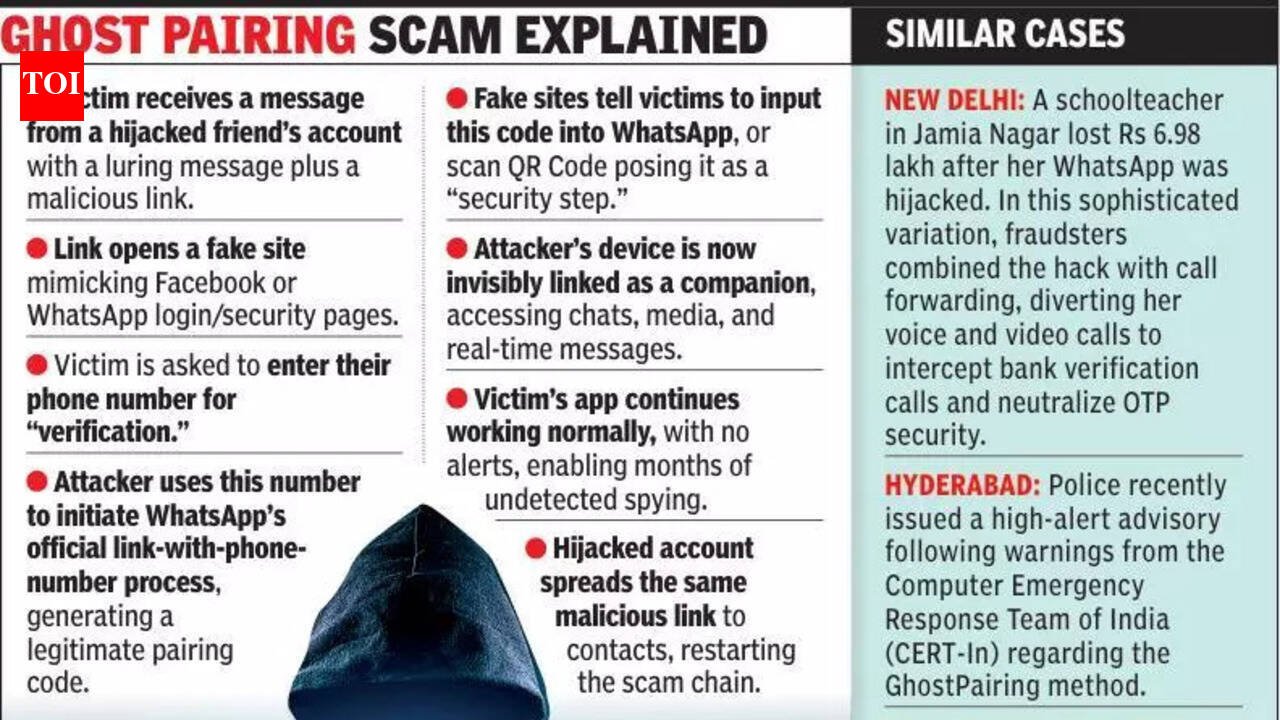
Vadodara: It was just another quiet day for city-based educator Pinal Desai until a notice from the Maharashtra police arrived at his doorstep a fortnight ago. The letter left him stunned, stating that his bank account had allegedly been involved in fraudulent transactions and directing him to appear before the police for questioning.When Desai met the cybercrime officials in Navi Mumbai about 10 days ago, he was informed that a WhatsApp group had been created using his mobile number and that the group was allegedly used to dupe people by promising lucrative returns through bogus investment schemes. “I did not create any such WhatsApp group, and I had no knowledge whatsoever about these schemes. It was only then that I realised my WhatsApp account had been hacked by cyber-frauds, who created the group and added several people to it,” Desai told TOI.Desai, 53, said the fraudsters regularly posted details of different investment plans in the group and shared bank account numbers for deposits. Members were persuaded to transfer money to those accounts with assurances of unusually high returns. According to police, a woman from Maharashtra who was added to the group ended up losing nearly Rs 84 lakh to the scam.“I fully co-operated with the police, shared all the required information, and even handed over my mobile phone for examination. The investigators conducted a thorough forensic scan of my device and, after detailed verification, returned it to me. They confirmed that my phone was clean and had not been used for any illegal activity. I was allowed to leave, with the assurance that I would be contacted again if further details were needed,” Desai said.Desai said, “It is worrying that someone can send messages or run scams from your number while you remain completely unaware. This can land innocent people in serious trouble,” he added. When asked whether he may have clicked on a suspicious link, Desai admitted that although he is generally cautious, he might have inadvertently tapped on an unknown link at some point.Cyber expert Mayur Bhusawalkar explained that the technique used in such cases is known as “ghost pairing.” “Scammers typically send a message such as ‘check this photo’ along with a malicious link. Once the user clicks on it, the fraudsters gain remote access and hijack the WhatsApp account. The victim often does not even realise that someone else is operating their account simultaneously,” Bhusawalkar said.“People should activate all available security features on WhatsApp, including two-step verification, to prevent unauthorised access. The government has also issued advisories warning citizens about this emerging form of cyber fraud,” Bhusawalkar added.
