


Mumbai: As seamer Brad Currie finished his media duties in the mixed zone of the Wankhede Stadium after Scotland’s last game of the 2026 T20 World Cup, he spotted some chocolate cupcakes at the catering area. Walking past them, he politely inquired if he could have one.
Associate nations and their players were the flavour of the group stage over the past couple of weeks in India and Sri Lanka, offering a rich and diverse early taste of this World Cup. Enjoy those cupcakes, Currie.
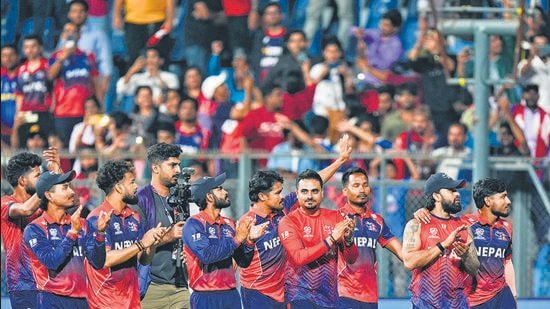
No Associate team progressed to the Super 8, yet their cricket showed palpable signs of progress. Amid promos of an impending 300 by big-team bullies, USA and Netherlands asked serious questions of the Indian batters. One big hit separated Nepal from beating England, and one spilled catch separated Netherlands from possibly taking down Pakistan.
Debutants Italy scripted their first World Cup victory, and Scotland, after a last-minute dash to the tournament, were far from being blown away by England and West Indies either side of their win over Italy.
“The gap’s closing,” said Currie. “We’re getting close. Close isn’t good enough, but, for the fans watching, we’re not seeing sides being absolutely pummelled. We’re all putting on very tough competitive games. And that makes cricket more entertaining.
“Hopefully, that’s what, at least this group stage (of the World Cup), will be remembered for.”
The question is for how long. Once the Test-playing nations take over the business end of World Cups and the majority of the cricket calendar, Associates largely tend to become footnotes in the sport’s narrative. How much attention and chatter did Nepal’s T20I series win over the West Indies last year generate?
“Normally during the World Cup, it (Associates’ performances) gets attention and then it fades away,” said Bas de Leede, Netherlands all-rounder. “We can only hope this World Cup may change that.”
One of the common themes of that change, and for teams like Nepal, USA, Netherlands, Scotland and Italy to build on the promise of this World Cup, is to find more balance in playing opportunities. It’s an oft-repeated clarion call by those in Associate cricket. It’s worth repeating too.
“Especially after this World Cup, we have to play a lot of games, against good sides,” Nepal captain Rohit Paudel said. “When we come in the next World Cup (in 2028), at least in a year we have to play two series against Test-playing countries. So that we can see where we stand against them.”
Scotland’s captain, Richie Berrington, wasn’t one bit surprised that the Associates showed “once again what they can do on the world stage”.
“We just need more exposure to this,” he said. “Playing the bigger teams, and having more fixtures against them is only going to make us better and help us move forward.”
That remains easier said than done in modern cricket, where the circle of those “bigger teams” is only getting smaller, and the international calendar only more crowded. Franchise leagues sprouting around the globe only compounds the issue. It has helped Associate nations’ players rub shoulders with those of Test-playing kind and develop on an individual level but from a collective viewpoint, it has widened the divide to the bridge.
“The crowded schedule is making it tougher,” Trudy Lindblade, Cricket Scotland CEO, told select Indian media in Mumbai.
“We’ve all been consistent in terms of what we want — more cricket on a more regular basis, (and) playing against the top teams. You don’t always have to play the Englands and Australias of the world. We want to play a mix of teams.
“We sit here as Scotland and say we want to play more. But we also need to help come up with the solutions.”
Various options have been floated around by those within the cricketing ecosystem and outside on social media as part of those solutions.
Maybe cricket’s own version of the Six Nations, for the strong European presence in this World Cup to compete more with each other. Perhaps expanding regional qualifiers to World Cups so that even the “bigger teams” have to play and go through, like in football where defending champions Argentina also had to qualify for this year’s World Cup.
There are also warm-up tours to Associate countries (for example, playing in Scotland or Netherlands before an England series). Or at times bringing in an Associate nation to bilaterals between two full members (imagine Nepal being added to India vs Sri Lanka).
“I get the financial reasoning,” said de Leede regarding the challenges to such changes. “But maybe a tri-nation series could be an option.”
Playing more might be the mantra, but there is also acceptance from some that they could also get better internally. Nepal followed up on their strong showing against England with surrenders to Italy and West Indies. “We need to be consistent,” said Nepal pacer Aasif Sheikh. Teams like Oman, Canada and Namibia still appear to have a long way to catch up.
The overriding takeaway, though, doesn’t change. The Associates have added a greater flavour to this World Cup with their fight and flair. How much richer they get from it remains to be seen.
“There is a real opportunity for the ICC (International Cricket Council) to look at this. And I know that this tournament has only reinforced the need to do that,” said Lindblade. “I am confident that they will be taking away how we have performed at this World Cup and going, ‘How do we build on that?’”
