


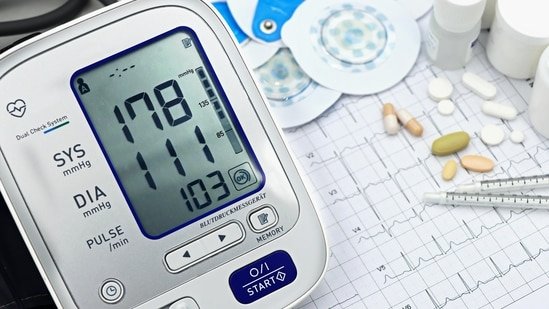
Without treatment, high blood pressure (BP) can lead to severe health issues. According to the American Heart Association, undetected or untreated high blood pressure, also known as hypertension, can become the primary reason for heart attack, stroke, heart failure, vision loss, kidney disease or failure, plaque buildup in the arteries, and more.
Therefore, it is important to treat high blood pressure in a timely manner. While getting medications and consulting your doctor should be your first choice, it is also necessary to adopt heart-healthy lifestyle choices to manage high blood pressure.
In a February 25 Instagram post, Dr Sanjay Bhojraj, a board-certified interventional cardiologist with over 20 years of experience, discussed the fastest way to lower high blood pressure. According to him, this method, which he elaborates in the post, is the ‘fastest way to lower your blood pressure naturally’ and takes less than 2 minutes a day.
Fastest way to lower blood pressure
Dr Bhojraj explained that when his blood pressure spikes during the day, he doesn’t reach for more caffeine. He tries to normalise the levels by controlling his breathing. As for how to lower your BP through breathing, the cardiologist explained:
- Inhale through your nose for 4 seconds.
- Exhale for 6 to 8 seconds.
- Repeat for 2 minutes.
How does breathing help lower BP?
According to him, longer exhales increase vagal tone and reduce sympathetic output. “That lowers vascular resistance and, in many people, drops systolic pressure within minutes,” he added. According to the American Heart Association, systolic blood pressure is the first (top) number, measuring the pressure your blood exerts on your arterial walls when the heart beats.
Moreover, the cardiologist stressed that the breathing technique isn’t a theory. He emphasised, “Multiple clinical studies on slow breathing and device-guided breathing have shown average systolic reductions of 5 to 10 mmHg when practised consistently. That’s comparable to what some first-line interventions achieve.”
Next, he highlighted that blood pressure is a nervous system signal as much as it is a salt issue. Further adding, “Stress load, insulin resistance, poor sleep, and visceral fat all feed it.” Lastly, he suggested tracking your readings for two weeks to see the results.
Note to readers: This article is for informational purposes only and not a substitute for professional medical advice. Always seek the advice of your doctor with any questions about a medical condition.
This report is based on user-generated content from social media. HT.com has not independently verified the claims and does not endorse them.
