


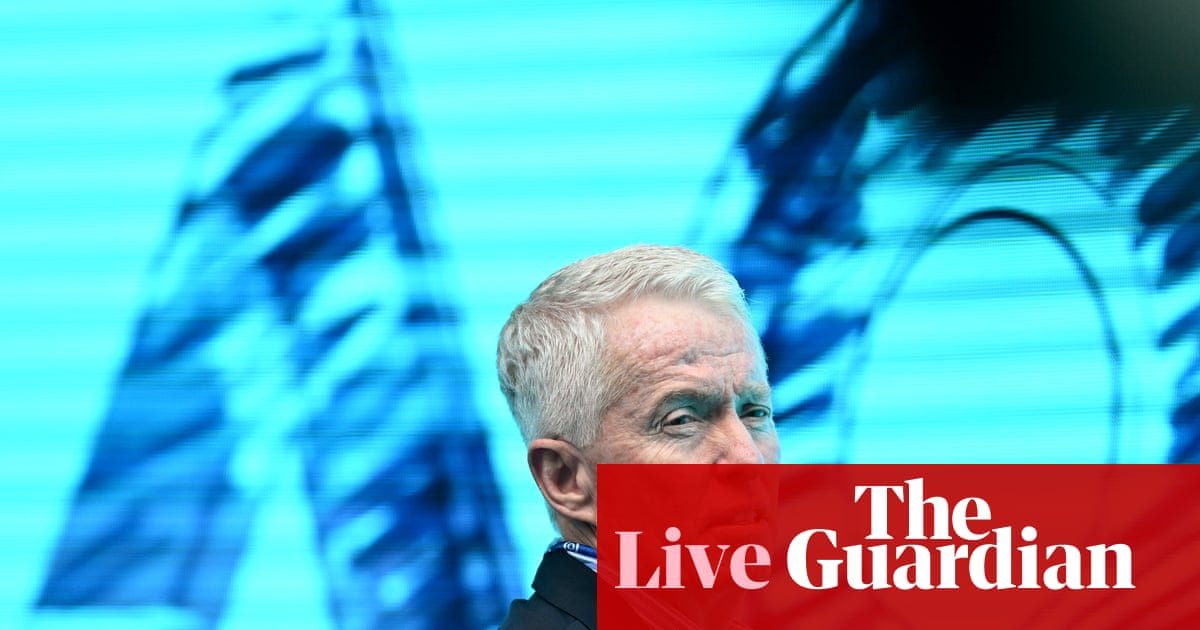
Tennis Australia CEO Craig Tiley to leave role for US
Craig Tiley is adamant his successor will continue filling the twin roles of running Tennis Australia and the Australian Open after confirming he will take up the same post in America, AAP reports.
After months of speculation, the Australian governing body on Wednesday announced Tiley was stepping down as TA chief executive to join the USTA later this year.
Having started as TA’s player development chief in 2005, Tiley became the Australian Open tournament director the following year and CEO in 2013.
Tiley will remain in his current role to help TA appoint his successor and support a smooth transition, and says the winning candidate will likely – but not certainly – come from within the tight-knit tennis community.
“The most important characteristics for what the board will look at for a new leader will be absolute cultural alignment,” he said.
Australia’s highest-paid sports administrator acknowledges he is leaving behind a luxurious lifestyle in Melbourne to uproot his young family to alligator country in Orlando, Florida.
Key events
Josh Butler
Waters says violence against MPs ‘must be called out’
Greens leader Larissa Waters has raised alarm about threats to politicians, after Anthony Albanese was forced to leave The Lodge last night due to a security threat.
“The Prime Minister being evacuated from his residence in Canberra due to a bomb threat overnight is shocking, I am glad he is safe and well,” Waters said on X, adding:
The recent escalation of threats against parliamentarians must be called out. Violence has no place in our democracy.
Albanese is expected to speak at an event in Victoria later today, which we’ll bring you as it happens.
Minns says permanent rapid response force about making sure ‘police are always ready’
NSW premier Chris Minns said the permanent rapid response unit would ensure safety remained the “number one priority” in the state, adding the body would mean the “police are always ready”.
He said in a statement:
Operation Shelter has worked. Making it permanent means we’re building on what we know delivers real results.
People want to see police where it matters, at major events, near places of worship, and in busy public spaces. This ensures that presence is consistent, because our security challenges have changed and our policing model needs to change with them.
NSW police commissioner Mal Lanyon added that it is essential police are “able to provide an enhanced rapid response with long-arm capability”.
Similar specialised police units are already operational overseas and form an important part of public safety operations in several countries in Europe.
Our priority is not only ensuring the community is safe, but that people also feel safe, while providing a deterrence to anyone who wants to do harm and support our frontline operational police.
NSW police makes heavily-armed rapid response unit permanent after Bondi attack
A heavily-armed rapid response unit is now a permanent fixture of policing, after it was created to counter hate-driven violence following the Bondi Beach terror attack, AAP reports.
About 250 NSW police officers will transform Operation Shelter, established in 2023 to crackdown on antisemitism and Islamophobia, into a lasting dedicated hate crime unit.
The Australian-first unit means police will be out and about with long-range firearms to patrol high-profile public buildings, places of worship and protests around Sydney with a 24/7 specialised police operations centre to back them up.
The centre will support the unit with real-time coordination and surge management, including training, logistics and intelligence to sharpen targeting and prevention.
They will also be equipped with a fleet of specially modified rapid-response vehicles.
Isabella Lee
Mother-daughter fashion duo inspired by country Queensland win Australia’s National Designer award
In 2024 Grace Kelly closed her Brisbane-based brand Joaen to reassess its viability. On Tuesday night during Melbourne Fashion festival, she won the National Designer award – the most prestigious award for emerging talent in Australian fashion.
“It’s such a whirlwind,” said Kelly. “I didn’t expect this so quickly.”
Kelly established Joaen at the end of 2020, a “risky” time to start a business. Her relaunch in 2025 came with a renewed clarity, where she honed in on her family’s fashion history.
The name Joaen is a combination of her maternal grandmother and great-grandmother’s names – Joan and Jean. “I felt [Joan] doing that collection,” said Kelly. “And before things go into production, I go, ‘Yep, she’d be proud of this.’”
Read more here:
Should you sanitise your strawberries?
For Prof Enzo Palombo, an expert in food microbiology and gastroenteritis viruses at Swinburne University of Technology, the key to fruit and veg hygiene is to “be cautious, but don’t be paranoid”.
He acknowledges concerns about the presence of bugs or dirt, pathogens that can cause diseases like listeria or salmonella, and the use of chemicals and pesticides. But he says: “We tend to think we need to consume 100% sterile food – you don’t. Our body is designed to deal with these things, within reason.”
Scurr says Australia has stringent regulations in place to protect consumers from pesticides and disease, “particularly if you supply a major retailer”.
Read more about ideal fruit behaviour here:
Bowen says renewables and new infrastructure key to lowering power prices
Chris Bowen, the minister for climate change and energy, said the report echoed what the government had been saying about fossil fuels: big spikes in energy prices linked to gas and coal can have an “oversized impact on general prices”.
He told RN Breakfast this morning that renewables can help bring prices down on average, but the country is still seeing difficulties with those benefits flowing through to retail prices “when you have so much ageing infrastructure influencing supply prices”.
What all that means is it’s even more important to keep on with the job of replacing that ageing infrastructure with new infrastructure, with the very well-balanced commonsense plans we have in place, to ensure as much new supply [is] coming on as quickly as possible.
He conceded that shift will “take a while”, but the government would continue to press forward with that transition.
Australia’s largest coal-fired power plant, Eraring in New South Wales, recently said it will stay open until 2029 amid concerns about the grid’s ability to satisfy demand.
Australia ‘heavily reliant’ on ageing fossil fuel infrastructure which is pushing up power prices, report finds
A new report from the Climate Council finds Australia remains “heavily reliant” on ageing coal-fired power stations and gas, which in turn is pushing power prices higher.
The report found a surge in domestic gas prices is the primary reason electricity prices are so high, adding that although gas provides only 5% of electricity in Australia’s main grid, it sets the wholesale electricity price up to 90% of the time.
The report also found millions of Australians are paying too much for electricity in a system that penalises loyalty. Those households could, the Climate Council said, save $291 on average by switching to a better offer. South Australians who stuck with their retailer paid the biggest loyalty tax of $408 annually.
The Climate Council said in a release:
This year, many of us will be paying significantly more than we have been over the past 18 months as the energy bill rebates come to an end. It’s clear that the way we power ourselves is no longer working for Australian communities and businesses.
Latest inflation data coming this morning
The Australian Bureau of Statistics will release the latest inflation data this morning, at 11.30am Sydney time.
Last month’s data showed inflation jumped 3.8% in the year to December, from 3.4% in the month before. The data led the Reserve Bank to raise the cash rate to 3.85%.
Reuters reports the central bank has said it is focused on the quarterly trimmed mean measure to gauge inflation trends, noting the new monthly figures are volatile and it would take some time for seasonal adjustments to catch up.
Michael Plumb, head of the economic analysis department at the Reserve Bank, said the central bank would continue to focus on the quarterly data and use the “trimmed mean measure” to assess underlying inflationary pressures.
We’ll bring you live updates from that announcement as soon as it lands.
US news site Politico to launch in Australia
Politico, a major US news company, is set to launch in Australia later this year.
The company announced a move into the Australian market and the launch of a new product called Canberra Playbook when parliament returns in the third quarter of 2026, after the winter recess.
The company said:
POLITICO’s expansion to Australia will bring its signature ahead-of-the-curve, insider political and policy journalism to help the country’s most influential audiences cut through the noise in a vibrant democracy.
The expansion will further POLITICO’s mission of linking global power centers and help readers in North America and Europe understand the decisions made in Australia that affect them and vice versa.
Politico first launched in Washington DC in 2007 and expanded to Europe a decade ago. The latest iteration will be anchored by editor Ryan Heath, an Australian native.
Caitlin Cassidy
More on the discovery of human remains yesterday
Police believe the body of missing 85-year-old Chris Baghsarian could have been dumped on Sydney’s outskirts just 40 hours after he was kidnapped in a case of mistaken identity.
New South Wales police said they had found human remains near a golf club in Pitt Town about 8am on Tuesday. Baghsarian, a widowed grandfather, was kidnapped from his North Ryde home just after 5am on Friday 13 February.
Police on Monday said forensic evidence linked to Baghsarian had been found in a burnt-out car in Westmead, with officers subsequently searching bushland at Glenorie. The car involved, a grey Toyota Corolla, was seen in Glenorie on the night of Saturday 14 February and then in Pitt Town Bottoms Road at 9.05pm.
Marks said this week that officers had discovered evidence inside the car that had also been linked to an abandoned and derelict property in Dural, where it was believed Baghsarian was held.
Police raided the Dural property on Thursday evening, later saying it had been used as “a makeshift stronghold by the kidnappers”.
Read more here:
NSW police arrest two men after death of Chris Baghsarian
Two men have been arrested “in relation to the alleged kidnapping and murder of 85-year-old Chris Baghsarian”, police have said.
NSW police said a man, 29, was arrested in Kenthurst and a man, 24, was arrested in Castle Hill. They have been taken to Riverstone police station as inquiries continue. No charges have been laid.
Human remains suspected of being those of Baghsarian were found on Tuesday morning near a golf club in Pitt Town, NSW, about 45km northwest of the Sydney CBD.
Early inquiries after his disappearance on Friday 13 February established Baghsarian was not the intended target and had been taken in a case of mistaken identity.
Tennis Australia CEO Craig Tiley to leave role for US
Craig Tiley is adamant his successor will continue filling the twin roles of running Tennis Australia and the Australian Open after confirming he will take up the same post in America, AAP reports.
After months of speculation, the Australian governing body on Wednesday announced Tiley was stepping down as TA chief executive to join the USTA later this year.
Having started as TA’s player development chief in 2005, Tiley became the Australian Open tournament director the following year and CEO in 2013.
Tiley will remain in his current role to help TA appoint his successor and support a smooth transition, and says the winning candidate will likely – but not certainly – come from within the tight-knit tennis community.
“The most important characteristics for what the board will look at for a new leader will be absolute cultural alignment,” he said.
Australia’s highest-paid sports administrator acknowledges he is leaving behind a luxurious lifestyle in Melbourne to uproot his young family to alligator country in Orlando, Florida.
Finance minister says bomb threat reflects ongoing need to ‘take the temperature down’
Katy Gallagher, the federal finance minister, said the security incident at the prime minister’s residence was “very troubling”, echoing Albanese that the country needed to “take the temperature down”.
“This is just another reminder that there are threats out there,” she told ABC News this morning.
Gallagher said politicians were well supported by police and security services, but said the events were a moment to reflect on the need for Australians to “peacefully make your point” rather than opt for violent threats.
I can say that certainly, in my time in politics, I haven’t experienced some of the turbulence and some of the push against politicians at the moment. I think certainly the online world is alive and flourishing … and yeah, it’s difficult.
Josh Butler
More on the bomb threat at the prime minister’s home in Canberra
Prime minister Anthony Albanese was evacuated from his home in Canberra, The Lodge, after a bomb threat on Tuesday night.
Following an extensive search, which saw Albanese moved to a secure location, the Australian Federal Police said “nothing suspicious was located” and that there was “no current threat to the community or public safety.”
The AFP said early Wednesday morning there were no updates on the incident. Albanese’s office referred enquiries to the AFP.
Albanese is scheduled to make a speech at an infrastructure forum in Victoria on Wednesday.
In a post on social media, the opposition leader, Angus Taylor, said he was pleased to hear Albanese was safe after the threat.
“Threats against any parliamentarian are utterly abhorrent, especially in a country built on expressing our differences through debate,” he wrote on X.
We’ll bring you more through the day.
Good morning, Nick Visser here to pick up the blog. Let’s see what Wednesday holds.
Australian climate pollution down 1.9% as renewables boom
Adam Morton
Australia’s climate pollution was down 1.9% across the year to September 2025 as renewable energy reached record levels and the burning and venting of gas dropped.
The latest quarterly greenhouse gas inventory found annual emissions were 444.3m tonnes, down from 452.8m a year earlier. This is 27.4% less than in 2005.
The climate change minister, Chris Bowen, said this placed the country on track to meet its legislated 2030 target – a 43% cut – “if we stay the course and continue to lift our efforts”.
That picture is complicated by adjustments to earlier emissions estimates. Despite the annual fall, the report says Australia is further away from the 2030 goal than it was in the last report, covering the year to June 2025. Then, emissions were estimated to be 28.5% less than in 2005.
But Bowen said there was evidence emissions were coming down in several areas. Changes included:
-
A 3.1% fall in pollution from electricity grids, mainly due to renewables displacing coal.
-
A 3.8% drop in fugitive emissions from fossil fuel operations. Less gas was vented into the atmosphere, more CO2 was captured and stored, and underground coal mining production dipped.
-
A 1.7% fall in emissions from fossil fuel use in manufacturing, mining and buildings, in part due to people using less gas in their homes.
-
After years of increases, a 0.4% drop in transport pollution as petrol consumption fell. It coincided with more people driving electric and hybrid cars.
Nearly half of universities have spent most of the last five years in deficit, report finds
Natasha May
Australia’s universities are operating on increasingly thin margins, a new report from Universities Australia reveals.
The report, titled Critical challenges in Australia’s university sector: securing a sustainable future, found over 40% of universities have spent most of the past five years in deficit.
The average funding per commonwealth supported student place has fallen by 6% in real terms since 2017, the report found. It said research is also at risk as universities increasingly have to fund it themselves as investment in research and development has fallen to a 20-year low (1.7% of GDP).
Universities Australia’s chair, Prof Carolyn Evans, said:
Our universities are not just economic engines – they are places where people build their futures, where talent is nurtured and where opportunity is expanded for the next generation.
However, chief executive officer Luke Sheehy said the report was a reality check.
There’s a myth that universities are awash with money. The numbers tell a very different story. You can’t ask universities to educate more students, deliver more research and drive productivity while steadily reducing funding per student. At some point, the maths catches up.
Welcome
Good morning and welcome to our live news blog. I’m Martin Farrer with the top overnight stories and then Nick Visser will take over.
The big story this morning is the bomb threat that forced Anthony Albanese to be evacuated from The Lodge at around 6pm last night. He returned three hours later after a search of the residence was completed. We’ll have the latest from Canberra.
And elsewhere, Australia’s universities are operating on increasingly thin margins, according to a new report which found over 40% of universities have spent most of the past five years in deficit. More coming up.
