


A heartbreak in Ahmedabad on Sunday felt like déjà vu for the thousands who had packed the Narendra Modi Stadium, and for Suryakumar Yadav. The look of despair after his dismissal to Corbin Bosch off the first ball of the 10th over said it all, before Keshav Maharaj drove the final nail into the coffin with a triple strike in the 15th. For the India captain, the sense of déjà vu ran deeper. At the same venue on November 19, 2023, he had fallen for the identical score of 18 in the ODI World Cup final defeat to Australia.
That loss triggered a period of self-reflection for the Indian team, which culminated in an unbeaten run across the 2024 T20 World Cup and the 2025 Champions Trophy. Now, with the streak snapped and India staring at possible elimination, it is time for introspection once again.
Yet, all is not lost. India still have two Super 8 matches remaining, beginning with Zimbabwe in Chennai on February 26.
The squad has already arrived in Chennai and will resume training on Tuesday. But do they need to press the panic button and make sweeping changes? If the disappointing 2021 campaign taught them anything, it is to avoid a complete structural overhaul. What is required instead is tactical recalibration.
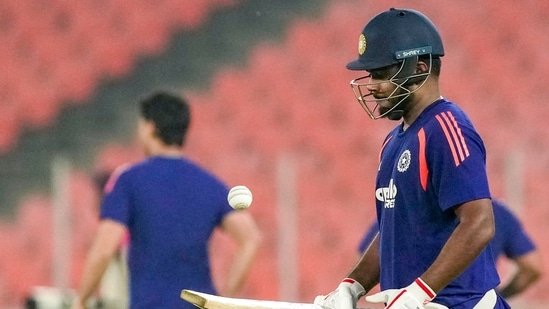
Time for Sanju Samson’s return
Oppositions have found early success by starting with off-spin. India know it, yet in each of their last three matches, they have lost a wicket in the opening over to spin, all for ducks: twice Abhishek Sharma and once Ishan Kishan. Zimbabwe are likely to follow suit with Sikandar Raza or Brian Bennett if India persist with two left-handed openers.
India need a right-hander to disrupt that plan, and that’s where Sanju Samson comes in. His only appearance was against Namibia in the group stage, where he struck a brisk 22 off eight balls in Abhishek’s absence.
If Zimbabwe open with spin, Samson could take strike. If they switch tactics and hand the new ball to Blessing Muzarabani, Abhishek can counter with his natural aggression.
So where does that leave Ishan Kishan?
At No. 3. That would mean a tough call on Tilak Varma, who has managed 107 runs off 90 balls at a strike rate of 119, with a highest score of 31 off 27 deliveries.
Ishan recently batted at No. 3 during the home series against New Zealand, scoring a century and a 32-ball 76. He also plays that role for Sunrisers Hyderabad in the IPL.
However, Ishan’s promotion should depend on which opener falls first, ensuring India maintain the right-left combination. Suryakumar may need to enter earlier than usual, but crucially, he must anchor the innings amid recurring early collapses. He will have to navigate Zimbabwe’s pace duo, Muzarabani and Brad Evans, who can trouble him with hard lengths and slower variations.
If Chennai offers turn, Shivam Dube could be promoted to No. 5 to maximise his effectiveness against spin.
Axar vs Sundar
India did not lose solely because of one tactical call against South Africa. The presence of three left-handers in the Proteas’ top order justified Washington Sundar’s selection. But against Zimbabwe, who could field as many as five right-handers in their top seven, Axar Patel should return to the XI.
Need for a bowling Plan B
India’s smooth group-stage run was built on disciplined bowling. But when Varun Chakravarthy endured a rare off day, there was no effective contingency. As David Miller and Dewald Brevis attacked, India lost control during the middle overs.
A second attacking spin option is essential. Kuldeep Yadav could be that missing piece. The wrist-spinner has played only once in the tournament, returning 1 for 14 in three overs against Pakistan.
Reverting to the Pakistan combination — Axar, Kuldeep and Varun as the three spinners, alongside Jasprit Bumrah, Hardik Pandya and Dube as pace options — would provide balance and wicket-taking threat.
Above all, India must resist panic. Stability and clarity of roles will be crucial if they are to regain momentum and keep their World Cup campaign alive.
