


Head in a blue drum, hands and legs thrown away, bloodstains in the car and house and other chilling details of a 49-year old man’s murder by his son in Uttar Pradesh’s Lucknow have surfaced, triggering haunting memories of a similar killing in Meerut last year.

A 21-year-old BCom student allegedly shot his father, a liquor businessman and pathology lab owner, dead on the morning of February 20, chopped the body into pieces, and put the remains in a blue drum at the family house in Lucknow’s upscale Ashiana area, police said on Monday.
The student – Akshat Singh – was arrested on Monday and confessed to the murder, the police added, as HT reported earlier. The murder was committed on February 20 around 4.30 am, according to the police.
The murder comes almost a year after the infamous blue drum case of March 2025 in which 29-year-old Merchant Navy officer Saurabh Rajput was killed by his wife, Muskan Rastogi, and her lover, Sahil Shukla in Meerut.
Chilling details of Lucknow case
The son often had an argument with his father and was planning to kill him for almost a year after he read about the Meerut case on social media, according to police sources cited in the earlier HT report.
The crime stemmed from an argument after the father pressured his son to pursue all India pre-medical test exam NEET (National Eligibility cum Entrance Test), instead of B.com. The latter disagreed, said Vikrant Vir, deputy commissioner of police, Central.
“Manvendra Singh had been reported missing for three days by his son. Police arrested Akshat Singh, 21, after his conflicting statements unravelled the plot,” said DCP.
After Manvendra, owner of Vardhman Pathology Lab in Kakori and also involved in the liquor trade, was last seen alive, Akshat later told police his father had woken him at 6 am, claiming he was heading to Delhi and would return by afternoon. But with Manvendra’s three mobile numbers going offline, the family grew anxious or so Akshat pretended.
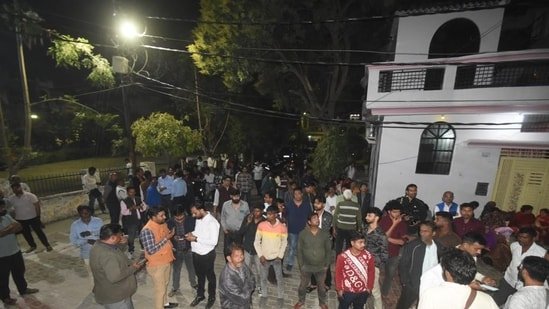
The officer added that the chilling discovery was made at their three-storey residence in Ashiana Sector L, where forensic teams are now looking for evidence.
“After a heated argument with Manvendra, Akshat grabbed his father’s licensed rifle and fired a shot, killing him on the spot,” read a police statement.
Body chopped to pieces, sister sees crime
The act was committed in front of Akshat’s younger sister, a Class 11 student. He allegedly threatened to kill her if she spoke out. “The sister witnessed the entire episode but was intimidated into silence,” said the DCP.
Ashiana SHO Kshatrapal said Akshay dragged the body from the third floor to an empty room in ground floor to erase the evidence. He chopped the body there using some tools.
“To erase evidence, Akshat dragged the body from the third floor to an empty ground-floor room. There, he dismembered it using tools from the house. He loaded some parts into his car and drove to Sadrauna, a remote area, where he dumped them,” said Kshatrapal.
The torso and head were stuffed into a blue plastic drum which Akshat planned to dispose of later but was caught before he could. The other remains of the body were thrown away by Akshat in a bid to conceal his crime and remain untraced.
He was in the process of getting rid of the torso when we intervened, the DCP said.
On Monday evening, officers raided the home with Akshat in custody and recovered the drum containing the mutilated remains. Forensic experts are examining bloodstains in the car and house, while teams search Sadrauna for the missing parts.
Akshat’s attempt to clean the car raised suspicions of his aunt, who questioned him about it but he brushed it off.
When questioned by police, Akshat first claimed his father committed suicide, then admitted to the murder.
“Strict interrogation led to his confession,” the DCP confirmed.
The Singh family hails from Jalaun district. Manvendra’s father is a retired Uttar Pradesh Police officer. Manvendra’s wife passed away nine years ago.
In the Meerut case of last year, criminals dismembered the body into 15 pieces, placed them in a large blue drum, and sealed it with wet cement to mask the odour and delay discovery.
