
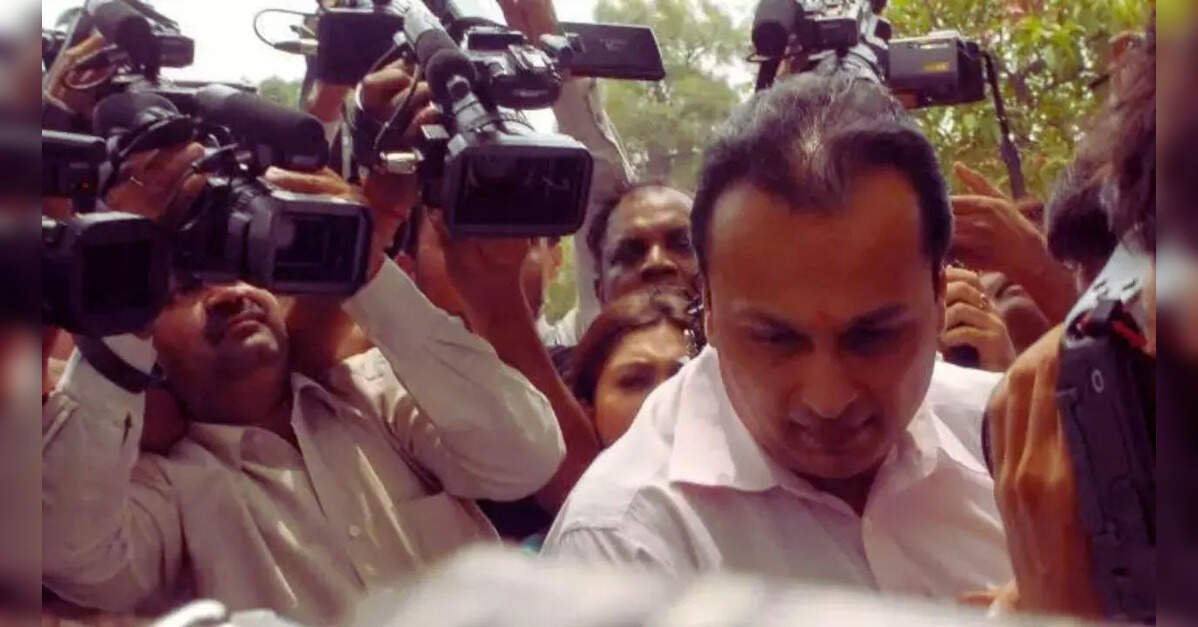
MUMBAI: In a setback to Anil Ambani and his company, Reliance Communications, the Bombay High Court on Monday allowed appeals filed by three banks and an external forensic auditor firm, BDO India LLP, against the relief granted to Ambani last December by a single judge over a forensic audit that led to the tagging of accounts as fraud.
The HC earlier noted that SBI, the lead bank, along with a consortium of 20 banks, were lenders to RCOM, RTL and RITL. Their total exposure to these three companies was Rs 31,580 crore.
The three banks — IDBI Bank, Bank of Baroda and Indian Overseas Bank — last month appealed against the interim relief granted in December 2025 to industrialist Anil Ambani by a single-judge bench of Justice Milind Jadhav, who had restrained the banks from taking action against Ambani’s accounts based on a 2020 forensic audit report (FAR).
The banks said Ambani’s challenge to the 2020 FAR was belated. They also said SBI, on June 13, 2025, declared RCOM and Ambani as “fraud”. The HC last October dismissed a challenge raised by Ambani to SBI’s action, following which Ambani this year filed a suit against SBI raising a similar challenge to BDO’s qualification and eligibility to conduct the forensic audit.
The consequence of the “fraud” tag by SBI was that RBI norms were triggered, debarring Ambani from raising additional credit from banks for five years.
While Justice Jadhav agreed with Ambani’s contention that the FAR 2020 report essentially flouted the 2024 Master Direction issued by the Reserve Bank of India on “Fraud Risk Management in Commercial Banks”, the appeal bench of Chief Justice Shree Chandrashekhar and Justice Gautam Ankhad agreed with the submissions made by the banks and BDO.
Solicitor General Tushar Mehta, representing one of the banks during the appeal hearing last month, argued that unless the order was stayed, it would lead to “disastrous” consequences.
BDO, represented by counsel Mustafa Doctor and Kunal Dwarkadas and RJD and Partners, and the banks, represented by MDP Legal and advocates Yogesh Pirthani and Rishi Thakur, also adopted Mehta’s contention that Justice Jadhav’s findings were not based on facts pleaded in the suit filed by Ambani or argued in court during the hearing of his plea for interim relief. BDO said its appointment did not violate any RBI guidelines as they existed at the time.
The Solicitor General also argued that by the December order, “the RBI master circular of 2024 has been given retrospective effect, which is patently impermissible”.
The audit report pointed to findings of fact, including that funds “were misused” and “siphoned off”, Mehta submitted, also arguing that Ambani never challenged the FAR on merits.
The banks maintained that the external auditor’s report was conducted under the 2016 RBI circular, which had been complied with.
Ambani, through senior counsel Mukul Rohatgi and Naik, Naik and Company, contended that the 2024 RBI Master Directions mandatorily superseded the earlier 2016 directions and required an “external auditor” appointed for forensic audits to be an auditor under the Companies Act, meaning they must be registered with the Institute of Chartered Accountants of India (ICAI).
The 2024 RBI directions provide a comprehensive and robust framework for banks for the prevention, early detection and timely reporting of fraud to law enforcement agencies.
Justice Jadhav, citing minutes of a meeting, said, “BDO LLP was already actively involved with all lender banks well before its appointment as External Forensic Auditor on May 7, 2019”, and noted that the lender banks followed no prescribed procedure or timeline.
In granting interim relief to Ambani, Justice Jadhav had reasoned that allowing banks to proceed against him based on the FAR 2020 would have “virtually drastic” consequences and lead to outcomes such as being blacklisted.
The appeal judgment pronounced by the Chief Justice will be available soon.
