
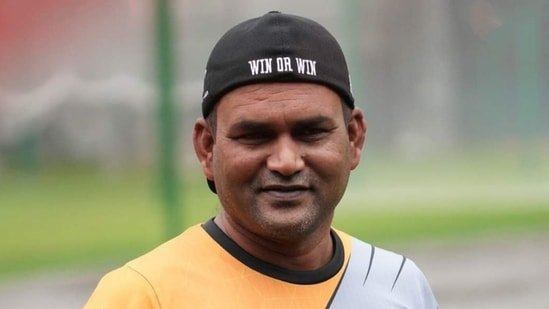
Bangladesh coach Mohammad Salahuddin has launched a blistering attack on the former sports advisor over the handling of Bangladesh’s stance on the T20 World Cup 2026, accusing him of publicly contradicting himself and privately steamrolling the players’ voices. The outburst comes amid a wider fallout around decision-making at the top – and the human cost of abrupt calls that land on a dressing room already living on thin emotional margins.
At the heart of Salahuddin’s anger is not just the decision itself, but the process: he suggests the narrative shifted in public, while in the room, the players were left feeling unheard, exposed, and forced to bear the consequences.
“He told such blatant lies,” Salahuddin was quoted as saying by Cricbuzz. “I am a teacher myself, and teachers generally lie a bit less. That he would say such lies so openly – I honestly can’t even imagine it. How will I even show my face in front of the boys? He took such a U-turn.”
The coach’s choice of words is striking because it frames the controversy as an issue of integrity and accountability, not merely administrative confusion. By repeatedly underlining the former advisor’s identity as an academic, Salahuddin is effectively arguing that a public figure linked to a premier institution should be held to a higher standard of honesty – especially when national representation and player careers sit in the balance.
“He is a teacher and a teacher at Dhaka University. A person from the highest educational institution of my country saying such lies – we can’t accept this. How can we accept this? He said one thing earlier and later took a U-turn,” he added.
Salahuddin also claimed the emotional aftermath within the squad was severe, describing a group that felt blindsided – not just by the outcome, but by how quickly and definitively it was imposed. In his telling, the meeting that should have been consultative became a one-way directive, leaving players to process a life-defining blow without even the dignity of a proper explanation.
“Look, when a boy goes to play in a World Cup, he carries his dream – his 27-year-old dream with him. You destroy that dream in one second,” said Salahuddin. “Fine, if it’s a country’s decision taken for national reasons, they will sacrifice for the country. But if you talk about loss, I will talk only about personal loss. Personally, you completely ended a boy’s dream. I know that two of my players went numb for days, completely lost,” Mohammad Salahuddin added.
The coach’s argument is nuanced on one point: he acknowledges that players will accept sacrifice when it is clearly a national call. What he appears unwilling to accept is confusion, shifting explanations, and a lack of basic communication that leaves athletes feeling disposable.
“For the sake of the country, I’m also ready to sacrifice many things, and the boys are ready too. But did I put my hand on a boy’s head and say, ‘Son, you couldn’t play because of this?’ If things had been communicated properly, I think many things could have been accepted,” he added.
